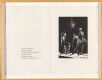
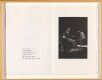
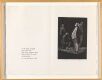
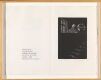
60 x 20 x 14, 191 x 61 x 54, 191 x 61 x 54, Ø 30 x 44
- Artist: Miroslaw Balka
- Creation date: (1992)
About
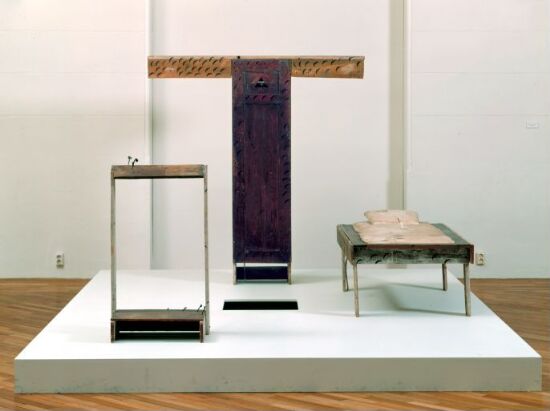
Mirosław Balka completed his studies at the art academy in Warsaw in 1985. He began his artistic career with figurative sculptural compositions, but in the late 1980s he started creating abstract installations in an austere, minimalist style. The human figure has nonetheless remained central to his work, including in this installation from 1992.
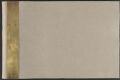
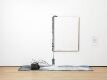
In a dimly lit room, the spectator encounters three metal crates, two large ones and a smaller one, with a single lamp as a light source. The artist’s own measurements serve as the yardstick for the objects and provide the piece with its title. The arrangement and the sparse lighting bring to mind a crypt, and the use of rusted iron evokes elapsed time and transience. One of the larger crates is open, and the bottom is covered by a yellow, rubbery material that resembles skin. The upper side of the other, closed crate is covered in terrazzo, a flooring material frequently used in postwar houses and public buildings. It links the symbolism of death to experiences from everyday life.
“My theatre is without actors,” Balka said of his work in 1990. The museum’s installation resembles a tableau, assembling silent props that are highly charged and existential in nature.
- Creation date:
- (1992)
- Object type:
- Installation
- Technique and material:
- stål, terrazzo, jernbøtte, tekstil, salt og elektrisk lys
- Material:
- Stål, Syntetmateriale, Textile, Annet, Filt
- Dimensions:
- Width: 464 cm
- Depth: 140 cm
- Keywords:
- Visual art
- Classification:
- 532 - Bildende kunst
- Inventory no.:
- MS-03627-1994
- Cataloguing level:
- Complex object/artwork
- Acquisition:
- Kjøpt 1994
- Owner and collection:
- Nasjonalmuseet for kunst, arkitektur og design, The Fine Art Collections
- Photo:
- Thorkildsen, Morten
- Copyright:
- © Balka, Miroslaw/BONO
Nasjonalmuseet's collection catalogue is a living resource of information gathered since the 1830's. Some records may contain language or ideas that today could be perceived as outdated, offensive or discriminatory with regard to for instance gender, sexuality, ethnicity or disability, and that may be at odds with the museum's values regarding equality and diversity.
Do you have suggestions for how this record can be improved? We would like to hear from you!
If you would like more information about specific objects in the collection or about objects that haven't been published online, please contact the museum. You can read more about how we work with the collection and our cataloguing practice here.












![[Uten tittel]](https://ms01.nasjonalmuseet.no/iip/?iiif=/tif/NMK.2019.0059.tif/full/,80/0/default.jpg)