About
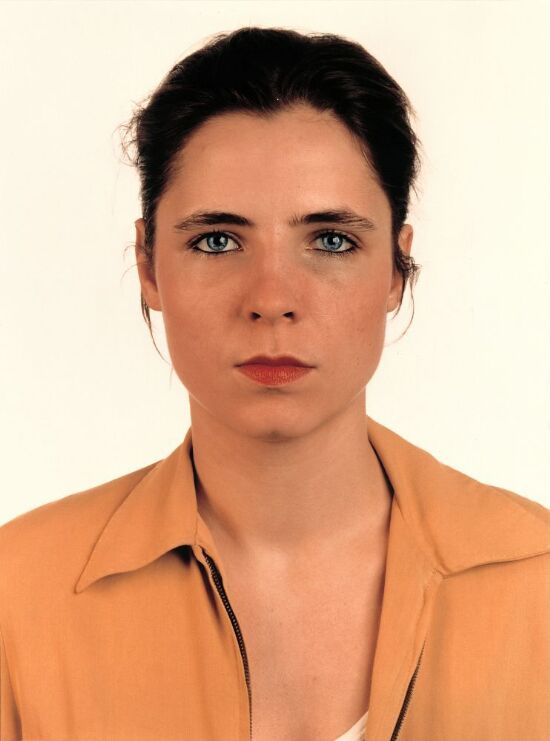
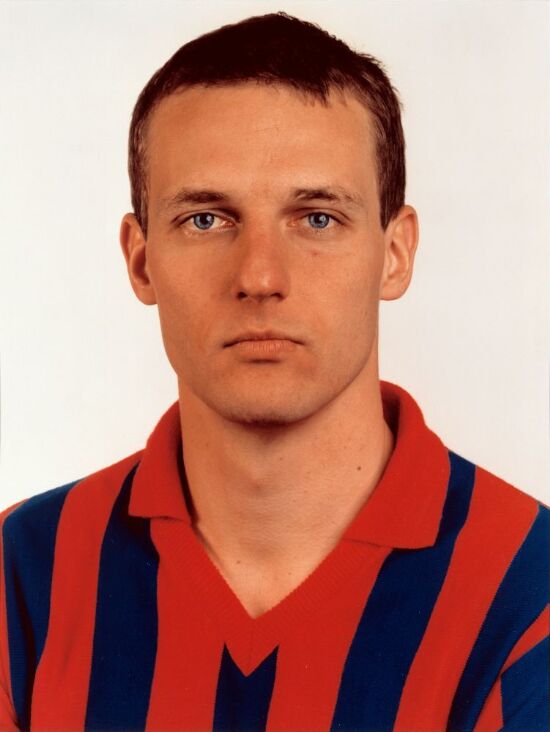
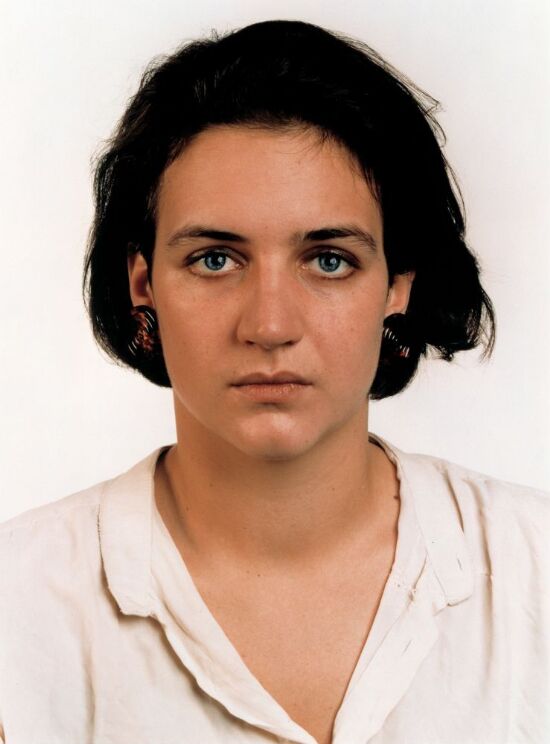
Thomas Ruff explores the photographic ambivalence between the documental and the manipulated. During his academy days he took portraits of his fellow students, using the aesthetics of passport photos to create oversized, expressionless, and impersonal headshots that seem both threatening and harmlessly superficial. Ruff continued the series later on: in some of the photos, however, he made the sitters’ dark eyes blue, thus undermining the authentic and documentational nature of the portraits.
The retouching can be interpreted as Ruff’s commentary on the issue of race. Blue eyes are often associated with the so-called Aryan race – a not unproblematic connection that brings Nazi racial theories to mind. Ruff belongs to the postwar generation of German artists. Through his manipulations he shows that such “pure” races are an illusion. At the same, he responds to the negative reaction to the original series, which was criticized for showing the “new generation of German Aryan youth”.
What significance does the colour of our eyes have? What happens to these people when Ruff changes the colour? Will their identity be ascribed another value?
Ruff trained at the renowned academy in Düsseldorf in the 1970s and 1980s under Bernd Becher. Bernd and Hilla Becher are regarded as mentors and trailblazers in conceptual, documentary photography. Several of today’s leading photographers, such as Candida Höfer and Thomas Struth, trained at the same time as Ruff.
- Creation date:
- (1991)
- Object type:
- Photograph
- Technique and material:
- c-print
- Material:
- Fotopapir
- Dimensions:
- Width: 29.5 cm
- Height: 39.5 cm
- Edition:
- 2/5
- 2 AP
- Keywords:
- Visual art
- Classification:
- 532 - Bildende kunst
Nasjonalmuseet's collection catalogue is a living resource of information gathered since the 1830's. Some records may contain language or ideas that today could be perceived as outdated, offensive or discriminatory with regard to for instance gender, sexuality, ethnicity or disability, and that may be at odds with the museum's values regarding equality and diversity.
Do you have suggestions for how this record can be improved? We would like to hear from you!
If you would like more information about specific objects in the collection or about objects that haven't been published online, please contact the museum. You can read more about how we work with the collection and our cataloguing practice here.