Albertine to See the Police Surgeon
- Artist: Christian Krohg
- Creation date: (Påbegynt 1885, avsluttet 1887)
About
The painting Albertine to See the Police Surgeon is realism at its most effective. It was regarded as scandalous when it was first exhibited, but now it is viewed as a success. The work incited widely divergent views, and the debate was heated. Why was this painting the subject of such intense controversy?
In March, 1887, there was a constant stream of people making a beeline to the street Rådhusgata in Kristiania every day. They were heading to see a painting on display. It was unusual for pictorial art to attract so much attention from the city’s inhabitants, but now both the bourgeoisie, who were typically interested in art, and members of the working class were eager to view Albertine to See the Police Surgeon.
Krohg’s Albertine
What they got to see was a full-scale depiction of an everyday situation among the city’s prostitutes. It was as though Krohg had torn down the wall of the police surgeon’s waiting room on Møllergata, and was inviting people in to see what many knew was going on, but avoided talking about. Krohg, however, was fearless, and wanted to trigger a social debate. Only a few months earlier his novel Albertine had been published. The novel is about a poor working girl who is summoned to the police surgeon after having been raped by a police superintendent. She subsequently ends up as a prostitute. The novel was confiscated by the Ministry of Justice immediately after publication. It was especially the rape scene and the description of the gynaecological examination by the police surgeon that were deemed inappropriate for a novel.
The debate on prostitution in Kristiania in the 1880s
Prostitution had been illegal in Kristiania since 1842. All the same, the public authorities tacitly accepted it by providing compulsory medical check-ups and health controls. It was argued that the examinations of prostitutes were necessary to prevent the spread of venereal disease. Krohg saw this as a double standard, and he sought to put an end to this regulation and the systematic degrading and unlawful treatment to which impoverished women were subjected. In the painting, Albertine is placed in the background. She is clearly ashamed and embarrassed. She is dreading the examination, as the young women no doubt did in reality.
Freedom of expression and art
Krohg, along with many others, believed that the confiscation of his novel was a breach of Article 100 of the Norwegian Constitution, protecting freedom of expression. He brought the case before the Supreme Court, but lost and was forced to pay a fine. The painting was not confiscated, but the fact that the motif was closely associated with the prohibited book meant that several venues refused to exhibit the picture and some newspapers declined to print articles about the case. Eventually the debate came to revolve around freedom of expression in addition to the situation that the book and the picture criticised: that public prostitution had not yet been abolished, despite being prohibited by law.
From beauty to truth
The artists of the realism movement aimed at incorporating pictorial art as a factor in the social debate. Art was meant to be something more than decoration or entertainment. Attracting viewers from all social classes, as was the case with Krohg’s Albertine to See the Police Surgeon, was a sign of success. The ideal was to convey truth rather than beauty. Artists were to paint motifs from their own times. Krohg went so far as to hire prostitutes to model for the Albertine painting. Such a realistic portrayal of the dark side of society was designed to provoke viewers. Few Norwegian artworks have sparked such intense debate.
- Creation date:
- (Påbegynt 1885, avsluttet 1887)
- Other titles:
- Albertine i politilegens venteværelse (NOR)
- Object type:
- Painting
- Materials and techniques:
- Olje på lerret
- Material:
- Canvas
- Dimensions:
- Width: 325.4 cm
- Height: 210 cm
- Depth: 4.7 cm
- Keywords:
- Visual art
- Classification:
- 532 - Bildende kunst
- Inventory no.:
- NG.M.00776
- Cataloguing level:
- Single object
- Acquisition:
- Kjøpt for A.C. Houens fond 1907
- Owner and collection:
- Nasjonalmuseet for kunst, arkitektur og design, The Fine Art Collections
- Photo:
- Børre Høstland
Nasjonalmuseet's collection catalogue is a living resource of information gathered since the 1830's. Some records may contain language or ideas that today could be perceived as outdated, offensive or discriminatory with regard to for instance gender, sexuality, ethnicity or disability, and that may be at odds with the museum's values regarding equality and diversity.
Do you have suggestions for how this record can be improved? We would like to hear from you!
If you would like more information about specific objects in the collection or about objects that haven't been published online, please contact the museum. You can read more about how we work with the collection and our cataloguing practice here.
Other works by Christian Krohg
 Fru Betsy Gude, f. AnkerChristian Krohg(1910)
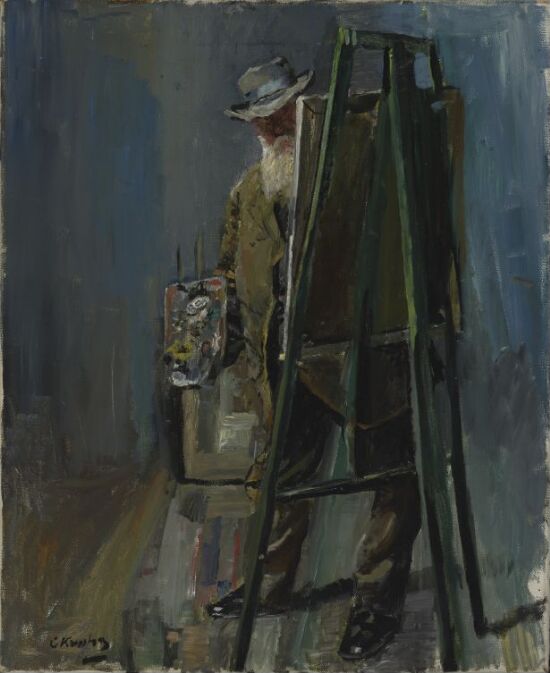 Self-Portrait by the EaselChristian Krohg(1912)
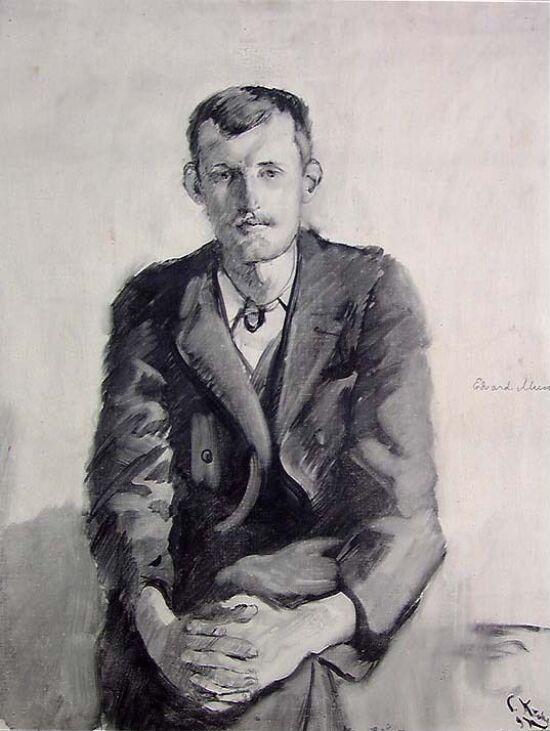 The Painter Edvard MunchChristian Krohg1891
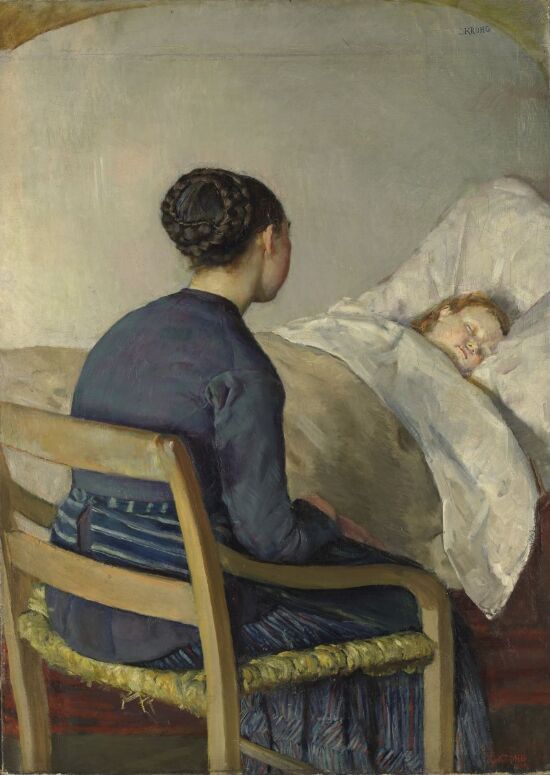 Mother at her Child's BedChristian Krohg1884
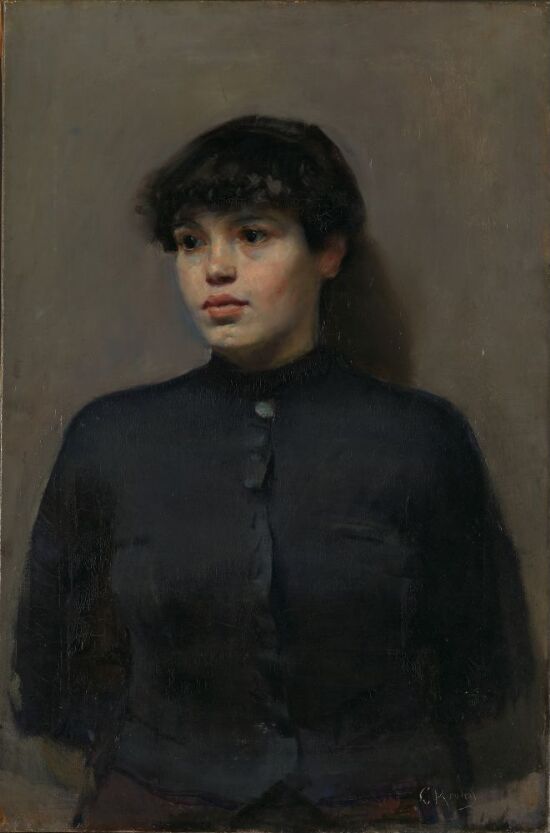 Portrait of "Jossa"Christian Krohg(1886)
 JulChristian Krohg1893
 Bybud nr. 44Christian Krohg(1906)
 Letter from HomeChristian Krohg1896
 Braiding her HairChristian KrohgAntagelig 1888
 Forarbeid til illustrasjon i Snorre Sturlason, KongesagaerChristian KrohgMellom 1895 og 1899
 Los RaskChristian KrohgFør 1890
 Liten pike står på tresko og titter inn av vinduetChristian KrohgUten år