While most of the Norwegian artists of his generation moved abroad to make a living, Johannes Flintoe made the opposite trek, moving from Denmark in 1811 to establish himself in Norway. He soon became a prominent figure in the young nation’s nascent art community, for example by helping to found national institutions of art and culture and by working at the Christiania School of Drawing for many a year.
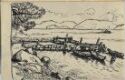
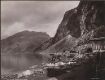
Moreover, it was Flintoe who showed the Norwegians the way to the Norwegian highlands: beginning already in 1819, he journeyed extensively back and forth over the mountains to Western Norway, and his travels provided preparatory studies for numerous majestic panoramas of fjords and mountains. Flintoe painted these landscapes in gouache and presented them with striking, illusionistic effect in cosmorama exhibitions.
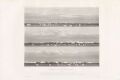
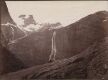
View of Jotunheimen, Hurrungene, with its breathtaking view of the jagged Hurrungene mountain range, was originally envisioned as being part of such a cosmorama, and was displayed for the first time in 1837. Whereas his painted views were usually based on his own studies, on this occasion Flintoe used the geologist B.M. Keilhau’s drawing of the motif, executed on his expedition in summer 1820 to the interior of what were then called the Jotun Mountains. The most famous of Keilhau’s was “Hurrungene, seen from a peak in Kolde Valley, 14 July 1820”. Already in 1822 Flintoe made an etching based on the drawing, which was published in the recently launched magazine for the natural sciences.
Flintoe kept all of his painted views and took them with him to Copenhagen when he moved back to Denmark in the 1850s.
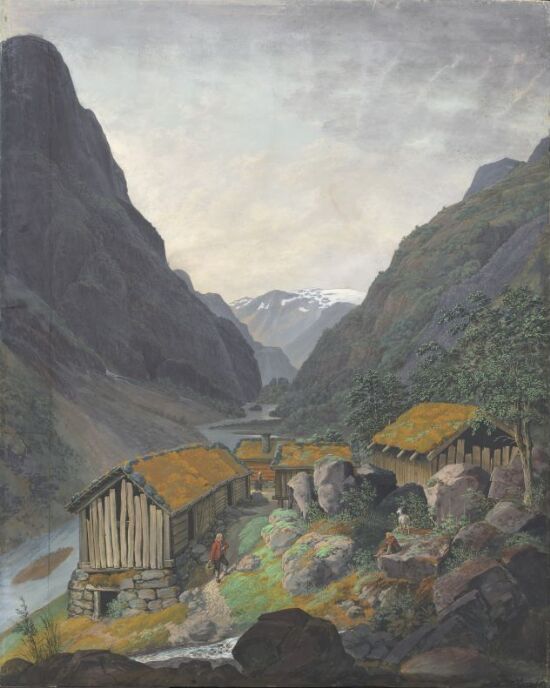 View of Hjelmodalen in Eidfjord, HardangerJohannes Flintoe(1833)
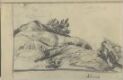
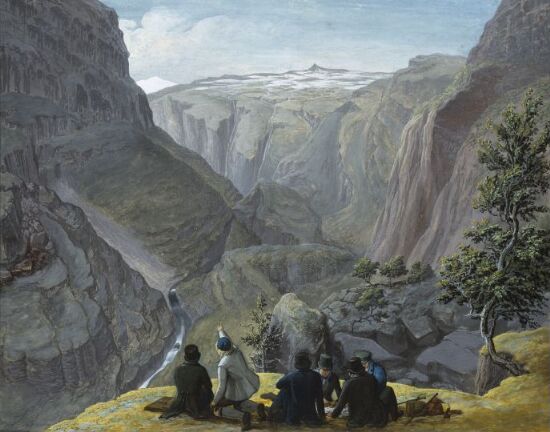 Bjønnestigvarden, AurlandJohannes Flintoe(1820)
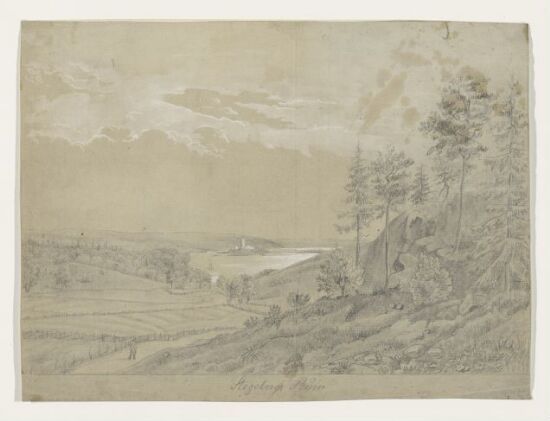 The Ruins of StegeborgJohannes FlintoeAntagelig 1821
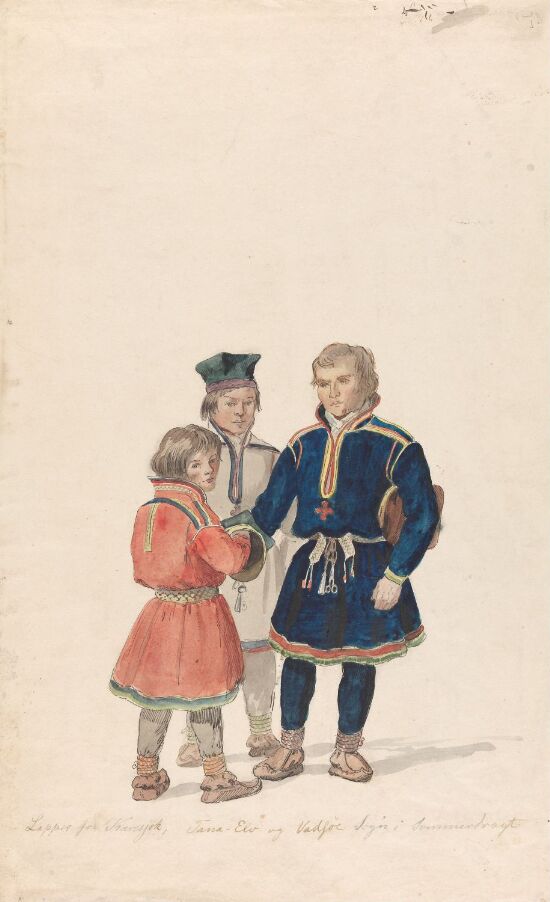 John Isaksen fra Karasjok, Anders Pedersen fra Tana og Hans Mortensen Kolpus fra Vadsø i sommerdrakterJohannes FlintoeEtter 1831
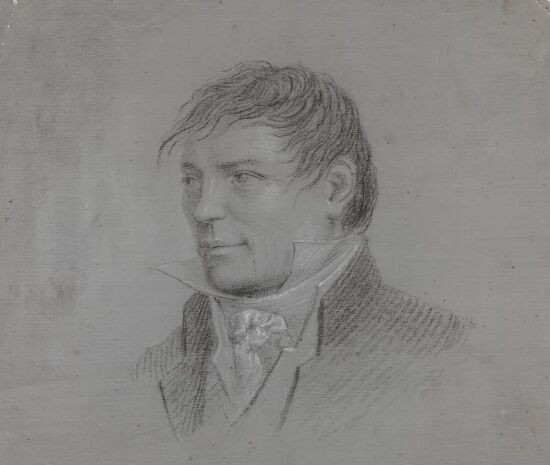 MannsportrettJohannes FlintoeUten år
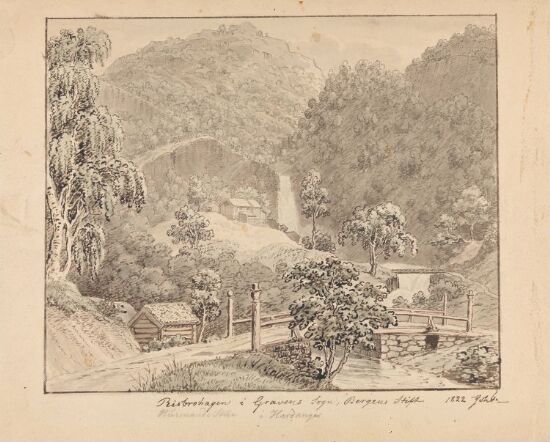 Risbrohagen, Granvin i HardangerJohannes Flintoe1822
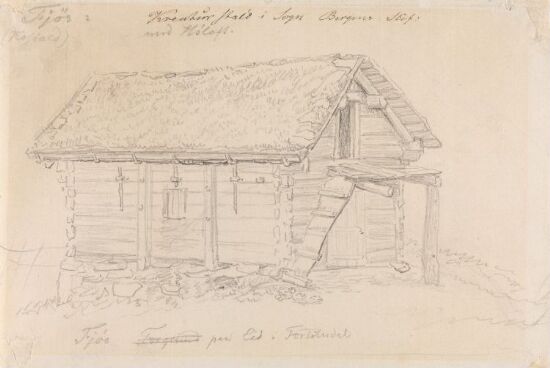 Fjøs med høyloft, FortunsdalenJohannes Flintoe(1822)
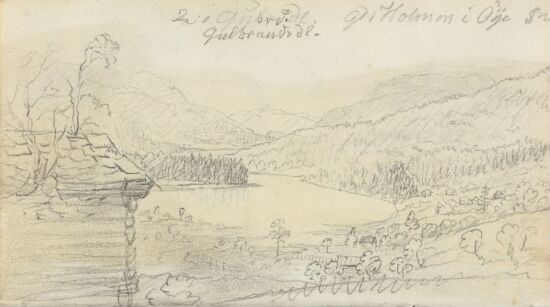 Fra Holmen i GudbrandsdalenJohannes Flintoe(1825)
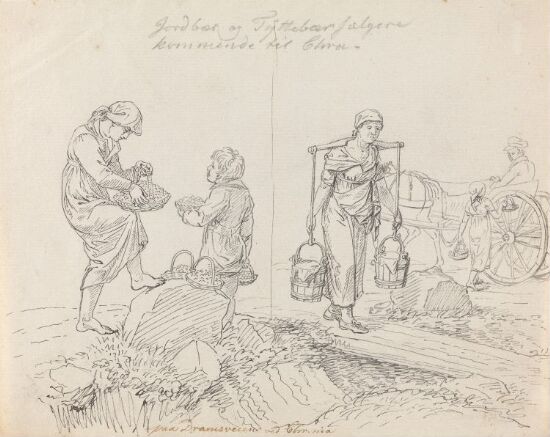 Jordbær- og tyttebærselgere på Drammensveien ved ChristianiaJohannes FlintoeUten år
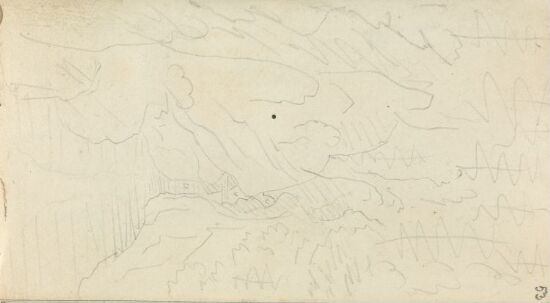 Riss av trangt elvepartiJohannes Flintoe(1825)
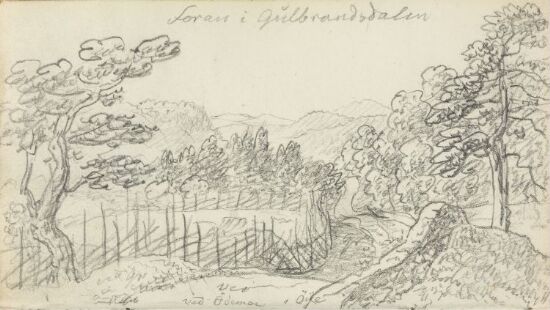 Ved Ødemo i GudbrandsdalenJohannes Flintoe(1825)
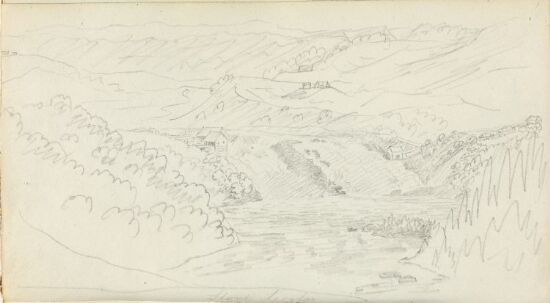 Øvre Leirfoss, TrondheimJohannes Flintoe(1825)