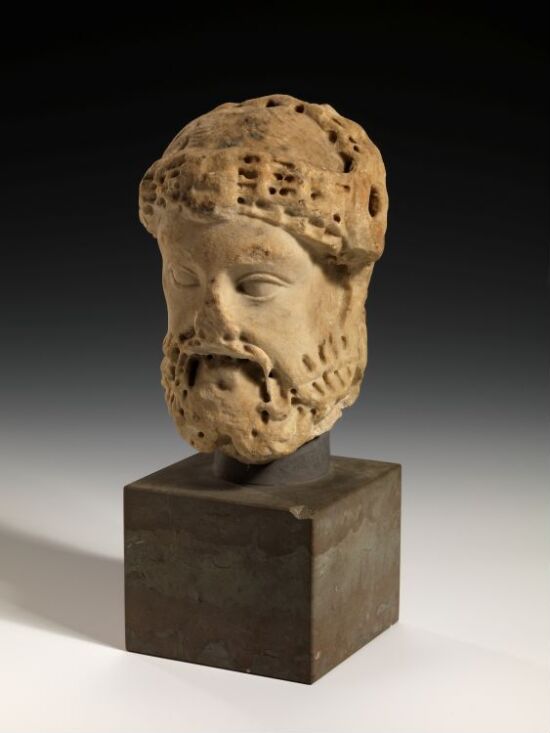
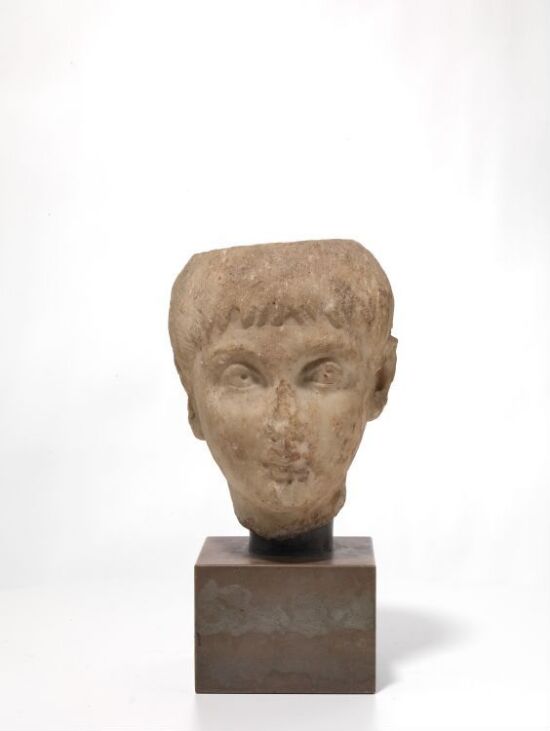
Head of Hermes attributed to Polykleitos
Artists:
- Uidentifisert, romersk
- PolykleitosCopy after
- Creation date: Mellom 40 og 50 e.Kr.
About
In the mid-fifth century BC, the Greek sculptor Polykleitos developed his famous standard of the perfect form. The aim was to find the ideal measure for human proportions and show the harmonious relationship between body and spirit. This standard represents a high watermark in classical Greek art.
Polykleitos’ models are sculpted in the posture known as contrapposto. The body’s weight is on one leg, and the resulting displacements ripple throughout the entire body. Though the head we see here is merely a fragment, the dynamic posture of the body is still evident in how the head slopes and in the transition to the neck on the left-hand side. Polykleitos usually worked in bronze, as evinced here by the sharply delineated lines around the mouth and the eyes. His sculptures were extremely popular and frequently copied, and the head in the National Museum’s collection is a Roman copy in marble from the first century AD, presumably part of a complete statue. The claw-like form of the figure’s hair is typical of Polykleitos’ sculptures that represent the Greek god Hermes. Even though many copies of Polykleitos’ Hermes have been preserved, it is nonetheless not certain that this head is a copy of that work, as it might also be a copy of a representation of the Greek hero Achilles.
According to Polykleitos’ theories, the ideal figure should be youthful without being too young. Despite the idealized visage of the head fragment in the National Museum’s collections, the compressed eyebrows and composed expression show that it is not a youngster who is being portrayed.
- Creation date:
- Mellom 40 og 50 e.Kr.
- Other titles:
- Hode av Hermes attribuert til Polykleitos (NOR)
Romersk kopi av gresk original fra ca. 440 f.Kr. (NOR) - Object type:
- Head
- Materials and techniques:
- finkrystallinsk hvit marmor, gul patina, med et sølvaktig, skimrende glimmerlag
- Material:
- Sten
- Dimensions:
- Width: 21 cm
- Height: 19.6 cm
- Depth: 25.7 cm
- Weight: 26 kg
- Keywords:
- Visual art
- Classification:
- 532 - Bildende kunst
- Motif:
- Sculpture
- Motif - type:
- Mythological scene or figure
- Inventory no.:
- NG.S.01265
- Cataloguing level:
- Single object
- Acquisition:
- Kjøpt i Roma ved Hans Peter L’Orange for Beers legat 1939
- Owner and collection:
- Nasjonalmuseet for kunst, arkitektur og design, The Fine Art Collections
- Photo:
- Høstland, Børre/Børre Høstland
Nasjonalmuseet's collection catalogue is a living resource of information gathered since the 1830's. Some records may contain language or ideas that today could be perceived as outdated, offensive or discriminatory with regard to for instance gender, sexuality, ethnicity or disability, and that may be at odds with the museum's values regarding equality and diversity.
Do you have suggestions for how this record can be improved? We would like to hear from you!
If you would like more information about specific objects in the collection or about objects that haven't been published online, please contact the museum. You can read more about how we work with the collection and our cataloguing practice here.
Other works by Uidentifisert, romersk
Portrait of a boyUidentifisert, romerskMellom 370 og 400 e.Kr.
Head of PriaposUidentifisert, romerskFlavisk-trajansk (mellom 69 og 117 e.Kr.)
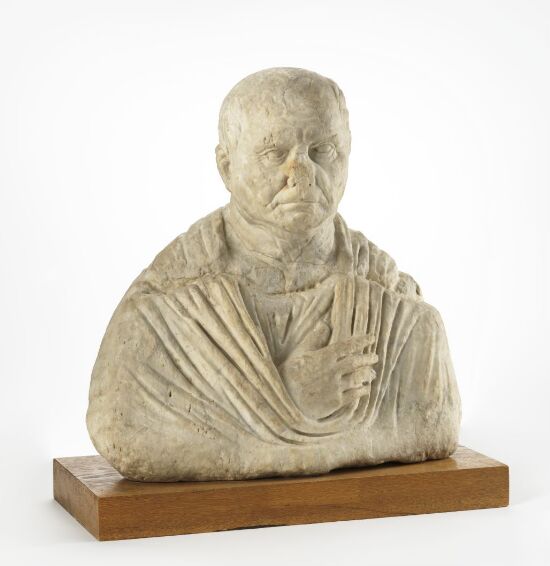
Funerary portraitUidentifisert, romerskCa. 50 f.Kr.
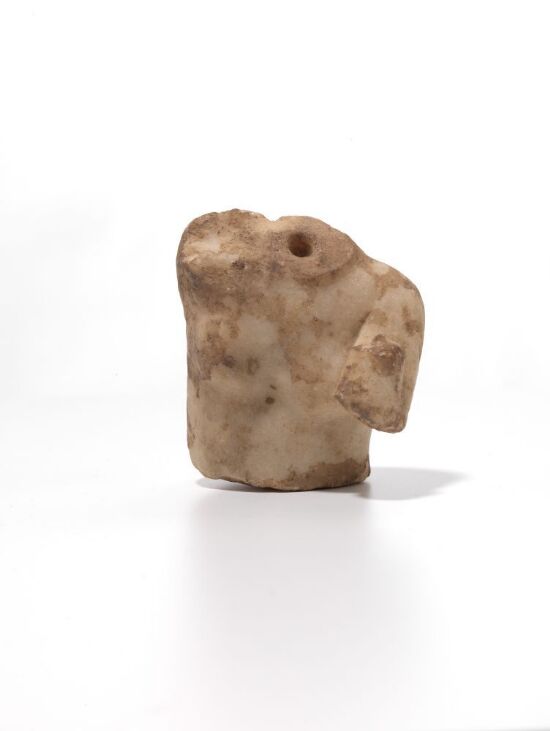
Statuette of Asklepios, Campana typeUidentifisert, romerskMellom 100 og 200 e.Kr.
Aphrodite AnadyomeneUidentifisert, romerskRomersk
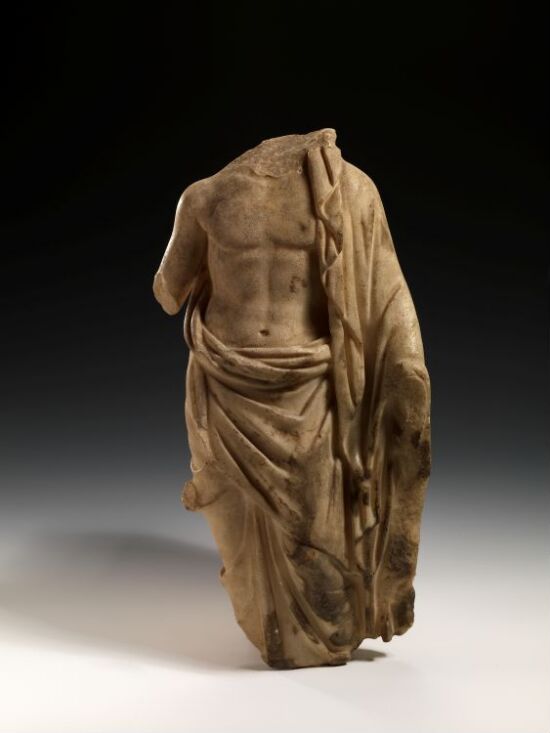
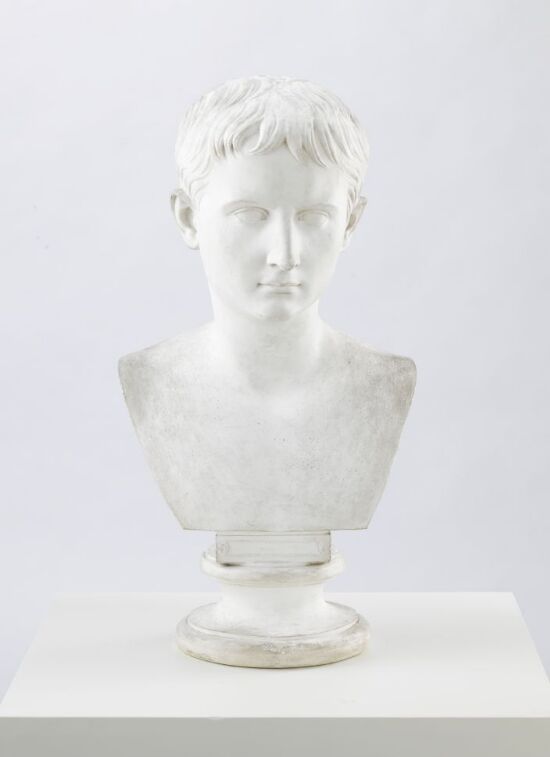
The Young AugustusG. Geiler gipsformator der königliche Akademie der bildende kunsten, Munchen
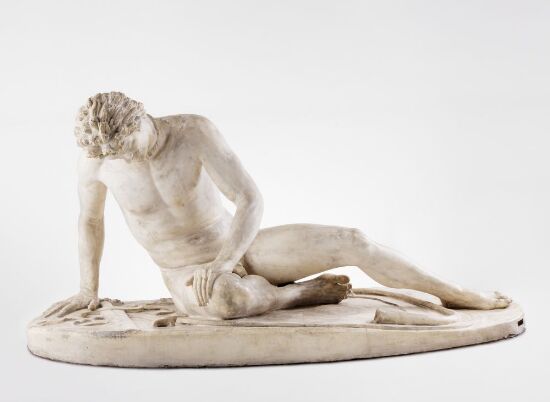
The Capitoline FloraMatthew Brettingham1756
Dying GaulLeopoldo Malpieri, Formatore Roma
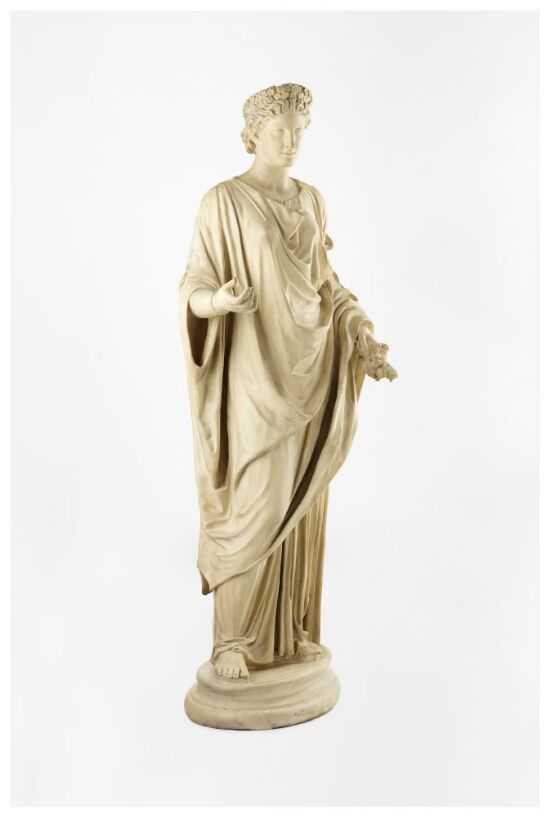
Fountain figure of a SilenusUidentifisert, romersk, Uidentifisert, hellenistiskMellom ca. 150 f.Kr. og 70 e.Kr.
Statuette, Kassel Apollo typeUidentifisert, romersk, Uidentifisert, greskAntoninsk (mellom 138 og 192 e. Kr.)
Two GoddessesJohan Gørbitz, Uidentifisert, romerskFørste halvdel av 1800-tallet
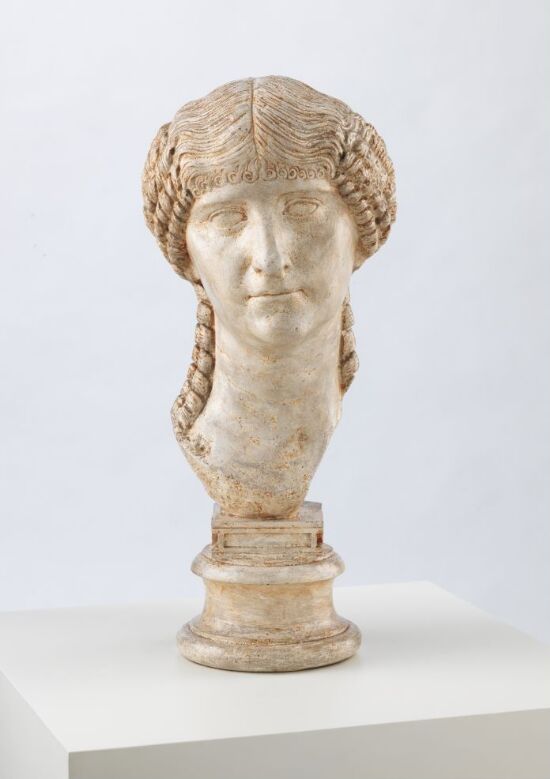
Agrippina minorNy Carlsberg Glyptotek