About
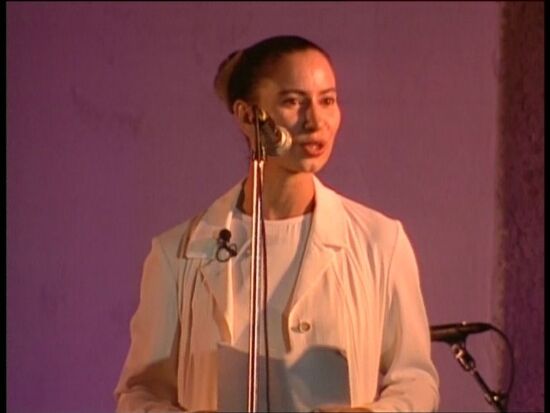
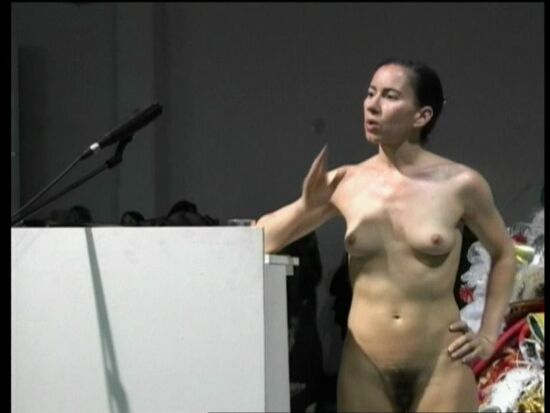
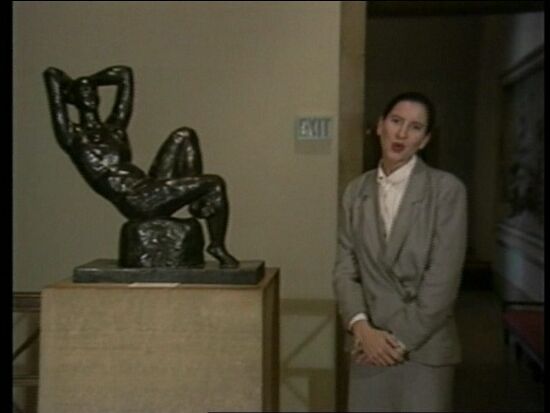
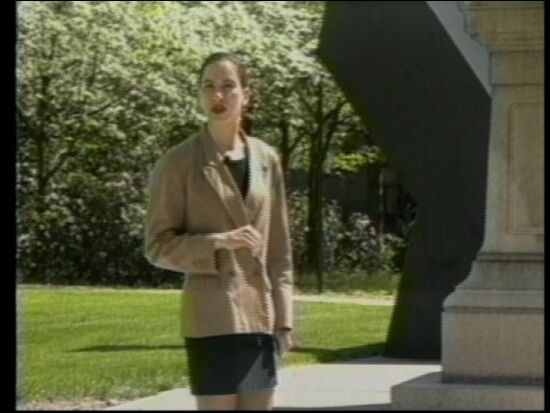
Andrea Fraser lives and works in New York and is one of the leading exponents of the genre of institutional critique. She first came to fame in the mid-1980s for her art gallery lectures and the performances she held in the guise of guided tours at various art institutions. In these works she critically reviewed the modes of presentation, hierarchic structures, and mechanisms of exclusion that she argues are prevalent within the world of art.
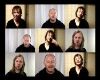
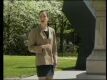
Fraser was invited to the various art institutions to create her performances, which problematized a number of issues concerning museums, private collectors, and the art world in general. In the videos that document her performances, Fraser conveys her message through parody and exaggeration, though always based on her in-depth research and expertise. She writes her manuscripts as a sort of collage based on interviews with artists, curators, art lovers, and other “voices” from the field of art. The performer – either Fraser herself or a hired actor – presents a set of different voices whose juxtaposition brings to light their various social positions. May I Help You underlines the connection between social class and the consumption of art, and was originally performed in 1991 in New York at an exhibition featuring works by the American artist Allan McCollum. During the performance, “tour guides”, who were in fact actors, presented six different perspectives, ranging from a connoisseur who loves art to a person who feels threatened by and excluded from the world of art.
- Creation date:
- 1991
- Object type:
- Video art
- Materials and techniques:
- Video
- Dimensions:
- Duration: 47 s
- Keywords:
- Visual art
- Classification:
- 532 - Bildende kunst
- Inventory no.:
- NMK.2009.0222
- Cataloguing level:
- Single object
- Acquisition:
- Kjøpt 2009
- Owner and collection:
- Nasjonalmuseet for kunst, arkitektur og design, The Fine Art Collections
- Photo:
- Andrea Fraser
- Copyright:
- © Fraser, Andrea/BONO
Nasjonalmuseet's collection catalogue is a living resource of information gathered since the 1830's. Some records may contain language or ideas that today could be perceived as outdated, offensive or discriminatory with regard to for instance gender, sexuality, ethnicity or disability, and that may be at odds with the museum's values regarding equality and diversity.
Do you have suggestions for how this record can be improved? We would like to hear from you!
If you would like more information about specific objects in the collection or about objects that haven't been published online, please contact the museum. You can read more about how we work with the collection and our cataloguing practice here.