607 Temp 1 og 2
Katti Anker Møller
Asta Nørregaard
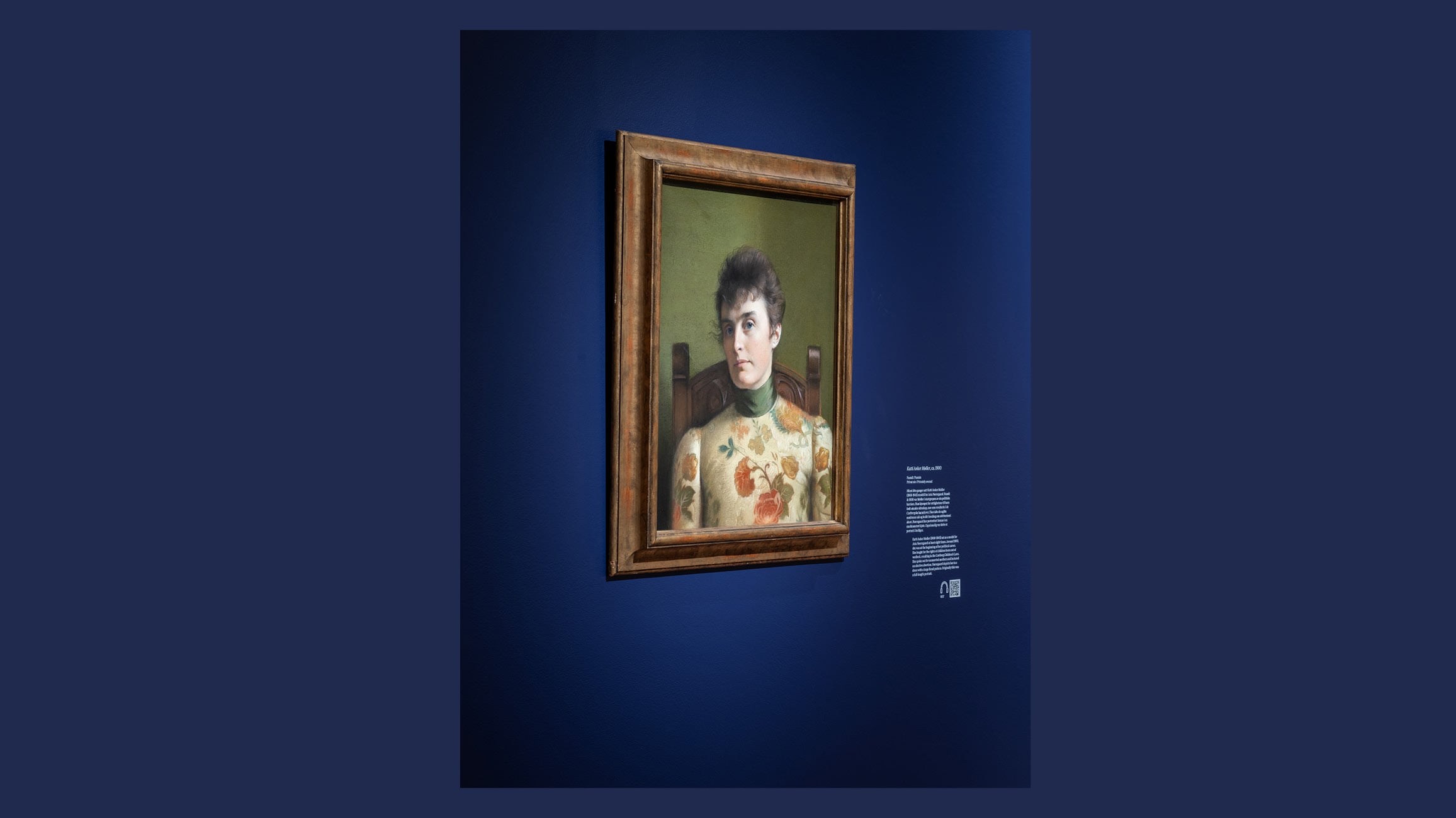
We see Katti Anker Møller – mother of three, and a women's rights activist in the early stages of her political career.
She was married to the landowner and member of parliament, Kai Møller, and was a housewife at Thorsø manor in Østfold (100km south-east of Oslo).
She sat as a model for Asta Nørregaard in her studio apartment at least eight times – probably all in the year 1900.
They knew each other from before – they had met in Rome in 1889, when Katti Anker Møller and her husband were on their honeymoon.
When they met again in connection with the portrait assignment, both were on the threshold of something new and life changing…
Katti Anker Møller was about to emerge as a significant feminist political activist.
She fought for the rights of children born out of wedlock, including giving them the right to their father's inheritance and name.
Together with her brother-in-law, the left-wing politician Johan Castberg, she passed the Castberg Children's Acts in 1915, which legally equalized children born in and out of wedlock – which at the time was a very radical law in a European context.
She also spoke out for unwed mothers and gave lectures on self-determined abortion.
Nørregaard, who was 15 years older, was an established portrait painter with a large clientele.
Life changed for her when she met the women's rights activist Kaja Geelmuyden towards the end of the 1890s. She gained a life-partner, and she became more politically aware of women.
Women's rights bind Nørregaard and Anker Møller together. Nevertheless, Nørrregaard has portrayed her more as a landowner's wife – in a floral-patterned dress. This is because, in her political work, she dressed more toned-down in her simple "lecture dress", as she called it herself.
In 1901, Thorsø Manor was rebuilt after a fire. Katti Anker Møller moved back to the estate and accelerated her political work.
Her portrait was placed in the new main house on the estate, which in turn became an important cultural and political meeting place for prominent figures in the arts, science and politics – such as the winner of the Nobel Prize in Literature, Bjørnstjerne Bjørnson, amongst others.
In the following years, Nørregaard portrayed several important women's rights activists.