609 Temp 1 og 2
Marthine Cappelen Hjort
Asta Nørregaard
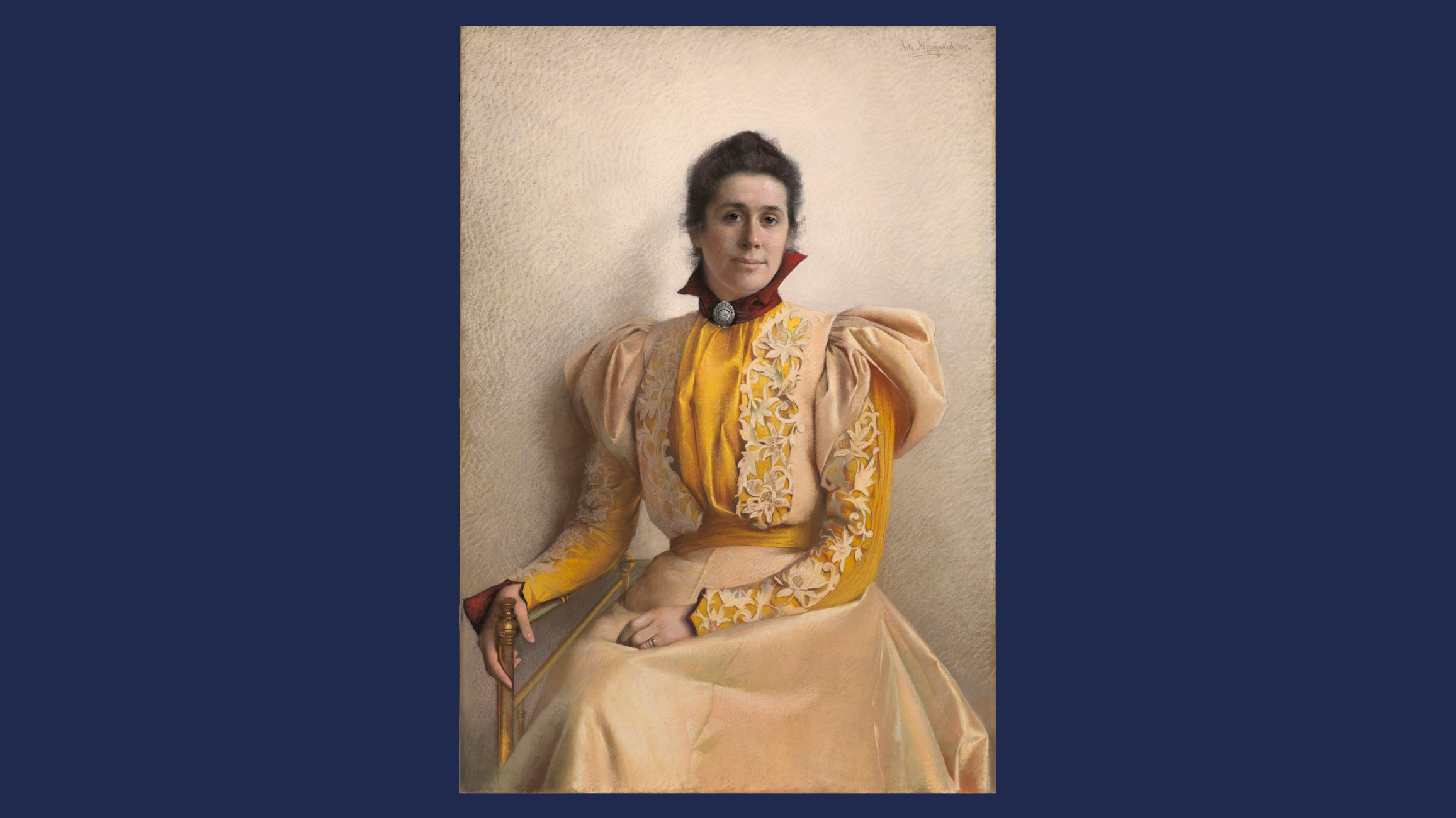
There are few places where Nørregaard's pastel technique is as strongly expressed as in this portrait of Marthine Cappelen Hjort from 1897.
The luxurious silk dress has a red collar and red cuffs that contrasts with the yellow draped dress, bodice and sleeves.
The colour choice is reflected in the weave of the silk fabric, where red threads are woven in one direction and yellow threads in the other.
This creates a colour-changing silk fabric depending on how the light falls.
At that time, these “shot silk” fabrics – where the two directions of thread create a shimmering colour sheen – were called "sjang-sjang" in Norwegian, after the French word "changeante" – meaning changeable.
Such silk fabrics were a fashion phenomenon! For example…
When Queen Maud married in 1896, her so-called "going-away" outfit consisted of a silk dress with a cape made from shot silk.
In this portrait, the shimmering surface of the silk seems to change colour before our eyes, masterfully rendered in pastel.
The artwork is both a portrait of Marthine Cappelen Hjort, but also a “portrait” of a dress, of the latest fashion of the time.