605 The National Museum – Architecture
The Story of Haben
Dessale Berekhet
The Story of Haben
by Dessale BerekhetIt’s a quiet, dark night. Outside my window, snow falls gently, covering everything in white. The only sound is the soft ticking of the clock on the wall. I’m sitting on my bed; the bed I’m trying to sleep in for the very first time.
The room still smells a little like roasted coffee beans and sweet incense. Sometimes, Mom brings her Eritrean coffee ceremony in here, and the warm smell stays for hours.
My brother Dejen is already fast asleep on the other side of the bed. But I can’t sleep. My thoughts keep spinning as I think about how everything in our home is starting to change. Maybe if I write down my story, I’ll understand my feelings better.
My name is Haben. I’m nine years old, and I came to Norway when I was five.
When Mom and I fled from Eritrea to Sudan, I was only two years old, and Mom was pregnant with Dejen. If the soldiers had caught us at the border, they might have thrown us into prison; with no food or water.
Mom once told me that when we finally crossed into Sudan, she fell to her knees, kissed the ground, and whispered a prayer. I didn’t understand it then. I was just a baby, but now I think it was because she knew we were safe.
We stayed in Sudan for three years. That’s where Dejen was born, and I became a big sister. I still remember how things changed then. Before, I used to sit in Mom’s lap and feel like I had her all to myself. But when Dejen came, I had to scoot over and share her hugs.
The house smelled different from back home in Eritrea. Maybe it was the spices Mom used when cooking, or the dusty wind that always slipped through the cracks. I didn’t like that wind. It blew sand in my eyes and made me sneeze.
But Sudan wasn’t our last stop. After three years, we had to move again; it was a long, scary journey. We rode in a big, crowded truck, bumping over dry land for days and days. That’s how we crossed the Sahara Desert.
I had heard grown-ups say the Sahara was huge and empty. But when I saw it with my own eyes, it felt even bigger; just sand, sky, and silence. I held tightly onto Mom’s scarf to block the sun and dust from my face.
Then came the sea. We crossed the Mediterranean in a small rubber boat filled with people. It was shaky and crowded, and the water seemed to go on forever. I don’t remember how long we were out there, but I remember how quiet everyone was. Maybe we were lucky. There weren’t any big storms like the ones people talk about. I held Mom’s hand the whole time.
In the end, we came to Norway. I remember stepping out and seeing snow for the first time. It looked like clouds had fallen from the sky—white and soft. Everything felt still and new. The cold air stung my cheeks.
In Norway, we got a big bedroom with a bed big enough for all three of us. There was also a smaller room with a single bed for guests.
At bedtime, Mom always reads us stories. Sometimes they’re folk tales from Eritrea—like the one about Zingbaba, the beautiful child, and the magic tree. But my favorite story is about the tricky fox and four oxen, each a different color.
Every night, the oxen slept facing in four directions so they could watch out for each other. But the fox made a deal with the wild beasts and started telling lies. “The white ox is too easy to see at night,” she whispered. And the three oxen believed her and sent the white one away. Then the beasts came and ate him.
After that, the fox kept lying until the oxen stopped trusting each other. Once they were alone, the wild beasts attacked them one by one. The tricky fox got the leftover pieces the beasts had promised her. I hope there aren’t many people like that fox back in Eritrea.
After the stories, Mom scratches our heads. It makes me sleepy. But Dejen always has a million questions.
“Why are elephants so big but ants so small?”
“Where do fish drink water from?”
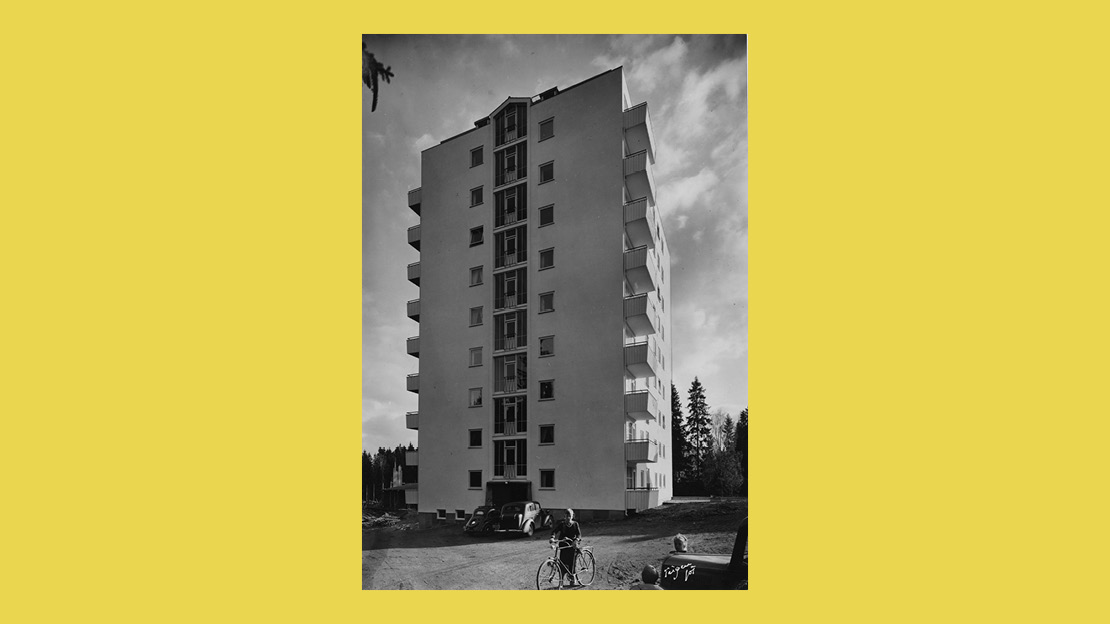
“Why do we sleep at night?”Image: Erling Viksjø, Snippen, Luftforsvarets boliglag A/S, Oslo, 1953–54, Nasjonalmuseet. Foto: Teigens fotoatelier/DEXTRA Photo/Norsk Teknisk Museum