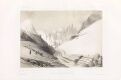
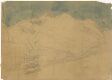
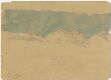
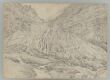
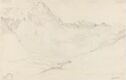
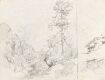
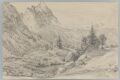
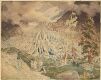
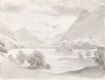
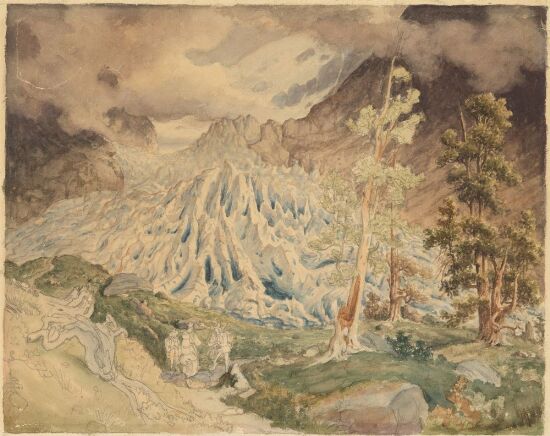
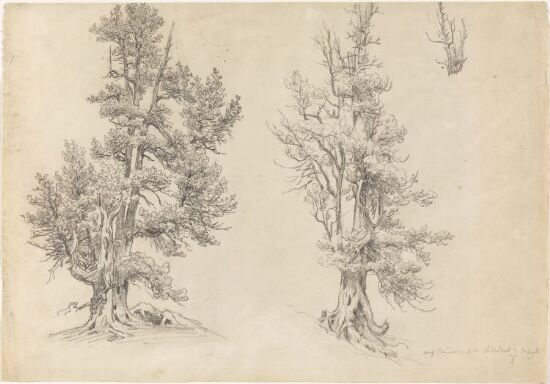
In The Grindelwaldgletscher, the highlight of Thomas Fearnley’s Swiss landscape paintings, the viewer gazes up from the grassy knoll in the foreground toward the bottom of a valley filled by a glacier. The majestic composition is based on Fearnley’s on-site observations. A sketch in pencil from August 1835 reveals a barren landscape in front of the glacier. The large trees, which form such an essential part of the picture’s overall composition, stem from studies of trees Fearnley made a week later in Scheideck.
Fearnley has made the landscape more overpowering than in the original on-site drawing. The mountainsides are steeper and have been accentuated through light and shadow. The contrast to the everlasting ice and snow of the desolate valley is heightened by the lush vegetation in the foreground, where sheep graze under a shepherd’s supervision. Fearnley emphasizes the wild, inaccessible aspects of nature by letting a bird of prey glide above the glacier, even as he playfully includes a visual, English-based pun on his name by adding a tuft of fern next to his signature.
Scholars have noted how the composition and the balancing of the various landscape elements evoke the Düsseldorf painter Johann Wilhelm Schirmer (1807–63), whom Fearnley met during his sojourn in Switzerland. In romanticism, a pronounced contrast between warm and cold tones, as seen here, was also perceived as symbolizing the confrontation between life and death.
Before the painting was completed, it was shown at the Paris Salon in 1836. Along with two paintings by J. C. Dahl, this painting and Fearnley’s The Labro Falls at Kongsberg (1837) were the first paintings by Norwegians artists to be acquired by the National Gallery.
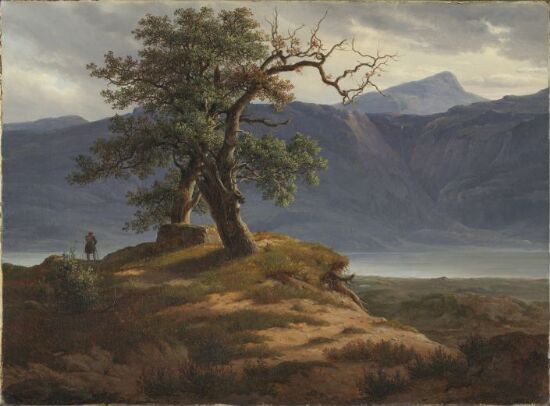 Landscape with a WandererThomas Fearnley1830
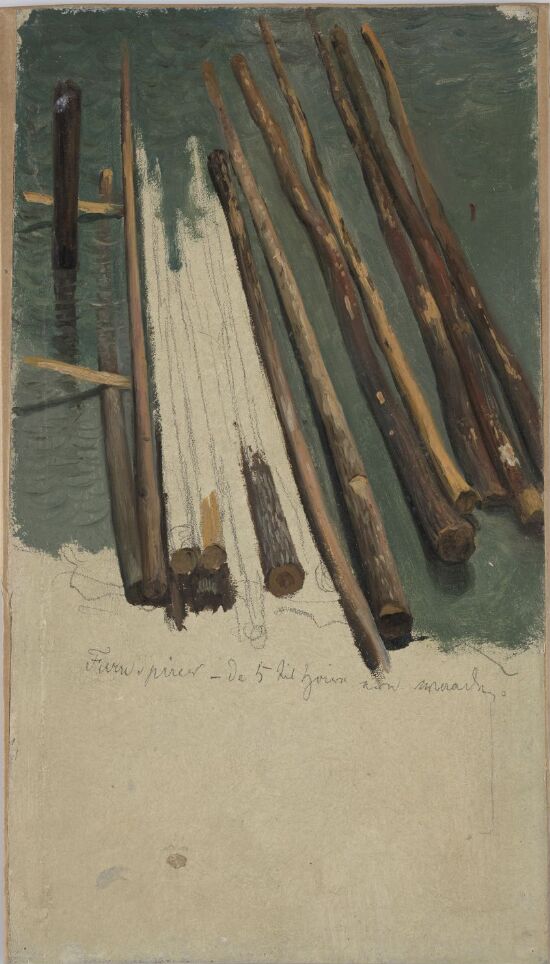 Logs at the BeachThomas Fearnley
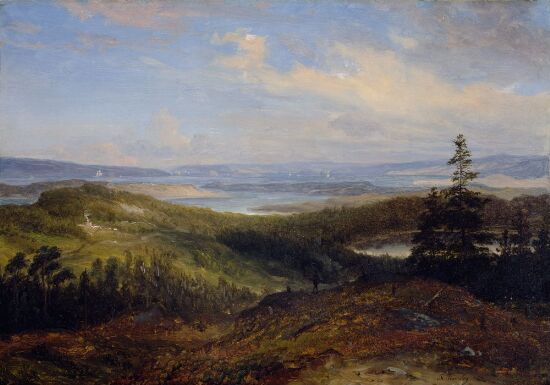 View of the OslofjordThomas Fearnley1839
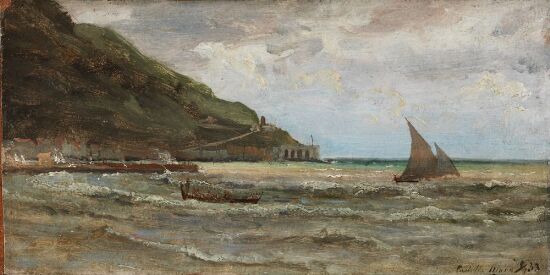 View from CastellamareThomas Fearnley1833
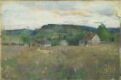
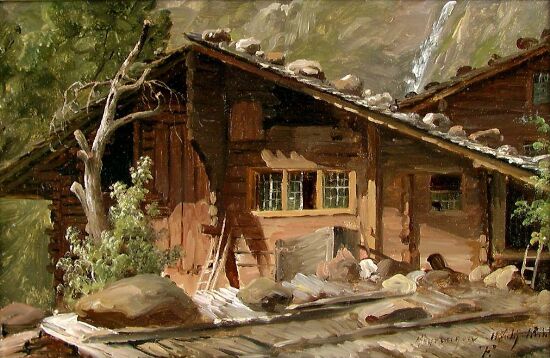 Farmhouses in Meiringen in SwitzerlandThomas Fearnley1835
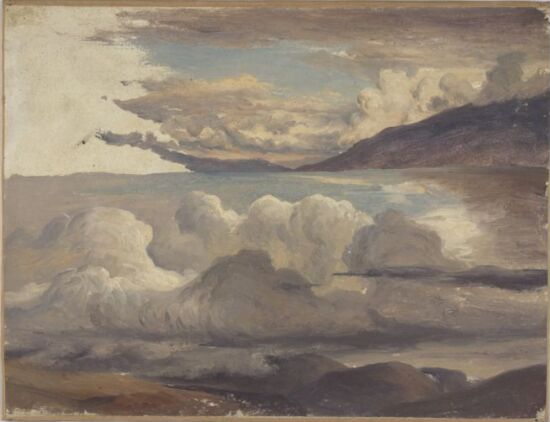 Clouds over the FjordThomas Fearnley
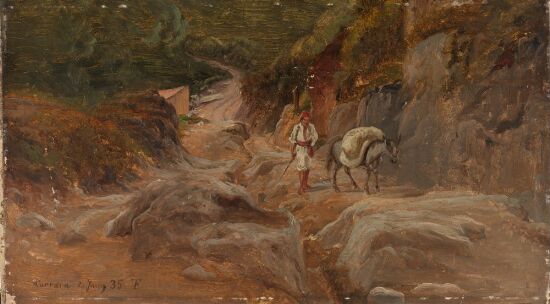 Road in CarraraThomas Fearnley1835
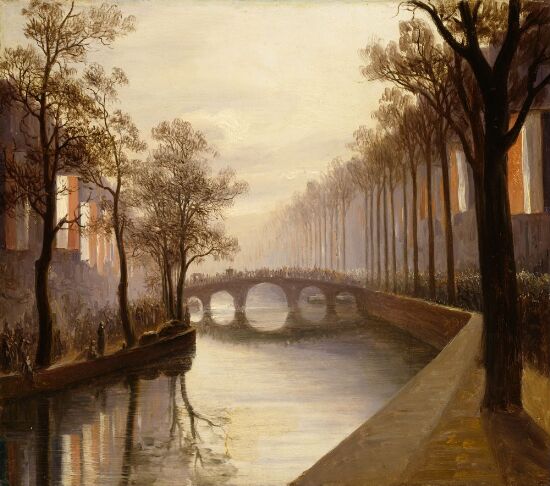 King William II's ceremonial Processsion into Amsterdam in 1840Thomas Fearnley(1840)
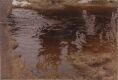
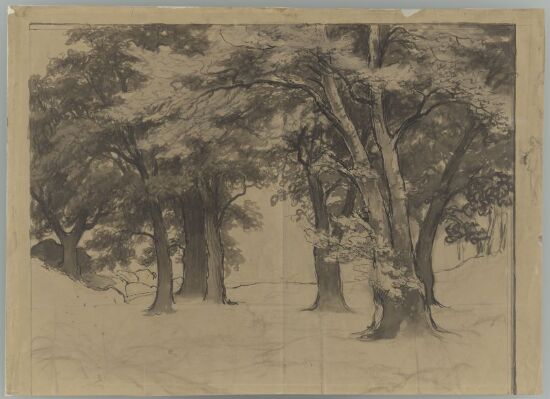 Trees, RydalThomas Fearnley(August 1837)
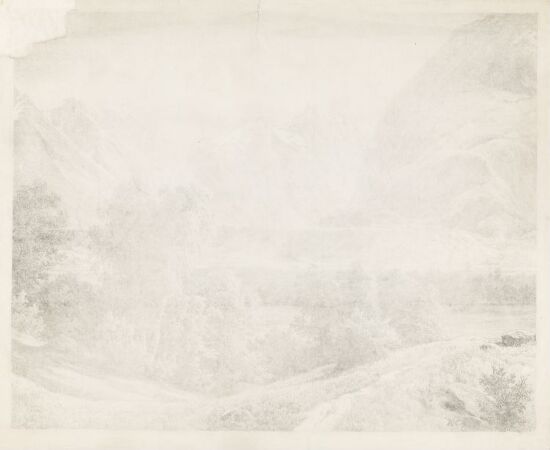 Fra RomsdalenThomas FearnleyAntagelig 1841
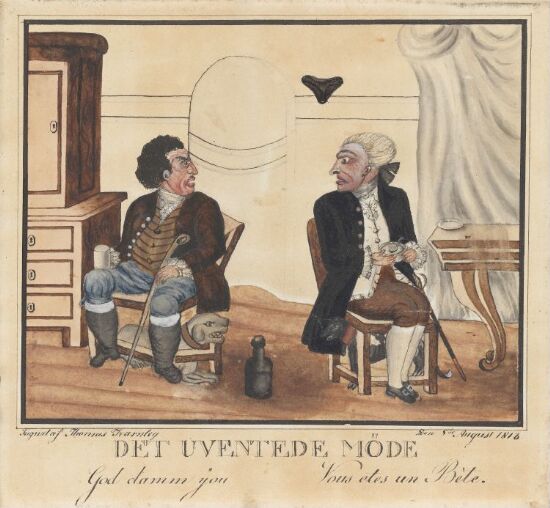 Det uventede møteThomas Fearnley8. august 1818
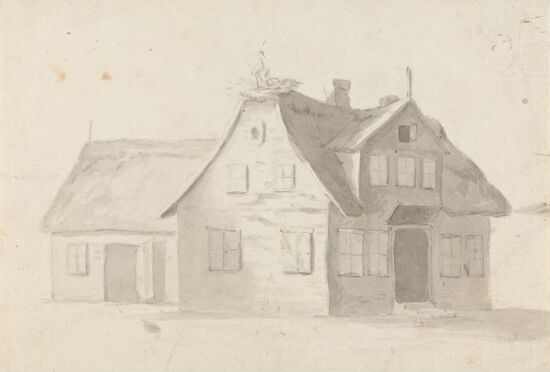 Våningshus med storkeredeThomas FearnleyUten år