Social Programme: Caring for Audiences

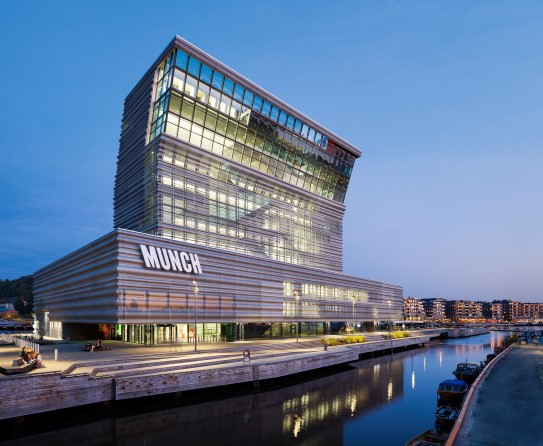
Wednesday, 19.11.2025: 7 pm.
MUNCH, meeting point: MUNCH, Amfi (the round room behind the reception)
Lise Rønneberg, Director of Learning and Audience Engagement, and Christin Fonn Tømte, Head of Learning, will open the evening by introducing the museum and presenting MUNCH’s approach to learning and audience engagement.
Next, Nikita Mathias, Senior Concept Developer, will present the innovation project “Nysnø”. Developed as part of the museum’s MUNCH Lab initiative. “Nysnø” uses artificial intelligence to explore new interactive ways of making Edvard Munch’s archive of approximately 7,000 drawings accessible to a wider audience. The project forms the basis for the exhibition “Munch’s Drawings”, opening to the public in 2026.
After the presentation, everyone is welcome to join us upstairs at our cocktail bar, Kranen, for mingling.
MUNCH: The new museum building by Bjørvika, at the harbor in Oslo houses the works of Norway's most famous artist, Edvard Munch (1863-1944). The museum collection was bequeathed to the municipality of Oslo in 1940. The museum has 11 exhibition halls with different approaches to Edvard Munch's art and life, in addition to contemporary art and other international modernists. The monumental works, the largest paintings Edvard Munch ever made, can be experienced in a specially built hall that extends over two floors. The building, also called Lambda, which was completed in 2021, has a distinctive architecture and was designed by the Spanish architectural studio Estudio Herreros.
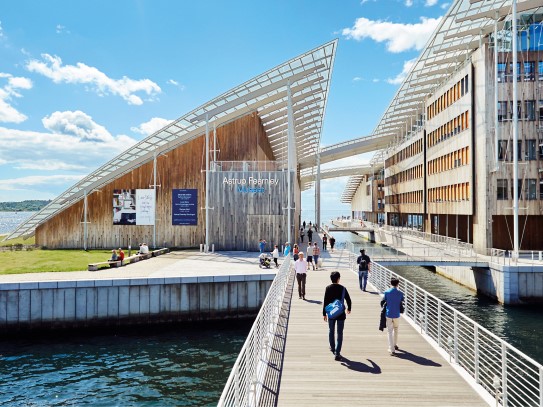
Thursday, 20.11.2025: 5:30 pm, visit to the Astrup Fearnley Museet.
Join a guided tour of the museum’s current exhibition. Burning the Days at Astrup Fearnley Museet presents the first comprehensive retrospective of Lutz Bacher’s work in Norway.
With a career that spans more than 40 years Lutz Bacher’s (1943-2019) oeuvre occupies a distinctive and elusive position within contemporary art, characterized by its exploration of identity, gender norms and their inherent power dynamics, and the human condition. Her work delves deeply into themes of sexuality, politics, violence, and societal norms, frequently challenging the observer to confront uncomfortable truths. At the same time, her work also provides humor and references to popular culture.
The pieces selected for this upcoming show are chosen to highlight the many angles Lutz Bacher treated the subject of contemporary society, whilst also showing how she used material in a very specific way.
The guided tour lasts 50–60 minutes.
The Astrup Fearnley Museum is one of the largest museums for contemporary art in the Nordic region. The museum manages the extensive Astrup Fearnley collection and presents changing exhibitions with both works from the collection and new productions by artists from all over the world. The museum is located in Oslo's harbor area, at the edge of Tjuvholmen. The building was designed by the Italian architect Renzo Piano and is surrounded by the Tjuvholmen sculpture park.
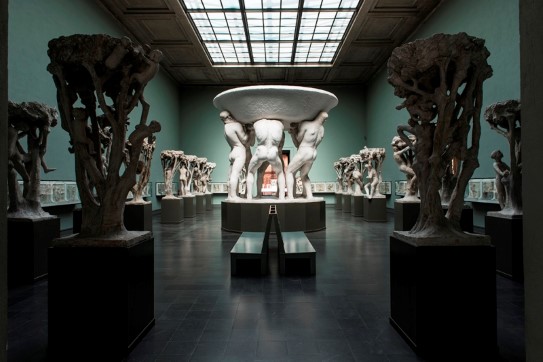
Friday 21.11.2025: 5pm, Closing reception at the Vigeland Museum.
5:00 PM:
Jarle Strømodden, director of the Vigeland Museum, welcomes everyone to the Vigeland Museum. A brief introduction to the museum (approx. 10 min). Mingling.
5:30 PM:
Participants who wish to see Vigeland’s artist home will be assigned a time by the museum staff. These tours last about 15 minutes.
5:30 PM – 7:45 PM:
Continued mingling and the opportunity to see the Vigeland collection and the exhibition about the sculptor Ambrosia Tønnesen (1859–1948) on your own.
8:00 PM: The museum closes.
The Vigeland Museum is the former studio and residence of sculptor Gustav Vigeland (1869–1943). The museum, which opened in 1947, presents the development of Vigeland’s artistic career and offers a unique insight into the history of the Vigeland Park. You can also learn more about how the sculptures were made. The museum features a permanent collection exhibition where you can experience some of the sculptor’s earliest works, his well-known monuments and portrait busts, as well as the full-scale plaster originals of the iconic works found in the Vigeland Park. In addition, the museum hosts temporary exhibitions of contemporary art. The building, designed by architect Lorentz Ree, is one of Norway’s finest examples of neoclassical architecture.