302 The Light Hall
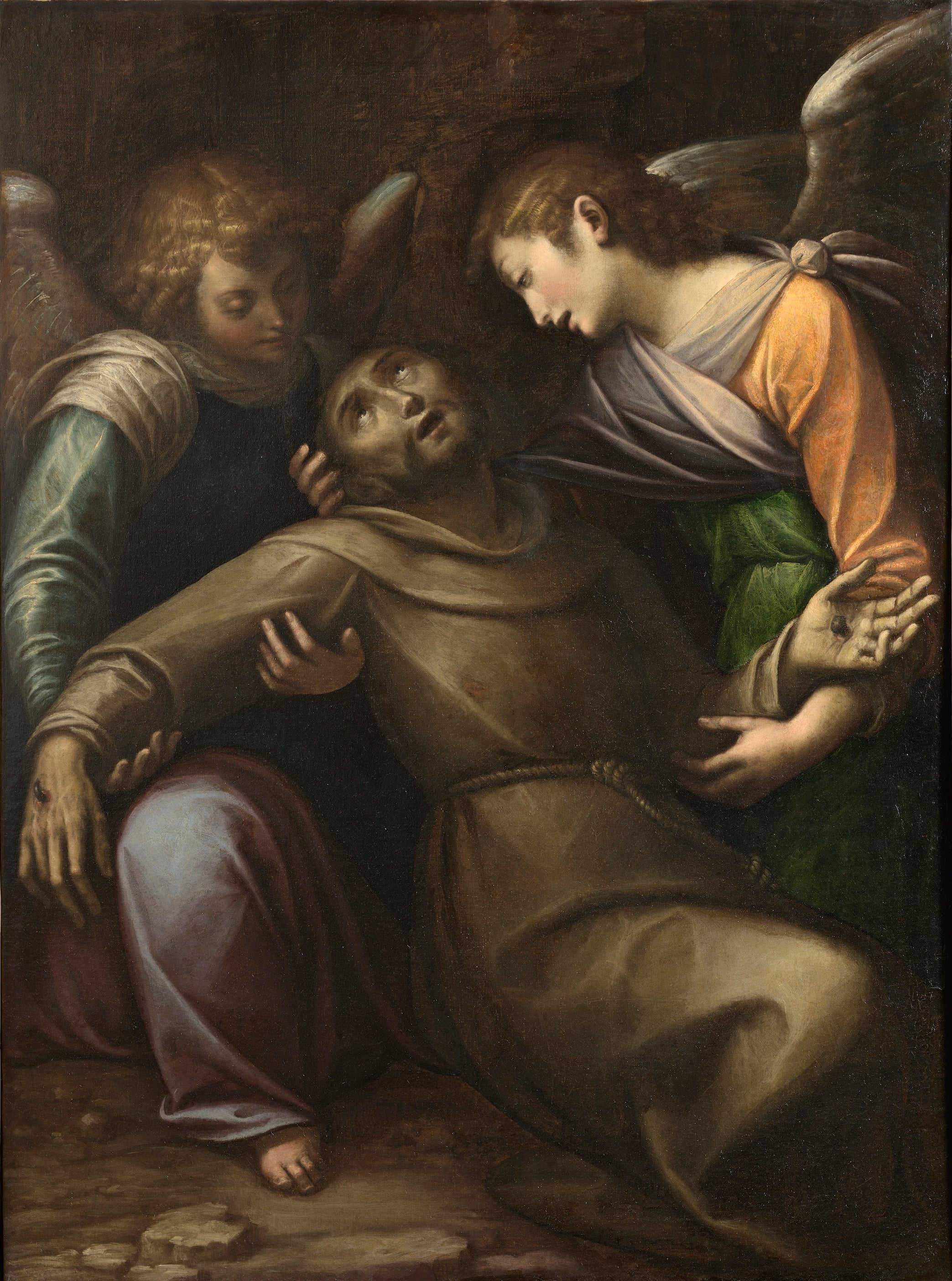
Saint Franciscus Comforted by Two Angels
Orsola Maddalena Caccia Guglielmo Caccia
Narrator
Orsola Maddalena Caccia – later known as Sister Orsola after joining the Ursuline order – is one of many female artists who were overlooked by art history for a long time and only rediscovered much later.She spent most of her life in a convent, moving constantly between prayer and art. While other painting nuns are known today – like Plautilla Nelli in the 16th century – few produced such a large body of work as Orsola did.
Here’s Cynthia Osiecki, art historian at the National Museum, to tell us more.
Cynthia Osiecki
She was born Theodora Caccia in 1596, the daughter of the artist Guglielmo Caccia. And in 1620, when she was 24, she took her vows and became Sister Orsola. A few years later, she moved into a convent that her father had founded. He eventually sent all six of his daughters there.Orsola learned to paint by assisting her father. She often worked on coloring or painted smaller figures within his compositions. Over time, she developed her own artistic practice inside the convent, and she even began teaching pupils of her own, and took on apprentices.
Her work includes still lifes, portraits, and larger altarpieces.
Narrator
The painting Saint Francis of Assisi Comforted by Two Angels belongs to the most formal genre she worked in. Today, it’s believed to be a collaboration between father and daughter.Cynthia Osiecki
Here we can see Saint Francis collapsing after receiving the stigmata – the marks of Christ’s wounds in his hands and feet. The motif became popular toward the end of the 16th century and functions as an echo of Christ’s Passion.According to the Gospel of Luke, Christ’s body is supported and comforted by an angel. That moment foreshadows the famous Pietà motif – where a dead Christ is resting in Mary’s arms.
We see that same idea mirrored here. Francis is presented as Alter Christus – another Christ – someone whose life and suffering so closely resemble Christ’s that he becomes a kind of living image of him.
Narrator
In the painting, Francis’s body almost forms a living crucifix.Two elegant, almost androgynous angels, gently support his body and head. There’s a sense of tenderness, as if they already know that the salvation Francis longs for is close… perhaps even already fulfilled.