303 The Light Hall
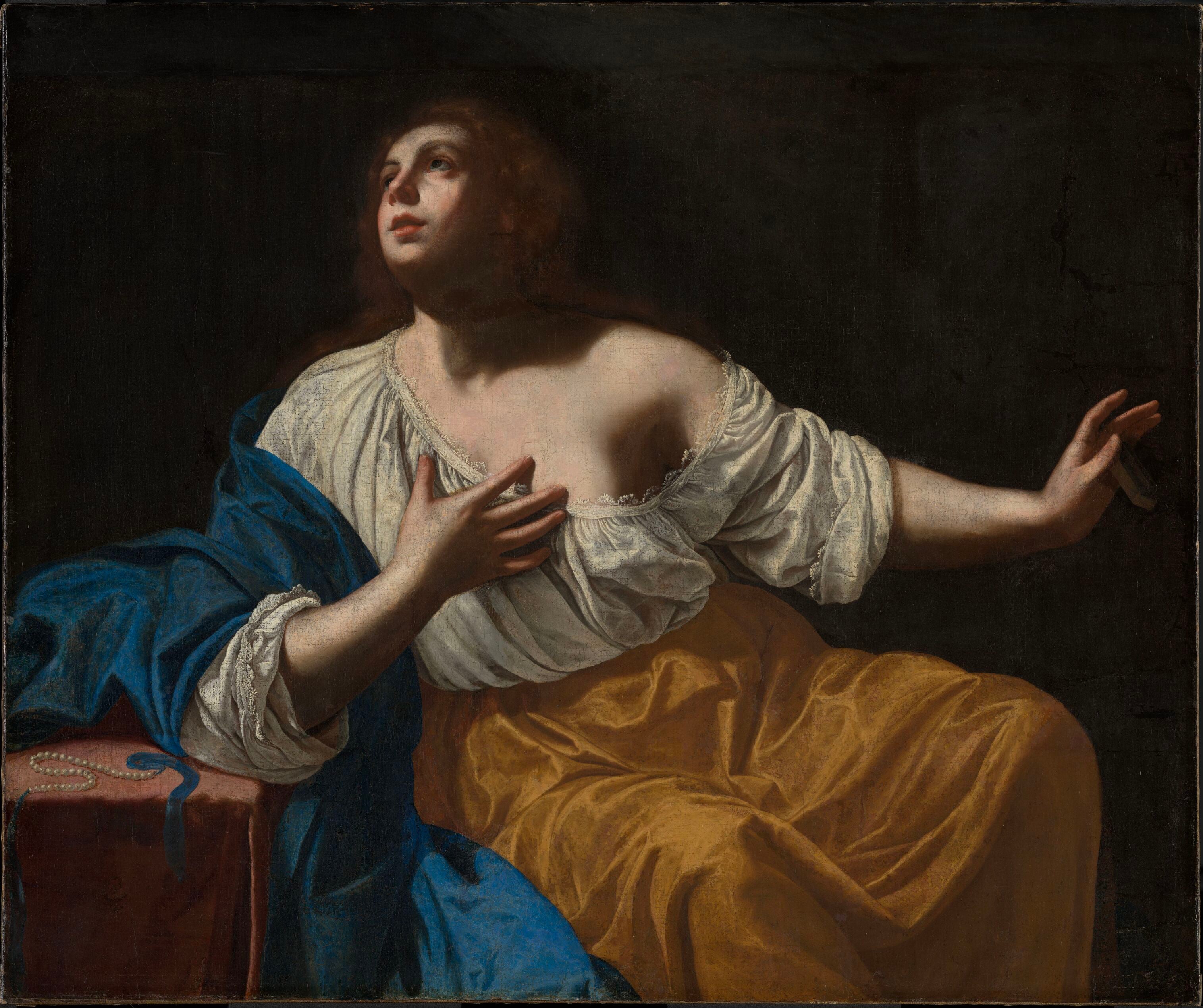
Mary Magdalene Penitent
Artemisia Gentileschi
Cynthia Osiecki
Mary Magdalene holds a particular fascination in art history. In many ways, she can be seen as a darker counterpart to the Virgin Mary.Narrator
This is Cynthia Osiecki, art historian at the National Museum.Cynthia Osiecki
Mary Magdalene is often understood as a symbol of the fallen woman, but also of humanity’s longing for redemption and reconciliation. According to the Gospels of Mark and John, she was present at both the crucifixion and the resurrection, and was the first to see the risen Christ, and to proclaim his return.Narrator
For a long time, the identity of the figure in this painting was uncertain. Some believed it might represent the Carthaginian queen Dido, or even the Egyptian queen Cleopatra.Cynthia Osiecki
Today, it is more widely accepted that the painting depicts the penitent Mary Magdalene. Here, she is shown at a turning point, having left behind a life of sin and now turning toward the light and grace that come from Christ.On the table to the left, you can see a discarded pearl necklace. It serves as a symbol of the old, superficial life she has renounced.
Her clothing is also meaningful. The blue and gold garment can recall the typical colours associated with Saint Peter, while the yellow dress is traditionally associated with the courtesan.
Narrator
The painting is strongly illuminated from the left, set against a dark background, an example of the Baroque technique known as chiaroscuro.Cynthia Osiecki
…the strong contrast between light and dark, used here to create a powerful, dramatic effect.This intense presence of the painting and its theme connects the painting to the Catholic Counter-Reformation. At the time, the Church emphasised devotional art that could move viewers emotionally – art that could inspire devotion and help draw people back to the faith. This in response to the growing influence of Luther and Protestantism.