304 The Light Hall
Judith and Her Maidservant with the Head of Holofernes
Artemisia Gentileschi
Narrator
In the 16th and 17th centuries, the figure of Judith became a powerful symbol of female strength and action.During the Renaissance, books celebrating women’s virtues and knowledge, often presented historical and biblical figures as models.
Cynthia Osiecki
Judith, the Jewish heroine who saves her people from the Assyrians and their general Holofernes, became a kind of prototype. She gains his trust, gets him drunk, and then cuts off his head while he sleeps.In Italian, she represents what’s called donne forti e intrepide – strong and fearless women.
Narrator
This is Cynthia Osiecki, art historian at the National Museum.Cynthia Osiecki
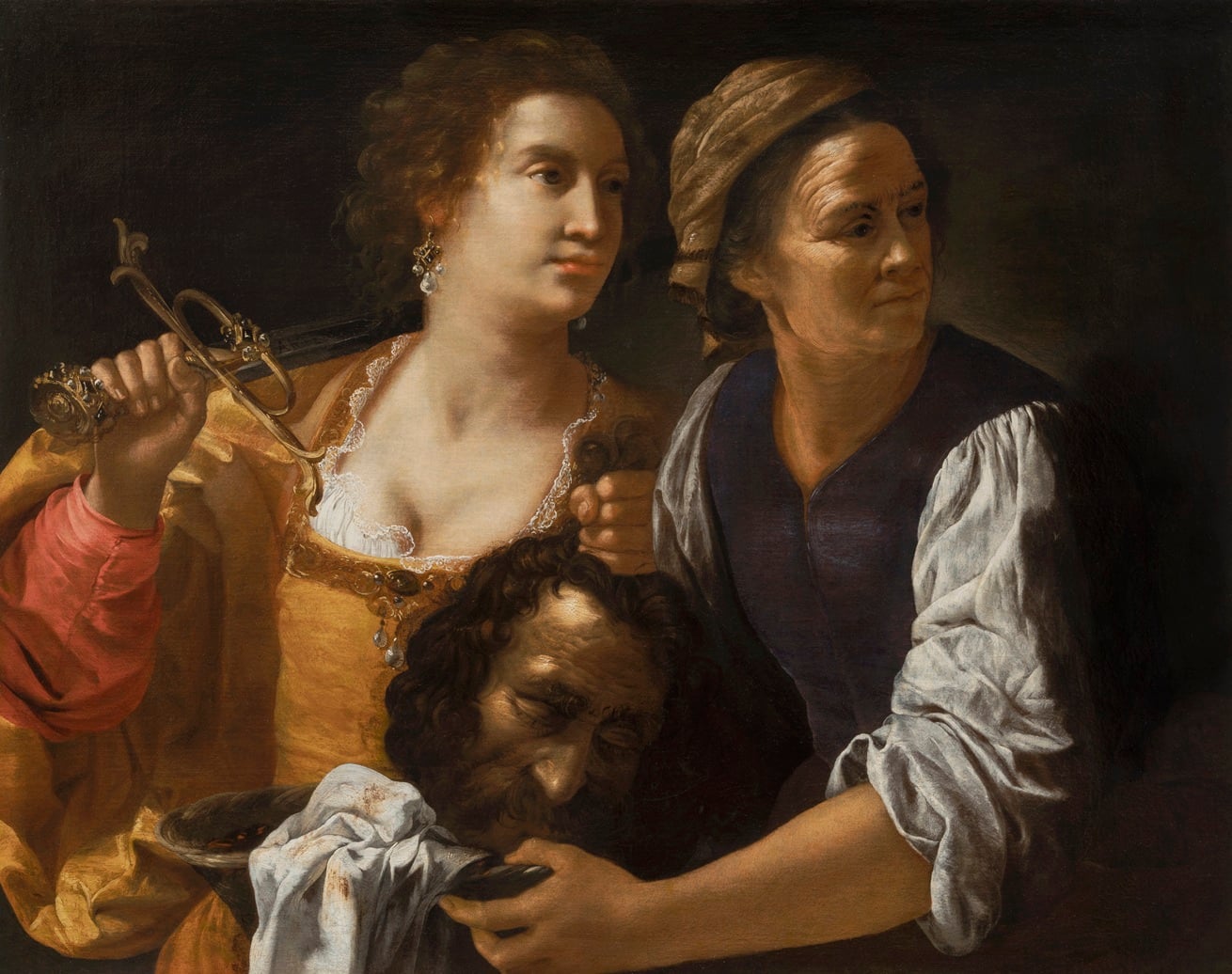
Artemisia Gentileschi is considered one of the greatest painters of the 17th century. She created several versions of this subject. Some versions show the act of killing itself, while others, like this one, depict what happens just after, as Judith and her maidservant deal with the aftermath.The motif had already been popularized by Caravaggio, but Artemisia pushes it further, making it more realistic, and even more brutal.
Narrator
Artemisia stands out as one of the leading artists of her time, regardless of gender. As the daughter of the painter Orazio Gentileschi, whose work is also included in this exhibition, and as the first woman admitted to the art academy in Florence, she was both well known and highly respected in her own time.Cynthia Osiecki
In this painting, Judith rests the sword triumphantly on her right shoulder – the deed is done. With her left hand, she grips the hair of Holofernes’ severed head. Beside her, the maidservant holds a dish, while the cloth meant to wrap the head, is already stained with congealed blood. Both figures glancing sharply to the side, as if checking whether anyone is approaching.The dramatic contrast between the strongly illuminated foreground and the dark background clearly points back to Caravaggio’s chiaroscuro—the groundbreaking use of light and shadow that became central to Baroque painting.