305 The Light Hall
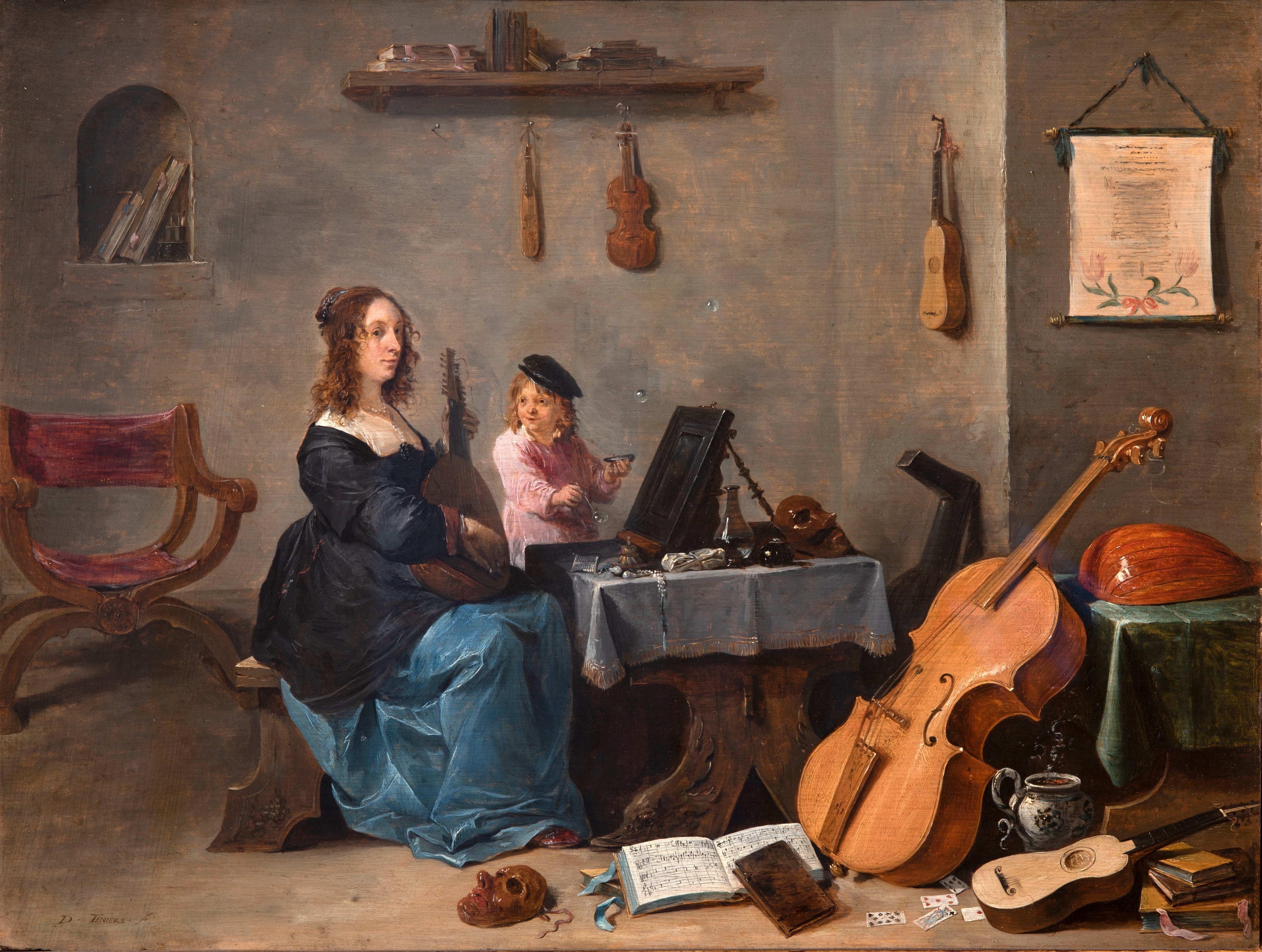
Portrait of Anna Brueghel and her Son David Teniers III
David Teniers II
Narrator
In a somewhat chaotic interior filled with musical instruments, playing cards, and theatrical decorations, the artist’s wife, Anna Brueghel, sits playing the lute. She plays for her young child, but also for us, the viewers, meeting our gaze directly.It’s assumed that she’s actually looking at the artist himself, her husband, David Teniers the Younger.
Here’s Cynthia Osiecki, art historian at the National Museum, to tell us more.
Cynthia Osiecki
Anna Brueghel came from an extraordinary artistic family. She was the daughter of the still-life painter Jan Brueghel the Elder, and the granddaughter of Pieter Brueghel the Elder.Even though we mainly know her today through her husband’s paintings, her network played an important role in his success. In fact, the great artist Peter Paul Rubens was present at their wedding.
David Teniers also came from an artistic family and was the son of the painter David Teniers the Elder. So their marriage really represents the coming together of two great artistic lineages.
Narrator
In 1651, Teniers moved to Brussels. There, he founded an art academy and became part of the circle around Archduke Leopold Wilhelm, even serving as the manager of the archduke’s art collection.But in his own time, he was best known as a genre painter.
Cynthia Osiecki
Genre painting, which the Netherlands in particular became known for, focuses on scenes from everyday life. It looks at ordinary moments within a specific environment, town or community.The tradition developed in the 15th century and reached its most popular phase in the 17th century.
This interior doesn’t depict a tavern scene or peasants at work, which were typical subjects of genre painting. Instead, we see a more intimate scene from a realistic Dutch artist’s home.
Anna Brueghel plays the lute for her child, David, who is blowing soap bubbles. At the same time, she presents herself to the viewer as cultured and refined.
The instrument becomes a symbol of education and along with the other musical and theatrical elements, it creates an image of the cultivated bourgeoisie that was emerging in the low countries at this time.