306 The Light Hall
Self-Portrait as Poet and Painter
Artemisia Gentileschi
Narrator
In the 15th, 16th, and 17th centuries, very few women had the chance to receive formal artistic training. In most cases, it was limited to daughters or sisters of male artists, or women from wealthy families.Artemisia Gentileschi was one of those artists. Her father, Orazio Gentileschi, recognized her talent early on. He became her teacher and introduced her to the craft of painting.
Here’s Cynthia Osiecki, art historian at the National Museum, to tell us more.
Cynthia Osiecki
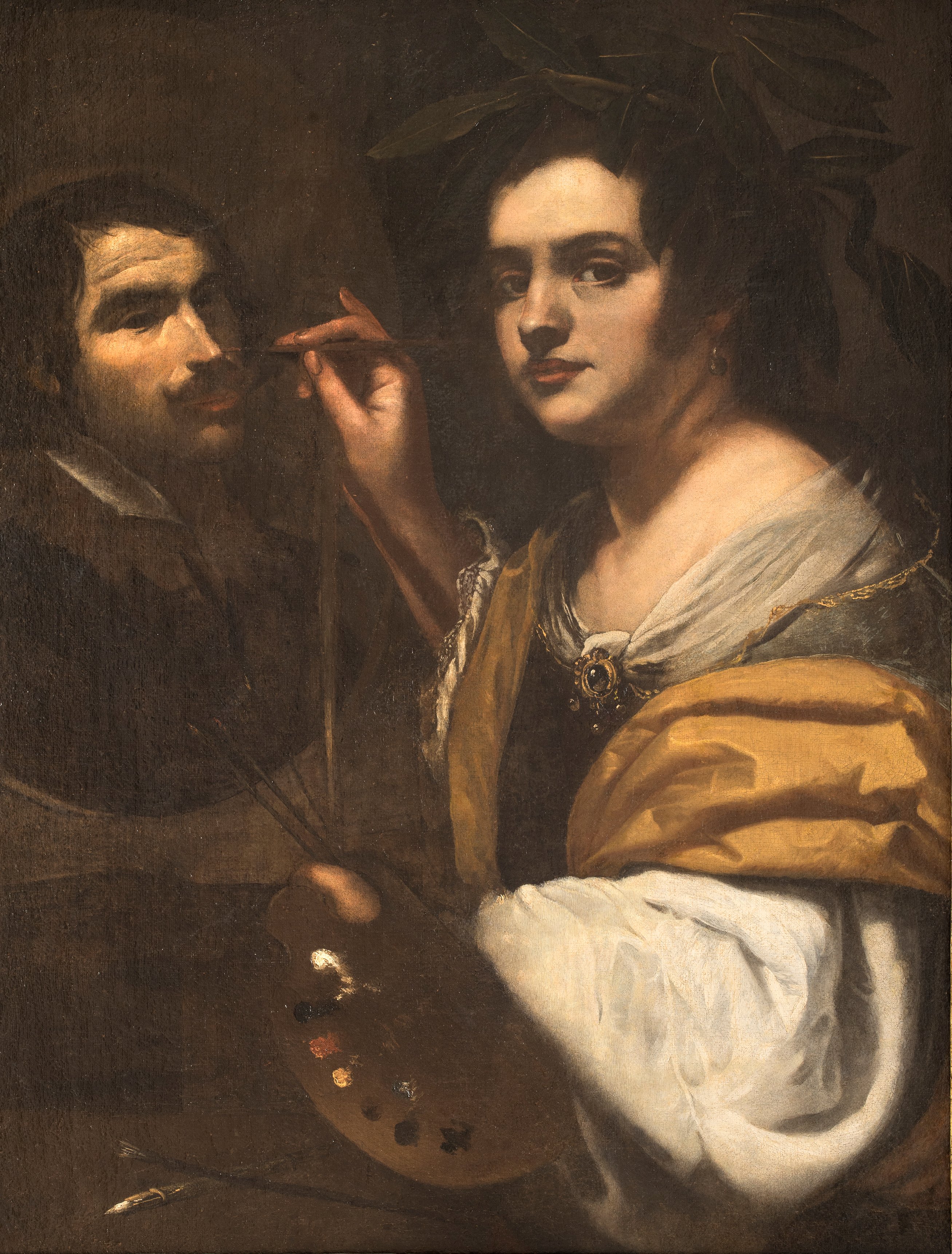
In 1616, Artemisia made history by becoming the first woman admitted to the Accademia delle Arti di Disegno in Florence. Founded in 1563, it’s considered the oldest art academy in the world.In this painting, what we’re seeing isn’t just the artist herself, even though it’s now regarded as a self-portrait. It also represents a broader idea: the image of the artist as a young person. Here, Artemisia functions as a symbol of art itself, La Pittura, or “Painting.”
By presenting herself like this, she makes a powerful statement: that there is nothing preventing a woman from taking on this role.
The laurel wreath on her head is important, too. It symbolizes poetry, and the idea that poetry inspires painting. This goes back to an ancient concept; the connection between the two arts, captured in the Latin phrase ut pictura poesis: “as is the painting, so is the poem.” In other words, a poem is like a speaking picture, and a painting is like a silent poem.
So here, Artemisia is celebrating both artistic talent and poetic abilities.
Narrator
We also know that in 1626, Artemisia exchanged sonnets with the Italian nobleman Pietro della Valle.As for the figure being painted, the identity remains uncertain. It has been suggested that he may be the French painter Simon Vouet, or Artemisia’s lover, Francesco Maria Maringhi, but no one knows for sure.
Cynthia Osiecki
What makes this painting especially interesting is how Artemisia turns the traditional roles upside down. Instead of a man painting a woman, we have a woman painting, and even depicting, a man.Here, the woman becomes the subject, and the man the object. The woman looks; the man is looked at.
That laurel wreath is not only an ancient symbol of victory and honour… it also signals artistic genius.