307 The Light Hall
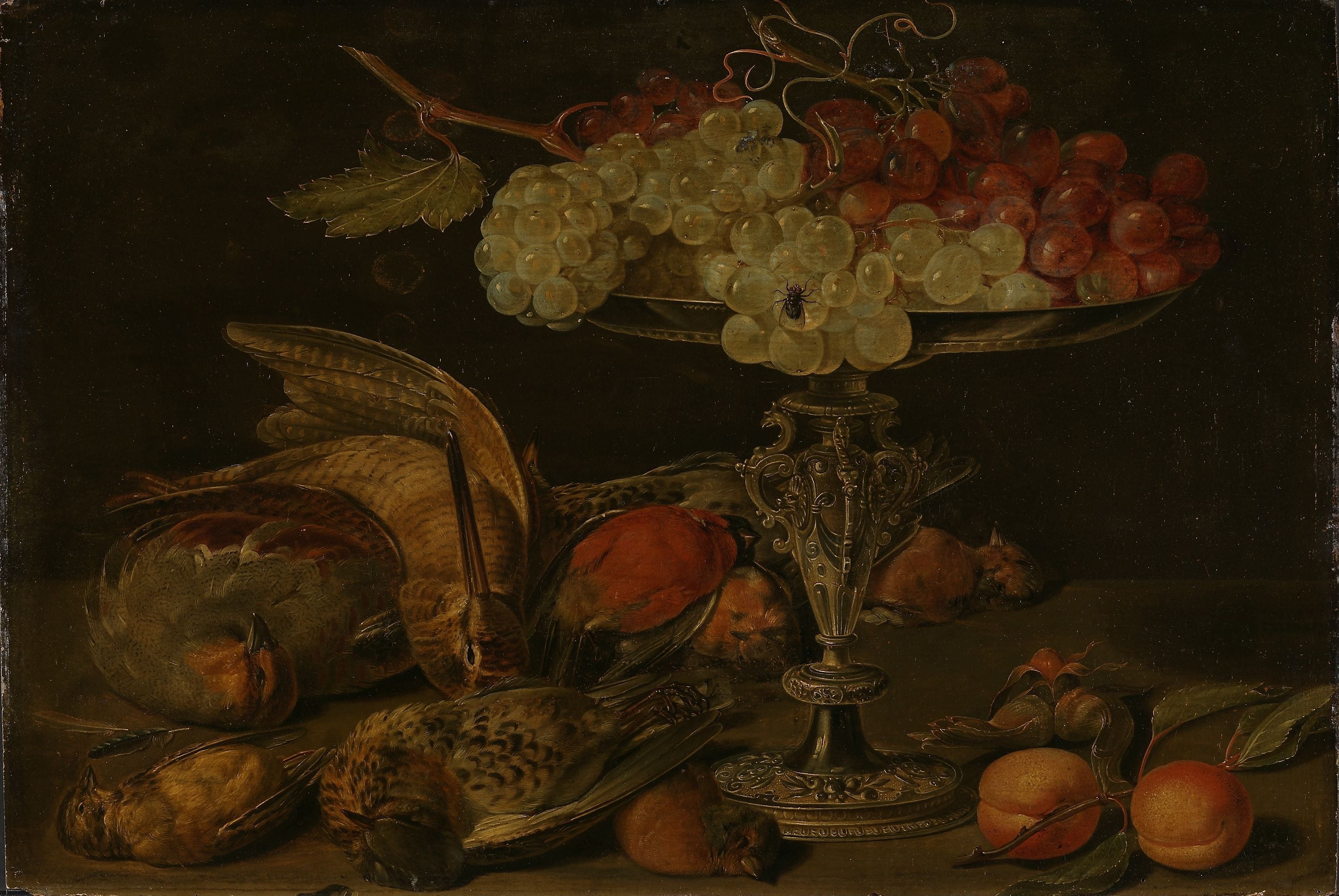
Still-Life with Small Game and Grapes on a Gilded Tazza
Clara Peeters
Narrator
A silver or pewter vessel stands on a large table, filled with green and blue grapes. In the foreground, a blowfly has landed on one of the grapes. Nearby, eight dead birds lie arranged across the tabletop.A broken branch still holds two peaches, their pale yellowish-white skin gently blushing at the edges. Over the plump, rubber-like grapes – painted with virtuoso highlights – a delicate sheen rests on the surface.
Cynthia Osiecki
This is the kind of physical world the Flemish painter Clara Peeters largely devoted herself to: objects, things, and living creatures drawn from everyday life.But when it comes to her biography, we actually know very little.
Narrator
This is Cynthia Osiecki, art historian at the National Museum.Cynthia Osiecki
Clara Peeters is one of many women artists we know only in fragments, and sometimes only through the paintings themselves.Still-life paintings like this were still a relatively new genre when Peeters began to explore it. She was among the first artists to give food, and especially fish, a central place in her compositions.
In this case, though, it’s not fish that catches our attention, but the dead birds.
Narrator
Dutch still lifes often contain symbolic dimensions. A skull or a burning candle, for example, can point to the fleeting nature of life. At the same time, these paintings aim to capture nature as it actually happens.Cynthia Osiecki
Here, the dead birds speak on several levels. On one hand, they represent death as a simple physical fact. On the other, they’re studied almost scientifically, with careful attention to detail – you might recognize a woodcock, a thrush, and other small birds.So, the painting tells more than one story. It says something about the food culture of a growing social class—the bourgeoisie and merchant communities of Northern Europe.
But it also carries the story of a woman artist working within, against, and through the social, economic, and gender-based barriers she encountered in her own time.