308 The Light Hall
Portrait of a Girl. Portrait of a Boy. Portrait of a Woman (Panesilea Dotto Capodilista?).
Chiara Varotari
Narrator
Chiara Varotari is not a widely known name today, even among art experts. She’s a good example of how many female artists from this period were overlooked or sometimes confused with their male counterparts.She came from an artistic family. Her father, Dario Varotari, and her brother, Alessandro Varotari, were both artists, which gave her access to training and artistic education.
Cynthia Osiecki
She worked very closely with her brother and often assisted him. She also traveled with him to different cities across Italy.Narrator
This is Cynthia Osiecki, art historian at the National Museum.Cynthia Osiecki
But Chiara wasn’t just his assistant, she had artistic ambitions of her own. In addition to her painting, she was also active in literature and was behind several publications.Narrator
Venice became especially important to Chiara Varotari. It was there that she built her reputation, particularly as a portrait painter of the local aristocracy. Three of those portraits are included in this exhibition.Cynthia Osiecki
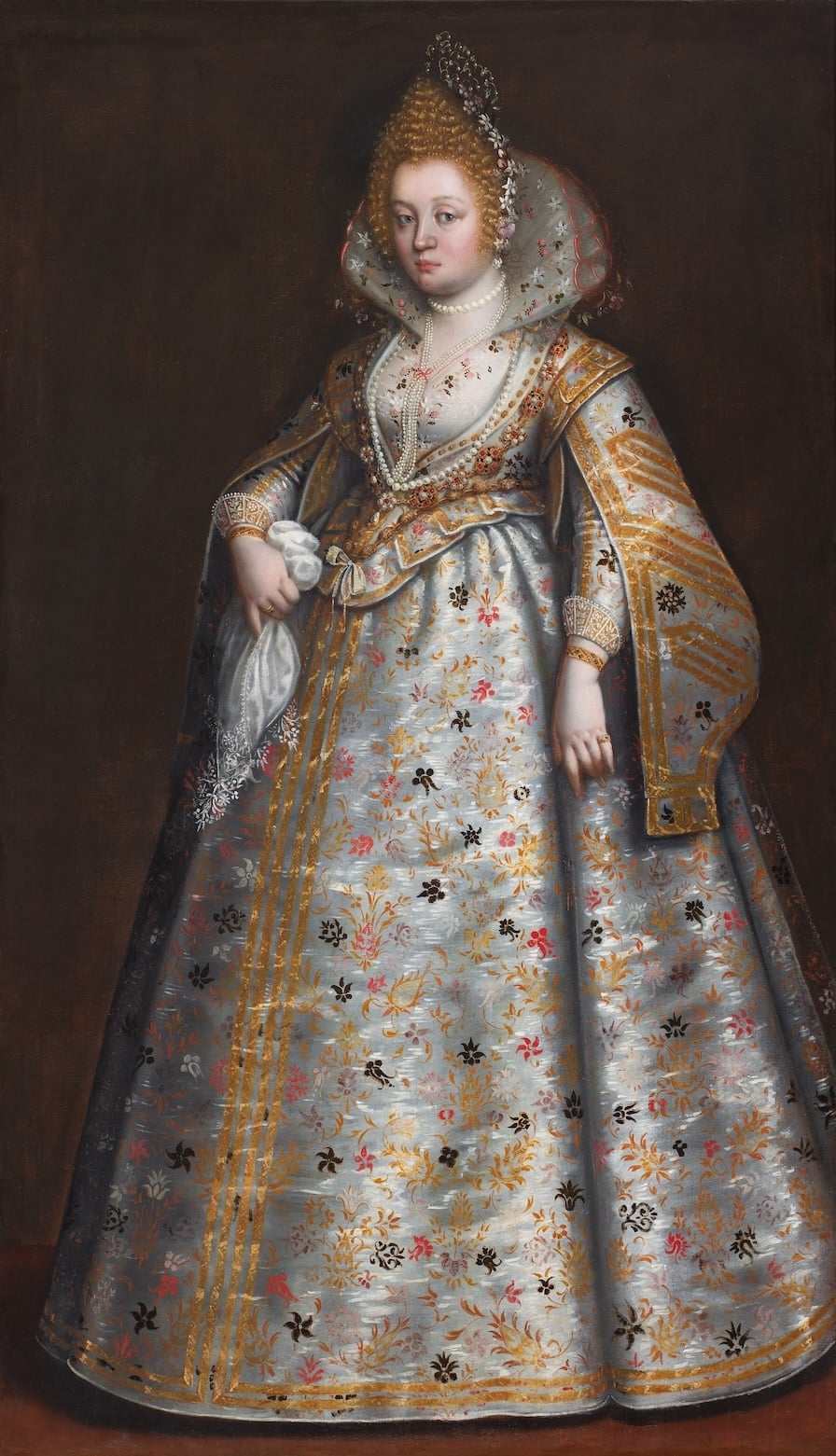
She became known for her remarkable skill in depicting fabrics, jewelry, and clothing, and you can see that in the portrait of Panesilea Dotto Capodilista.Panesilea came from a wealthy and powerful family, and her husband, Pio Capodilista, was a commander in the Venetian army. In this portrait, she is shown in three-quarter profile, almost as if she’s presenting her dress rather than herself. The magnificant garment emerges in a gold-shimmering relief and is in sharp contrast against the dark background.
Narrator
The two other portraits, of a young boy and a young girl, form a kind of paired work. They are believed to depict members of the Capodilista family.Cynthia Osiecki
In these works, you can see how the clothing and poses echo one another. Both figures wear the same blue garment, decorated with crescent-shaped gold details.What stands out in Varotari’s work is her focus on surface and appearance, rather than psychology. It’s the outward identity – status and appearance – that takes center stage.