309 The Light Hall
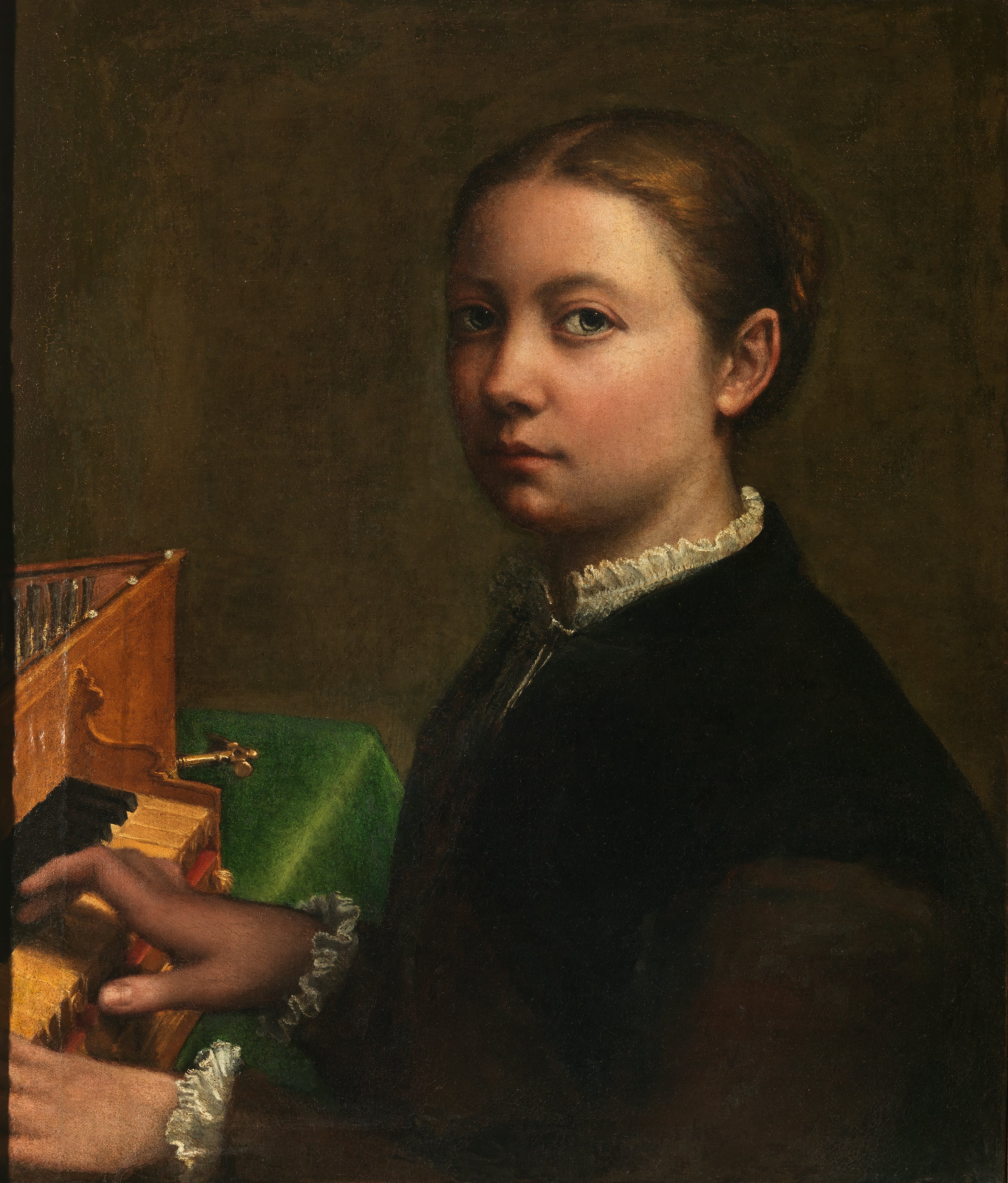
Self-portrait at the Spinet
Sofonisba Anguinssola
Narrator
Sofonisba Anguissola is often considered the first woman painter to achieve real fame across Europe. At a time when women were usually the subjects of paintings, not the artists behind them, Sofonisba broke new ground in art history.Cynthia Osiecki
Her reputation eventually led to her becoming a lady-in-waiting to Elisabeth of Valois, Queen of Spain, in 1559. But today, it’s her work as a painter that we remember her for.Narrator
This is Cynthia Osiecki, art historian at the National Museum.Cynthia Osiecki
Sofonisba was born into a noble family in Cremona in 1535, and was one of five sisters. The family wasn’t particularly wealthy, but she still received an unusually strong education, including training in art.Her earliest subject was herself. Of the two genres she would come to master, the self-portrait was especially important.
Today, twelve of her self-portraits are preserved, including this one: Self-Portrait at a Spinet.
Narrator
In this painting, Sofonisba doesn’t show herself at work as an artist. Instead, she presents herself in a style more typical of upper-class portraits; a young woman demonstrating refinement and education.Cynthia Osiecki
Her hair is styled in a braided crown, something we see in several of her self-portraits. She wears dark, understated clothing appropriate to her aristocratic circles. Also present, is a deep, dramatic pictorial space. This reflects the Lombard style of painting – realistic, sober, but still rich and concentrated in colour.The result is one of her most striking works. It has immediate psychological presence, a simple yet refined composition, with a combination of green, brown, and black tones. Those colour choices also connect her work to contemporary Venetian painting, where colour was used even more intensely, and a more emotionally charged artistic expression prevailed.