A find that changed the history of art

The story of the tiny details that led to a major discovery.
The moment she set eyes on the painting in the museum’s storeroom, curator Cynthia Osiecki knew she was looking at something special. The work had been catalogued as anonymous – standard practice when the artist is unknown – but there was something familiar about this picture that demanded closer attention. Thus began the work that would help to restore a woman to her rightful place in art history.
For Osiecki the work looked as if it could have been painted by Clara Peeters. Peeters was a doyenne of still-life painting in the 17th century, and Osiecki, who had already studied several of Peeters’s works, felt she had seen the ornate stemmed bowl (tazza) somewhere before. The arrangement of the fruit, birds and nuts in the picture also looked familiar.
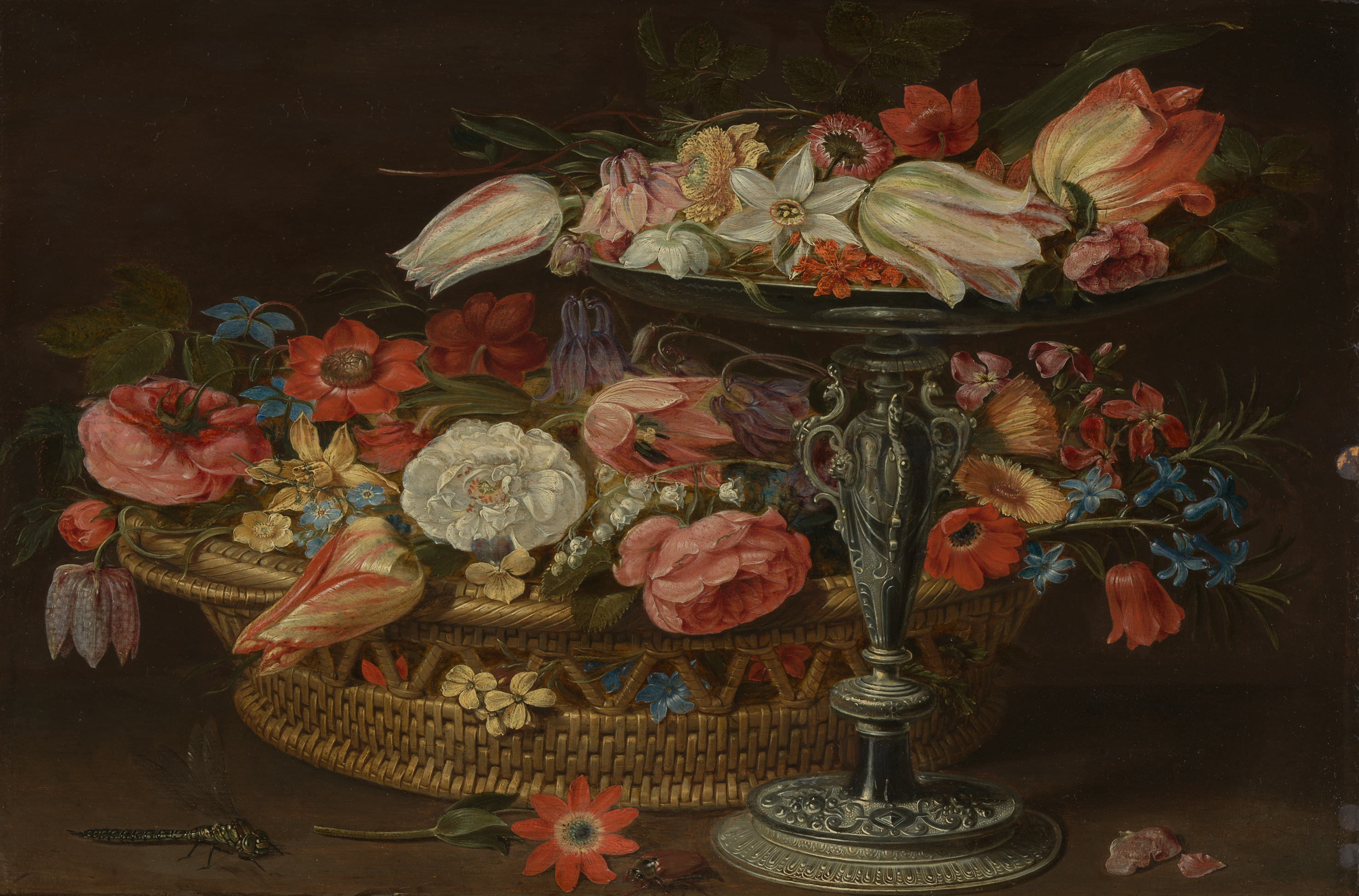
‘The positioning of the objects in the picture is just what she would do,’ says Cynthia Osiecki. ‘I have never seen an artist who arranges objects in quite the same way as Peeters does in her paintings.’
‘Peeters’s contemporaries also arranged objects, but Peeters used certain compositional strategies and combinations of things throughout her career. Her approach to composition functions almost lie a signature,’ explains Osiecki.
The right woman in the right place
Antwerp in the 17th century was home to a frame and panel maker by the name of Lambrecht Steens. As a supplier of prepared oak panels to artists in the area, Steens always signed the back of his products with the initials LS.
Osiecki knew that Peeters sometimes painted on wooden panels at that time. On the back of the painting in the National Museum, she found Steens’s signature. This was compelling evidence that the wooden panel originated from the same area in which Peeters worked. But there was more to discover.
Although artists did not always sign their paintings in that era, Osiecki knew that Clara Peeters generally did – in the lower left-hand corner. As chance would have it, that was the one part of this work that had been attacked by woodworm. Even so, Osiecki continued to find similarities with other works by Peeters.
Further specialists in other countries were contacted to study the painting in minute detail, with the result that in 2026 its attribution was changed from unknown artist to Clara Peeters. Suddenly, the National Museum found itself in possession of a treasure by a great Flemish painter, a work it had in fact owned since 1845, when the painting first entered the museum’s collection.
This is one of several works that have been reattributed in recent years. It dates from a period when a number women built careers as successful and sought-after artists, before being largely ignored in the writing of history.
Clara Peeters (født i Mechelen ca. 1594 og døde i Gent, etter 1636).
Selv om vi ikke vet så mye om henne, så vet vi at den flamske barokkmaleren Clara Peeters (trolig født i Mechelen ca. 1594, døde i Gent etter 1636) var en av flere kvinner som på slutten av 1500- og begynnelsen av 1600-tallet fikk opplæring som kunstner og levde som det.
Det tidligste maleriet vi kjenner til, ble malt da hun var bare 14 år. Det banebrytende i Peeters’ kunst er hennes stilleben. Blant hennes tidlige malerier finnes små, detaljrike framstillinger av mat og drikke. Senere blir komposisjonene større, og hun briljerer med framstilling av verdifulle objekter som pokaler og fat sammen med eksotiske og fargesterke blomster.
Clara Peeters’ verk finnes allerede i betydningsfulle samlinger fra 1600-tallet, noe som tyder på at hun var et etablert navn i sin samtid.
A matter of business
In 1971, the art historian Linda Nochlin pointed out that one of the most authoritative histories of Western art mentions only two women artists. This is remarkable when we consider that talented women artists frequently worked alongside men, especially in the 17th century.
‘No sooner were they dead than most of these women were forgotten. It wasn’t until the late 18th century that people began to write the history of art, and when they did, the authors were almost always men,’ says Osiecki.
In those days, few artists were in the habit of signing their paintings. Peeters stands out in this respect, because she was one of the few who did.
One woman artist whose name has come down to us is Anna Brueghel, who worked for the celebrated Peter Paul Rubens. She was trained by her father and by Rubens, and is mentioned in the archives as a painter – yet today, nothing of what she created is known to us.
Another fascinating example is Judith Leyster, Osiecki says. Literary sources tell us that Leyster stopped painting after marrying, but at the same time we notice that the quality of her husband’s paintings improved from that point on. Paintings by men fetched higher prices, so it is quite possible that she contributed to the works sold under his name.
‘In those days it was simply a matter of business. Our romantic notion of an artist didn’t exist back then. People had to put food on the table and did whatever made sense financially.’
Research in the field is ongoing, and the names of further women artists are constantly being discovered, often in connection with works that had previously been attributed to male colleagues.
‘As far as Clara Peeters is concerned, we are only aware of the works she signed, so there might well be more,’ Cynthia Osiecki concludes.
Still life
Still life has been a form of artistic expression throughout much of history, from ancient Egypt to the present. As a genre, it was especially cultivated in 17th century Netherlands, where increased trade and prosperity fuelled the demand for household luxuries, including paintings.
Still life is a genre in which the artist paints objects from everyday life or nature. Subjects can include everything from fruit, flowers, birds, fish and shells, to books, tableware and other mundane items. Sometimes the paintings are highly detailed. Artists would select objects that allowed them to demonstrate their technical skills in depicting light and colour, their flair for composition, or their ability to evoke moods, ideas or stories.

