Where are the Women in the History of Architecture?

Why don’t women have a clearer place in narratives about the history of architecture, and what is being done to raise their profile?
Text by Birgitte Sauge, Senior Curator
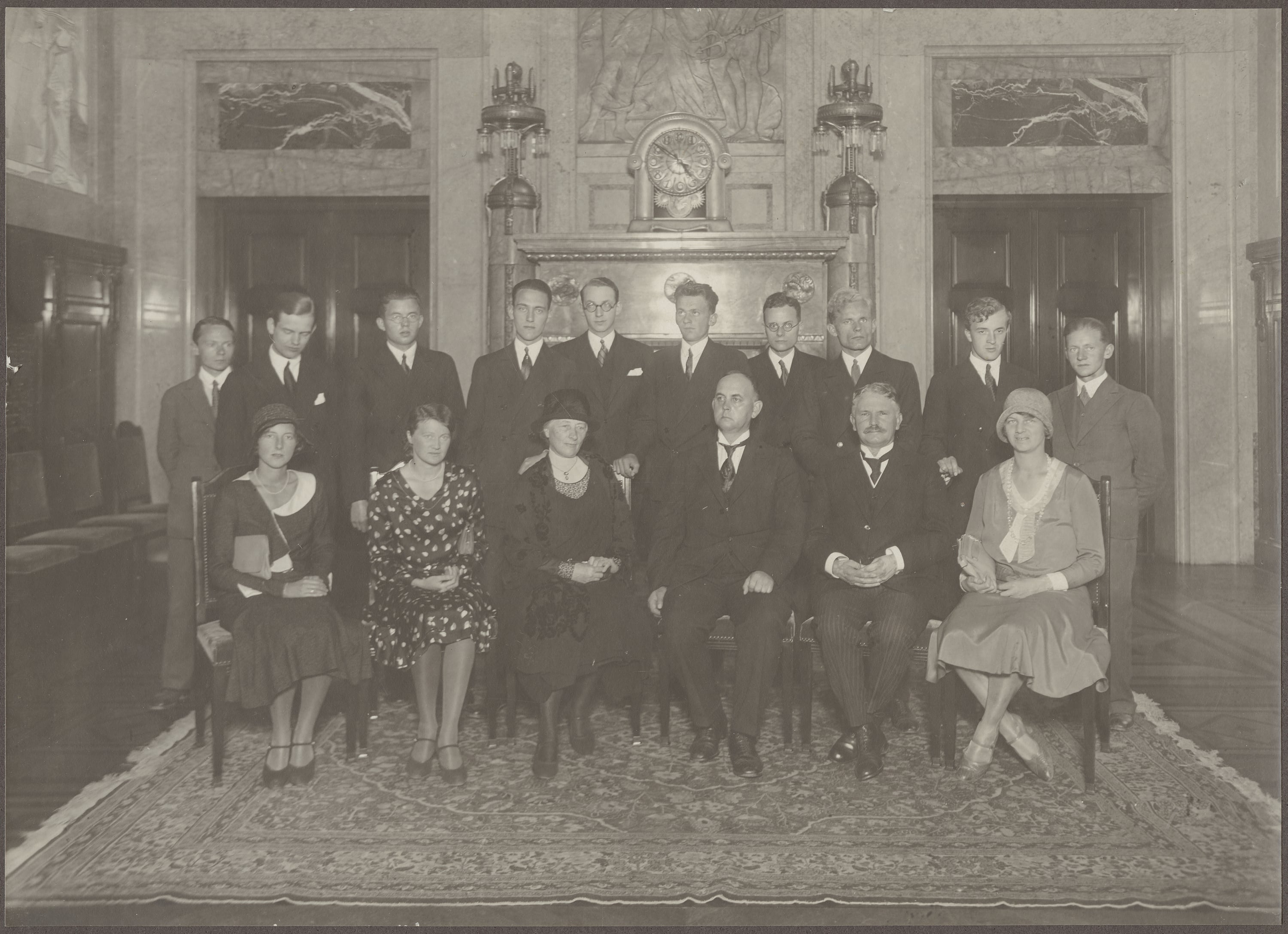
For around 130 years, women in Norway have been training as architects. In the 1890s, there were no fewer than ten female students in the building class at the College of Arts and Crafts in Kristiania (now Oslo). The first time that the Norwegian Institute of Technology (NTH) in Trondheim awarded a diploma in architecture to a woman was in 1919. When the class of 1961 enrolled at NTH, six of the forty-five architecture students were women. A new record, as Adresseavisen reported, although the number was still small compared to the situation today, when women make up approximately 50% of the students.
The exhibition “Stamina. Kari Nissen Brodtkorb and four predecessors” uses the stories of Lilla Hansen (1872–1962), Kirsten Sand (1895–1996), Kirsten Sinding-Larsen (1898–1978), Maja Melandsø (1906–1981) and Kari Nissen Brodtkorb (born 1942) as a prism to consider women’s place in the architectural profession in the first part of the 20th century; their training and routes into the profession, their experiences of running their own architectural offices and the opportunities and scope for action for women working in the field in a male-dominated society.
All the architects in the exhibition gained wide recognition among their contemporaries. Even so, their legacies can be hard to spot today. The reasons for this neglect and what is now being done to raise the profile of women in architecture are the topic of this essay.
A new focus on feminist architecture research
The title of this article is inspired by the concise, highly readable book Where Are the Woman Architects? by Despina Stratigakos, one of today’s leading feminist architecture researchers. Stratigakos writes: “History is not a simple meritocracy: it is a narrative of the past written and revised – or not written at all – by people with agendas.” All over the world, researchers are now working to enhance our understanding of architecture, cities and landscapes from a gender perspective. They are turning a critical spotlight on established notions of what it means to practice architecture, and the kind of architecture that is judged to be valuable and gets written into history.
Also under scrutiny is the way architectural history is written. Researchers point out that traditional synoptic architectural histories and monographs have been dominated by celebrations of the supposed heroic genius – a man inscribed with a masculine, Western cultural background. The narrative about major developments in architectural history has also been linear, with single male figures succeeding each other, like a kind of genealogical saga. It is not a format that can accommodate many female architects, and when they are mentioned, it is in the form of “name-dropping”. Neither has this type of narrative had much space for women’s contributions in firms with a partnership structure, for example between a man and a woman.
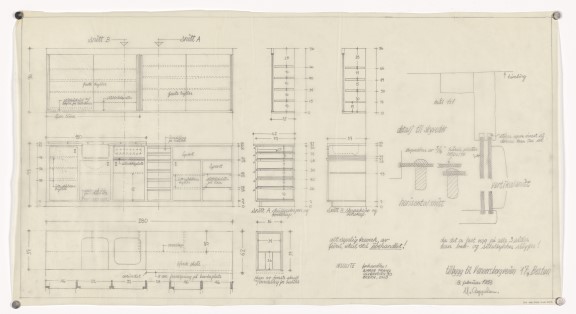
Today’s architectural researchers, in both universities and museums, have ambitions to break with this narrative tradition of celebrating the supposedly genius white male architect who single-handedly creates individual iconic buildings, and who has helped to trivialise and obscure women who work in the field of architecture. New sources, forms of work and narrative techniques are being explored. With its use of various types of published material, documentation from private and building-record archives, the Stamina exhibition is a good example of this.
Likewise in the field of landscape architecture, efforts are underway to throw light on women and their untold stories. Overarching questions, such as who defines quality, who gets assessed, which voices are heard, highlighted and inscribed into the historical narrative, form the topic of a conversation between Lori A. Brown, Despina Stratigakos and the two Danish researchers Svava Riesto and Henriette Steiner, published in the anthology Women in Scandinavian Landscape Architecture. The important thing, they claim, is to make space for numerous, parallel narratives rather than a single dominant one.
A major transnational endeavour that has at last been published digitally is the Bloomsbury Global Encyclopedia of Women in Architecture 1960–2020. The initiators and chief editors behind this project were Karen Burns and Lori A. Brown. Researchers from around the world have contributed biographies and essays about women who have practiced architecture and played a part in various related activities in their respective regions during the decades covered, helping to forge what could be described as a new historiographic genre. Contributions from Norway include presentations on ten architects, one of whom is Kari Nissen Brodtkorb. In addition, there is a synoptic article about early Norwegian women in the architectural profession by Bente Solbakken, senior curator at the National Museum.
Women write about women
In Western culture, the history of women in architecture is long; ever since women began training as architects, they have also been writing about women in the profession. Feminist architectural history as an academic discipline is more recent, dating back to the feminist movement of the 1960s and 70s, when feminists also turned their critical gaze on the built environment. In the 1980s and 90s, in line with the paradigm shifts of new theoretical and critical directions in academia, the categories of gender and sexuality assumed greater importance also in the field of architecture research. – Which fields and women have been included in the Norwegian architectural history narrative to date?
Women in Norwegian architectural history
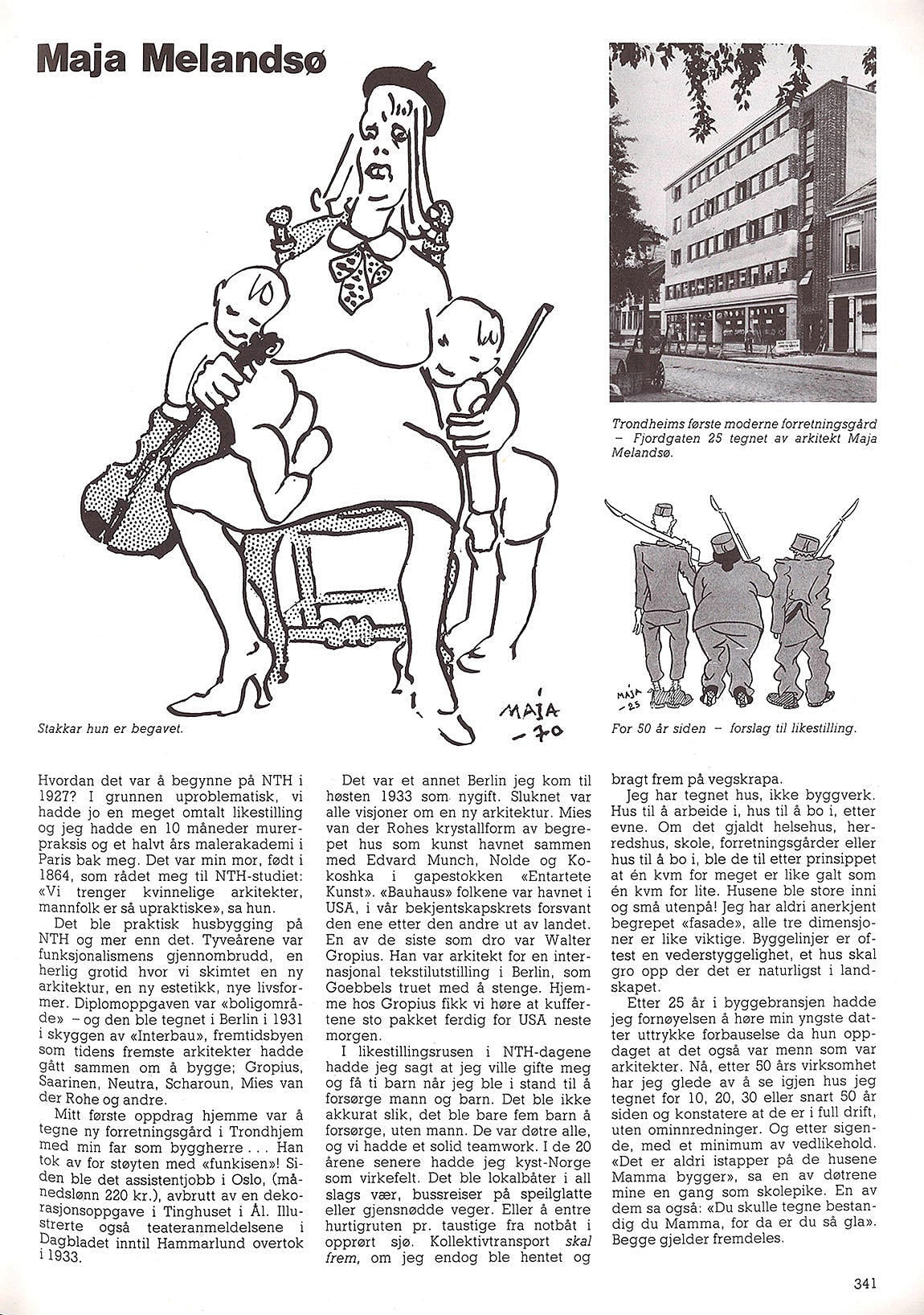
The first feminist perspective on women’s participation in Norwegian architecture was published in 1980. The initiative for a themed edition of Byggekunst, Norway’s professional journal for architects, came from Anne Sæterdal. Under the title “på kvinners vilkår” (On Women’s Terms), Byggekunst no. 8 1980 took a close look at pay and working conditions for women architects at the time, along with many other factors that impacted their careers. The edition included articles about women’s power and on-going projects with a strong focus on user participation and ecology, projects that challenged prevailing notions of what architectural design should be. There was also a historical section, which included a presentation of three women “pioneers”. It was in this context that Lilla Hansen was originally hailed as Norway’s first woman architect – a claim that has recently been modified. Maja Melandsø, a self-proclaimed feminist, presented herself in her own text. Work by Kari Nissen Brodtkorb, who in many contexts has described herself as a “born feminist”, was presented together with work by four other contemporary architects: Wenche Selmer (1920–1998), Siri Jemtland (born 1933), Lill Meinich (born 1938) and Randi Kvam (born 1945).
In the 1980s, two major synoptic works of relevance to Norwegian architectural history were released: the four volumes of Norsk kunstnerleksikon (Norwegian Encyclopedia of Artists) were published between 1982 and 1986, while the seven volumes of Norges kunsthistorie (History of Art in Norway) appeared between 1981 and 1983. Unfortunately, neither publication contains any evidence of a women’s perspective on architectural history. The field of architecture receives only limited attention in the encyclopaedia of artists, and the only women architects to be included are Lilla Hansen, Kirsten Sand, Maja Melandsø and a handful of others from the first half of the 20th century. Lilla Hansen also receives a mention in Norges kunsthistorie – but only in a footnote. In addition, three other women’s names appear, but in each case as partners to their husbands, who ran so-called husband-and-wife offices: Karen Brochmann (1908–1988), Molle Cappelen (1922–1986), and Mari Kollandsrud (born 1932).
In the 1990s, two doctoral dissertations were published that remain relevant sources of knowledge about Norwegian women architects to this day: “Som fugl føniks av asken? Gjenreisningshus i Nord-Troms og Finnmark” (Like a Phoenix Rising from the Ashes? Post-war Reconstructed Houses in Nord-Troms and Finnmark) and “Erfaring og boligspørsmål: fire kvinnelige arkitekters bidrag til funksjonalismen i Norge” (Experience and Housing Issues: The Contribution of Four Women Architects to Functionalism in Norway). Kirsten Sand is discussed in both studies. In 2002, the first monograph about a Norwegian woman architect was published: Wenche Selmer – omtankens arkitektur (Wenche Selmer – the Architecture of Thoughtfulness). This was also the first publication dedicated to a woman working in architectural education. It was not until 2019 that the next – and so far latest – monograph about a Norwegian woman in architecture, namely Kristin Jarmund (born 1954), was published.
In 2004, Mindretallets mangfold. Kvinner i norsk arkitekturhistorie (Minority Diversity. Women in the History of Norwegian Architecture) was published. A comprehensive survey of women architects who worked in Norway between 1890 and 2000, this book includes all five of the exhibition’s architects. It can be seen as an attempt to write a Norwegian feminist history of architecture and has become an important reference work on the many women who were active in the field during this century-long period.
In what is referred to as the third phase of feminist architectural research – the one we are currently in – a range of institutions and researchers are working in various ways, each pursuing their separate goals and themes, to elaborate the history of architecture. The spotlight is on individual women, their experiences and stories, which are being published, sometimes as monographs, sometimes as articles in anthologies. The same perspective is now also reflected in architectural education. Several researchers are helping to expand the Norwegian historical narrative. Again, Lilla Hansen and Kirsten Sand are subjects for research. New aspects of their work are constantly being documented as obscure sources are brought to light. It is still first and foremost female researchers who are concerned with the feminist perspective on history.
Hjørdis Grøntoft, with the married name Raknerud (1878–1918), was essentially forgotten before being rediscovered by recent research. She is one of the women who does not appear in the previously published reference works. But new sources have provided new information about this pioneering woman and her work as an architect as far back as the 1890s. Other women who trained as architects around 1900 have also attracted attention in recent years. Various private and institutional archives that have recently been made accessible are providing new knowledge about the National College of Art and Design in Kristiania and the Foreningen for anvendt kunst (Association for Applied Arts). The archive of completed diplomas submitted at the Norwegian Institute of Technology in the period 1914–1940 is now in the collection of the National Museum. It is a unique source that contains work by the twenty-seven women who graduated during this period. Here one finds both Kirsten Sand and Maja Melandsø, and Helene Kobbe (1915–1988), who later became head of urban planning for the municipality of Oslo, where her work was widely acclaimed. But the other women who appear in this archive still remain largely absent from the historical narrative, at best being only briefly mentioned.
Digitisation reveals new sources
New technology and the digitisation of archival material and printed sources have also become a valuable asset for researchers. Much of the new knowledge about women in architecture that we have gained in recent years can be attributed to the extensive digitisation of public historical records such as censuses and address registers. The digitisation of older volumes of newspapers and magazines has also provided researchers with far more secondary source material than was available in the past. Various contemporary materials such as newspaper reports and magazine articles offer insights into how women were viewed in the past and the assignments they worked on. Digitisation has also made it possible to include journalistic material about the architects in the current exhibition.
Not surprisingly, however, press reporting during the three decades after 1900 is characterised by the common perception of the “architect” as a gendered construct linked to the male body.
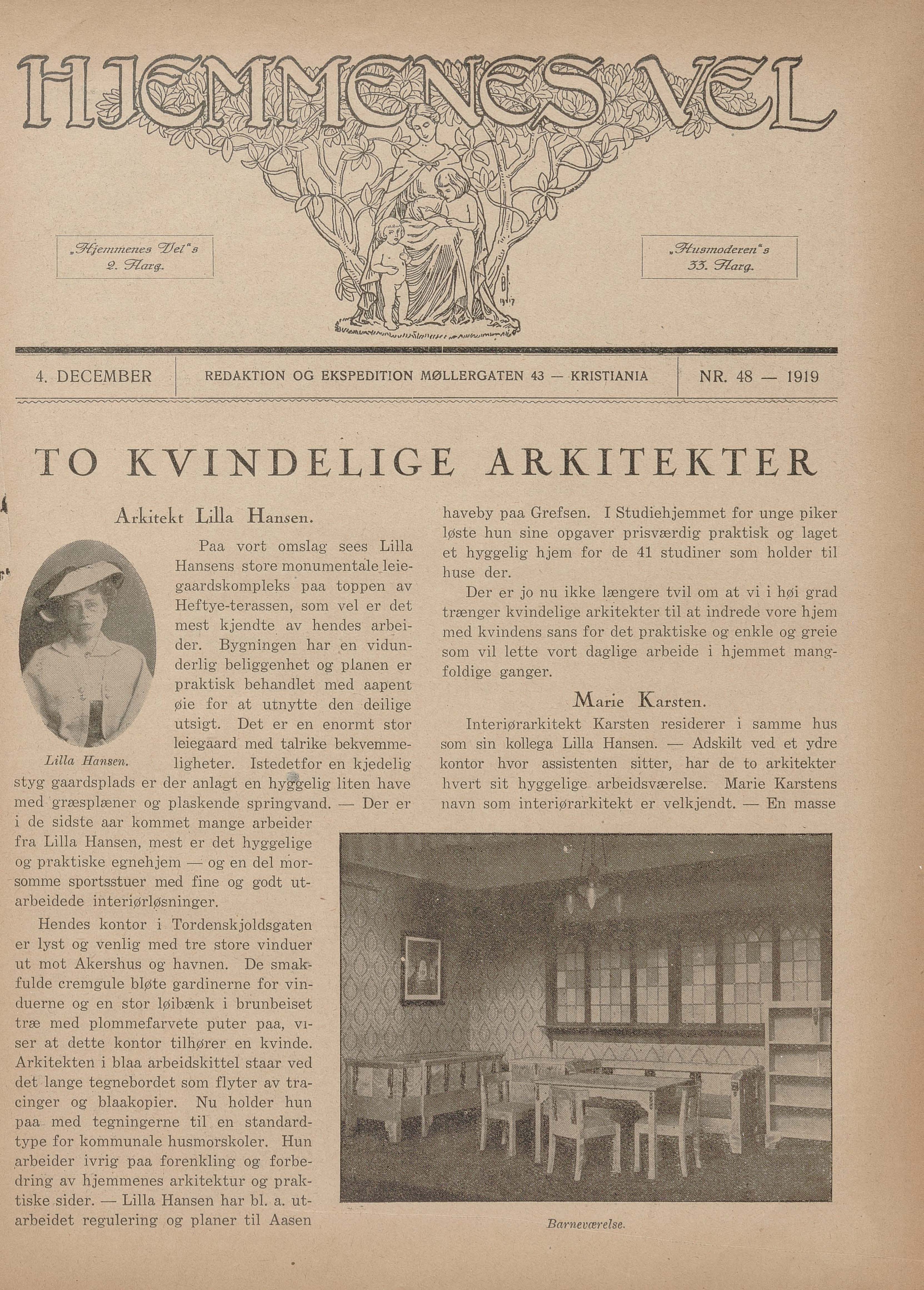
What is striking about one article in the magazine Hjemmenes Vel, written after a visit to the office of Lilla Hansen and Marie Karsten (1872–1953), is the emphasis on things like colours and textiles, which the reporter describes as lending a touch of homely comfort. A reliable sign that the office was occupied by a woman, reflecting the preconception that the two architects were born with a feminine talent for interior design and cosiness. A preconception that, according to Stratigakos, was rooted in ideals from Victorian England.
In 1929, ten years after the article about Hansen and Karsten’s office, Adresseavisen included an item with the heading “De på Høiskolen ingen taler om” (The College Students that No One Talks About). It illustrates that little had changed when it comes journalistic attitudes towards female interviewees. The two architecture students who were interviewed were Ingeborg Flak Tønnesen (1904–1987) and Maja Melandsø, the only female students at NTH’s architecture department at the time. Although, “interviewed” is a bit of an exaggeration, because, according to the reporter, Tønnesen was not present and Melandsø was so shy that she said nothing. While a generous interpretation might describe the article as an attempt to highlight female participation in a male-dominated discipline at a male-dominated educational institution, one is struck by the typical attitude of belittling young women in non-traditional contexts.
Why are there so few traces of women in the archives?
The availability of various types of archival material, especially the private archives of specific individuals and organisations, has also formed the basis for – and given a boost to – architectural history research in recent years. But researchers working on the stories of women architects have pointed out that the material preserved in public archives and museums is highly deficient. For example, Kari Nissen Brodtkorb’s archive is still privately owned, which means that, for the current exhibition at the museum, material had to be borrowed.
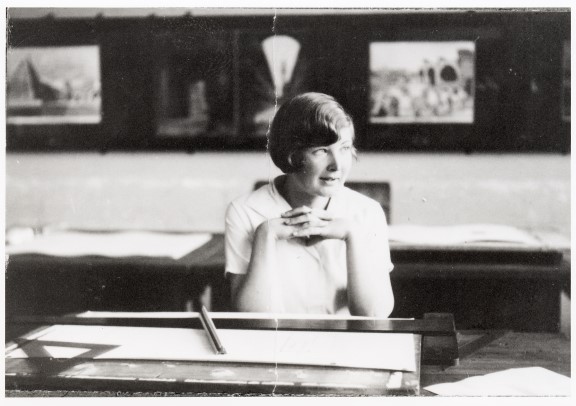
One of the reasons why cultural heritage institutions have been slow to incorporate documentation of women’s work in their collections is that, in a male-dominated culture, male architects invariably find it easier than their female colleagues to recognise the value of their own work. Another reason is that female architects are inclined to doubt the value of their personal archives. A third and by no means negligible reason is that traditional collecting practices at archives and museums have been dominated by a value system that favours male architects.
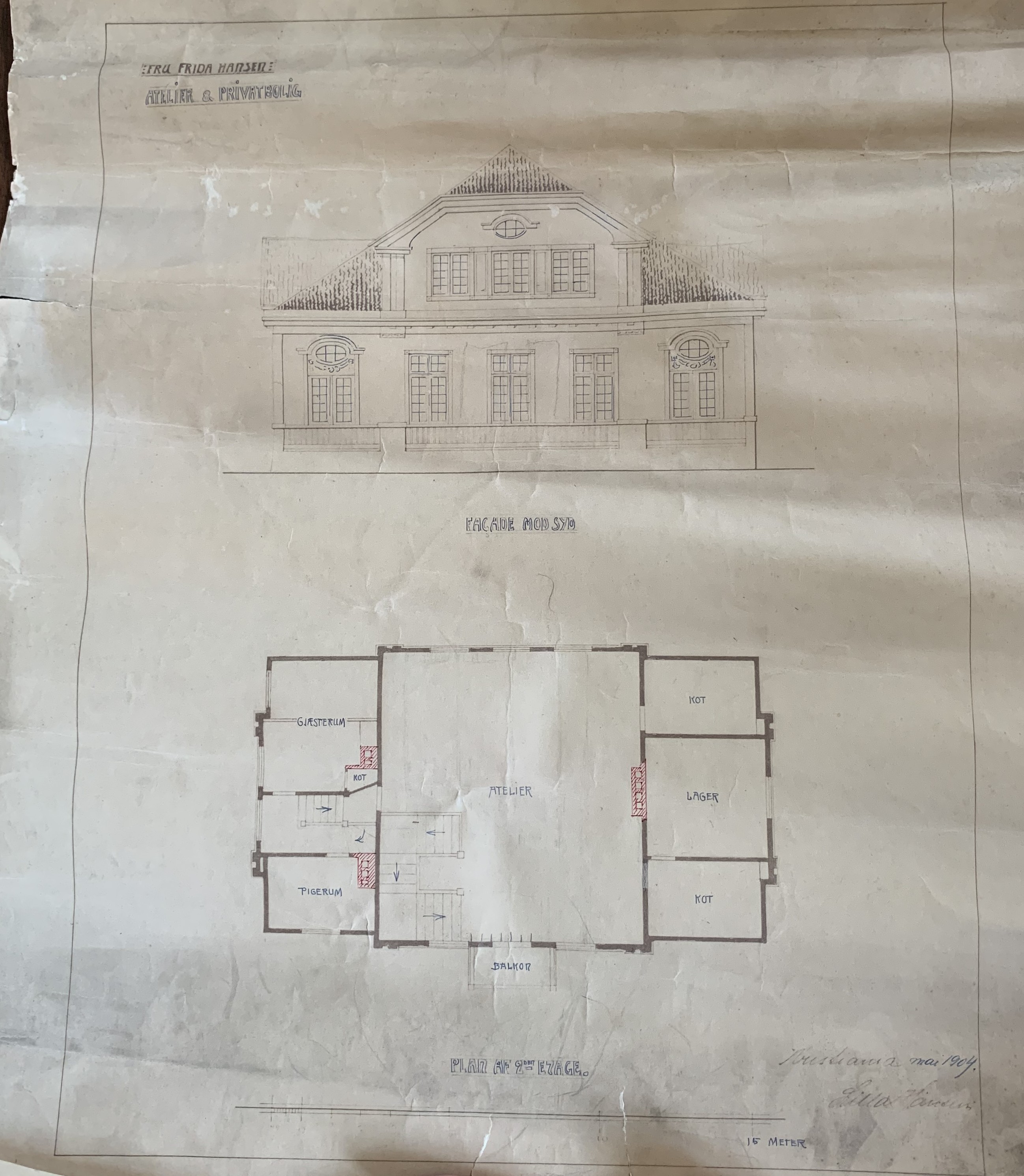
Fortunately, unknown materials or materials that were presumed lost are sometimes rediscovered. One recent example occurred in conjunction with preparations to preserve the “studio and residence of Mrs. Frida Hansen” in Oslo. Delving through old papers in one of the cupboards, the team found prints of the drawings made by Lilla Hansen in 1904. Other discoveries are often made when attics are cleared out following the death of some relevant figure.
Process-oriented primary sources, such as an architect’s personal archive, are uniquely useful. They can provide insight into creative processes from early sketches to final working drawings. For most architects, these archives are privately owned for as long as they remain professionally active; they are generally regarded as archives of the respective firm. It is when a practice ceases to operate that opportunities arise for its archive to be acquired by a museum or some other public institution. The decision to incorporate such an archive into a public collection is made partly by its author, i.e. by the architect who created it, and partly by experts at the receiving institutions. In the case of the National Museum, the process is formalised when the purchasing committee reaches a positive decision, based on a recommendation from the Architecture Team.
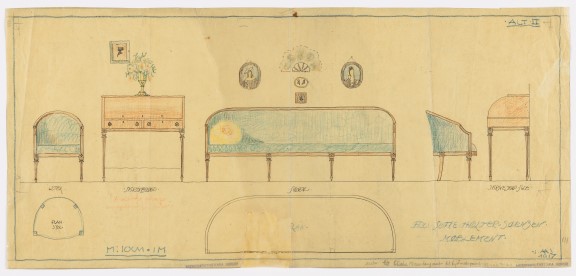
In cases where an architect sees no value in their personal archive, it is usually destroyed, either by themselves or their heirs. It appears that this is what happened in the case of Lilla Hansen. As for Kirsten Sand, we have no knowledge of an archive from the period when she ran her own office in Oslo. If ever one was compiled, it was probably abandoned and later thrown away following her move to Nord-Troms to work as a district architect. Kirsten Sinding-Larsen is reputed to have given the drawings to her clients after completion of the respective assignment. The collective result for these three architects is that it was not possible to include any of the original drawings they made as private practising architects in the exhibition. Maja Melandsø took the archive from her practice in Kristiansund with her when she moved to Trondheim, where she continued working as an architect. In 2007, her heirs donated her entire archive to the museum. Kari Nissen Brodtkorb, the exhibition’s only living architect, has also preserved her archive, which, in addition to drawings, photographs, diplomas and newspaper articles, also contains various materials from her youth and student days. Such sources allow us to describe new aspects of Nissen Brodtkorb’s work – as we have sought to do in the exhibition.
Of the female architects who had their own practices in the 1920s and 30s, Maja Melandsø is the only one to have left a substantial archive, which is now incorporated in the collection of the National Museum. Also preserved are the smaller archives of Hjørdis Grøntoft and Ingeborg Krafft (1902–1963). Further, the collection contains fragmentary material from the careers of Lilla Hansen, Minna Heiberg (1899–1997), and Kirsten Sinding-Larsen. With the exception of Wenche Selmer, women who ran their own offices in the latter half of the 20th century are sporadically represented in the National Museum’s collection.
Practices that make women invisible
In many contexts, the category of junior architect in major architectural offices – whether male or female – is omitted from narratives so as not to distract attention from the firm’s lead architect. A few items in the National Museum’s collection indicate the activity of women during their time as employees at offices in the private sector, but when looking back at completed projects, it can be a challenge to find the architects who contributed to them, due to the routines that individual architectural offices use for crediting and publishing their work.
In the public archives there is no trace of Gudrun Klingenberg (1873–1930) or the other women architects who worked in the state or municipal sectors in the early 20th century. Their contributions have been thoroughly anonymised, not least because of their failure to sign the drawings they worked on.
The municipal archive of building applications preserves material relating to public administration. This can be an important source of knowledge about what specific architects actually succeeded in building. On display in the exhibition are a number of drawings that Lilla Hansen and Kirsten Sand submitted in conjunction with building applications. In many municipalities, this material has now been digitised, but unfortunately the search options are generally confined to addresses or cadastral numbers and offer no possibility of searching for an architect’s name. Were it possible to search for architects by name, research work and probably also our knowledge about earlier female architects would receive an immense boost!
Collections, “critical cataloguing” and statistics
In many institutions, including the National Museum, efforts are now being made to remove institutional, structural and systematic obstacles that effectively render certain categories of people, such as women in architecture, invisible. The metadata in the database where all the works in the collection are registered is being revised. In addition, improved routines are being put in place for cataloguing new works that enter the museum’s collection. One example of these new routines is that gender (male/female/nonbinary) is assigned to the person (the architect) who is registered as the intellectual property owner of the individual work. This allows us to keep track of how many – or few – female architects are represented in the collection, who they are, and which works represent them. Another measure is to add metadata not just about the architectural firm (usually run by male architects) and the legal owner of a project, but also about the individual architects – irrespective of gender – who were employed by the firm, contributed to the project and signed individual drawings.
Due to its immense diversity, the material in the National Museum’s architecture collection is difficult to count or classify in a fully consistent way. Figures from 2015–25 show that, during that period, the National Museum collected architectural works by seventy-two architects, of whom sixty-three were men and nine were women. In the previous period, 2004–2014, the first ten years after the establishment of the National Museum, the number was 116 men and seven women. The number of acquired female architects is fairly similar for the two periods, but when considered as percentages, the figures represent an increase from 5.7% to 12.5%. Although the proportion is still rather modest, it has more than doubled from the earlier to the later period. When we consider the number of actual works by female architects that have been acquired, the increase is from 1.65% to 9.8%.
These figures only represent the cases where a woman is registered as an individual architect/maker of a work. Many works by Molle Cappelen, for example, are attributed to the firm where she was a partner, not to her as an individual. As a result, many of her contributions, and those of other women in a similar position, are invisible when compiling gender statistics across the whole architectural collection. By contrast, although Wenche Selmer is registered as a partner in the firm Wenche and Jens Selmer, she is also registered as a person associated with works in the collection, and consequently she is included in the count. Both for those of us who work with the management and development of the museum’s collection and for the broader research community, it is important that we eliminate structural obstacles of this kind that unintentionally distort results.
Conclusion
In addition to eliminating various structural obstacles in the management and dissemination of works in the National Museum’s collection, efforts are required from researchers, curators and archivists both in academia and in museums and archives. In order to challenge the canon with a critical gaze and to play a part in rewriting history, we need to move on from fixed value sets and their associated blind spots and to look beyond traditional private practices. We also need to use more publication channels than the traditional ones. We welcome contributions from other professional disciplines, such as journalism and the media industry. One good example of such a contribution is the series “Kvinnene som bydge landet” (The Women Who Built the Country) that appeared in Dagens Næringsliv’s Saturday supplement D2.
Together we will bring to light more stories about women’s contributions in the field of architecture. In this way, we will help to renew the genre of architectural history and to ensure a broader representation of women in our collective memory.
Bibliography
Berg, Knut, Peter Anker, Per Palme and Stephan Tschudi-Madsen, eds. Norges kunsthistorie. 7 vols. Oslo: Gyldendal, 1981–1983.
Burns, Karen and Lori Brown. “Telling transnational histories of women in architecture 1960–2015”. Architectural Histories, 8, no. 1 (2020): 15.
“De på Høiskolen ingen taler om”. Adresseavisen, 23 January 1929: 3.
Findal, Wenche. Mindretallets mangfold: kvinner i norsk arkitekturhistorie. Oslo: Abstrakt forlag, 2004.
Froknestad, Heidi. “Sandsgården i Gjøvik og arkitekten Hjørdis Grøntoft”. Årbok for Mjøsmuseet, 2012:19–31.
Hage, Ingebjørg. Som fugl føniks av asken?: gjenreisningshus i Nord-Troms og Finnmark. PhD thesis. Tromsø: University of Tromsø, 1996.
Harbo, Ingunn. Erfaring og boligløsninger: fire kvinnelige arkitekters bidrag til funksjonalismen i Norge. Hovedfagsavhandling. Oslo: [I. Harbo], 1999.
Larssen, Kristiane and Benedicte Ramm. “Kvinnene som bygget landet”. D2 (supplement to Dagens næringsliv), 7 articles in 2023–2025.
Lauri, Tomas, ed. In Service of Undiscovered Life: Kristin Jarmund Architects. Stockholm: Arvinius + Orfeus, 2019.
Nasjonalgalleriet, ed. Norsk kunstnerleksikon: bildende kunstnere, arkitekter, kunsthåndverkere. 4 vols. Oslo: Universitetsforlaget, 1983.
på kvinners vilkår. Byggekunst, no. 8 (1980).
Solbakken, Bente. “Jeg hvisker: kvinnelige arkitekter rundt 1900”. In: Drager og laft, 91–119. Oslo: Nasjonalmuseet, 2024.
Sprovin, Mathilde. Kunstvæversker og arkitekter: kvinner i estetiske fag omkring 1900. Oslo: Dreyers forlag, 2022.
Stratigakos, Despina. Where are the Women Architects? Princeton: Princeton University Press, 2016.
Riesto, Svava and Henriette Steiner. “The Moment We Are In! - Stories of researching women in architecture”. In: Women in Scandinavian Landscape Architecture: Building Collaborative and Transnational Feminist Histories, 45–54. Boston: De Gruyter, 2024.
Tostrup, Elisabeth. Arkitekt Wenche Selmer (1920–1998): omtankens arkitektur. Oslo: Gaidaros forl, 2002.
Vogt, M. “To kvindelige arkitekter”. Hjemmenes vel, no. 48 (1919): 631–632.
Recommended further reading:
Arnold, D., ed.: Women and Architectural History. The Monstrous Regiment Then and Now, London: Routledge, 2025.
Brown, Lori A., ed.: Feminist Practices. Interdisciplinary Approaches to Women in Architecture, London: Routledge, 2011.
“En kvindelig murer”, Morgenbladet, no. 513, 28. September, (1904): 2.
Fadnes, Astrid and Schnell, Alf Jørgen. “Imot kjøkkenrealismen: Kirsten Sand og den eksperimentelle boligen”. Arkitektur N, vol. 102, no. 6 (2020): 96–99.
Jannie Rosenberg Bendsen, Svava Riesto og Henriette Steiner, Ufortalte Historier om Kvinder i Dansk Arkitektur, 2023.
Karen Burns and Katie Lloyd Thomas, «Foreword to the 2022 Edition,» i Matrix (ed.), Making Space: Women and the Man-Made Environment, 2022.
Voss, S.: “En visitt hos tre av våre kvinnelige arkitekter”, Urd (1933): 296–297, 301.
Seip, Elisabeth.: “Kirsten Sand. Arkitekt for sin tid”. In: Berørt av bygninger, edited by Elin Haugdal, Hege Olaussen and Svein Aamold, Nordlit (2015): 61-78.
Related content


