About
- Edvard Munch bestandskatalog
The painting was made during a period when Munch produced several portraits of wealthy patrons, collectors and connoisseurs in German cultural circles, many of them on commission. The frontal pose with the hands at rest or gathered in front of the body is characteristic of his depictions of young women; comparable works include his portraits of Inger Munch, Ragnhild Bäckström and Aase Nørregaard (The National Museum NG.M.01862, NG.M.00499, NG.M.02814, NG.M.01793). The loose painting style, on the other hand, with its broad, sweeping brushstrokes, clear colour contrasts and distinctive touches of green, is typical of his paintings around 1906. The rendering of the blouse is particularly eye-catching, and seems to influence the idiom as a whole. Both the overall form and the woman's costume are indicative of the period's defining interest in elegance.
Munch also produced a lithographic portrait of the same woman (1906, Woll 2001, G 282) and two prints of her son Andreas Schwarz (1906, Woll 2001, G 280, G 281). In addition, he depicted the woman seated in another painting from the same period (1906, Woll 2008, M 697).
The identity of Mrs Schwarz has been debated. It was once believed that she was married to the German art historian Karl Israel Schwarz (Eggum 1994), but this has since been refuted (Johannesen 1999, Lange 2004, Ustvedt 2013). In a letter addressed to the National Gallery (20 February 1992), Marlene de Man-Flechtheim claimed that the portrait was of her mother, Maria-Helene Flechtheim, née Kohlsted (1882--1971). Maria-Helene's first marriage was to Georg Schwarz (1861--1936?), with whom she had two children: Andreas, born 1906, and Nickel, born 1908. The couple divorced in 1911, and Maria-Helene later married Julius Flechtheim (1882--1978). The identification seems plausible, since Georg Schwarz was a partner in Paul Cassirer's art dealership in the period 1901--1911. Munch had close contacts with the Paul and Bruno Cassirer brothers during these years and exhibited several times at the Kunstsalon Cassirer in Berlin. The date is also confirmed in a letter from Munch, in which he writes: "Ich male Frau Schwarz" (MM N 2334). The letter is undated, but written on the headed notepaper of Hotel Beyer in Berlin, a hotel where Munch stayed frequently in the years 1905--1906.
The painting was gifted to the National Gallery as part of the Charlotte and Christian Mustad bequest that was agreed in 1959, although it was only incorporated into the collection on the latter's demise in 1970.
Øystein Ustvedt
The text was first published in Edvard Munch in the National Museum. A comprehensive overview (Oslo: National Museum, 2022).
- Creation date:
- (1906)
- Other titles:
- Fru Schwarz (NOR)
- Object type:
- Painting
- Technique and material:
- Olje på lerret
- Material:
- Canvas
- Dimensions:
- Width: 60.5 cm
- Height: 99.5 cm
- Keywords:
- Visual art
- Classification:
- 532 - Bildende kunst
- Motif - type:
- Portrait
- Inventory no.:
- NG.M.02817
- Cataloguing level:
- Single object
- Inscriptions:
- Primary, Signature, oppe høyre: E Munch
- Acquisition:
- Bequeathed by Charlotte and Christian Mustad 1959, accessioned 1970
- Provenance:
- [40] Previous owner, Christian Nicolai Mustad
[40] Previous owner, Charlotte Mustad - Owner and collection:
- Nasjonalmuseet for kunst, arkitektur og design, The Fine Art Collections
- Photo:
- Jacques Lathion
- Hansen, Vibeke Waallann, et al. Edvard Munch i Nasjonalmuseet: en samlet oversikt. Redigert av Ustvedt, Øystein, et al. Oslo: Nasjonalmuseet, 2022. kat.nr. 48.
- Ustvedt, Øystein. «Who was Mrs. Schwarz? On a portrait by Edvard Munch». Kunst og kultur 96, nr. 4 (2013). 218–29.
- Woll, Gerd. Edvard Munch: Samlede malerier: B. 2: 1898-1908. Oslo: Cappelen Damm, 2008. kat.nr. 698.
- Cross, Elizabeth, red. Edvard Munch: The Frieze of Life. Utstillingskatalog. Melbourne: National Gallery of Victoria, 2004. kat.nr. 27.
- Lange, Marit. «Munch as Portrait Painter», i «Edvard Munch: The Frieze of Life», utstillingskatalog, 2004. 136–7.
- Fredlund, Björn, red. Edvard Munch: Göteborgs konstmuseum, 28 september 2002 - 6 januari 2003. Utstillingskatalog. Göteborg: Göteborgs konstmuseum, 2002. 78.
- Johannesen, Ina. «Ritratto di donna in camicetta verde», i «Edvard Munch. Dal realismo all’espressionismo; dipinti e opere grafiche dalla Galleria Nazionale di Oslo», utstillingskatalog, 1999. 60.
- Eggum, Arne. Edvard Munch. Portretter. Utstillingskatalog. Oslo: Munchmuseet og Labyrinth Press, 1994. 130.
- Nasjonalgalleriet, red. Norske malerier. Katalog. Oslo, 1992. 344.
- Nasjonalgalleriet, red. Edvard Munch. Utstillingskatalog. Oslo, 1927. kat.nr. 141.
Nasjonalmuseet's collection catalogue is a living resource of information gathered since the 1830's. Some records may contain language or ideas that today could be perceived as outdated, offensive or discriminatory with regard to for instance gender, sexuality, ethnicity or disability, and that may be at odds with the museum's values regarding equality and diversity.
Do you have suggestions for how this record can be improved? We would like to hear from you!
If you would like more information about specific objects in the collection or about objects that haven't been published online, please contact the museum. You can read more about how we work with the collection and our cataloguing practice here.
Other works by Edvard Munch
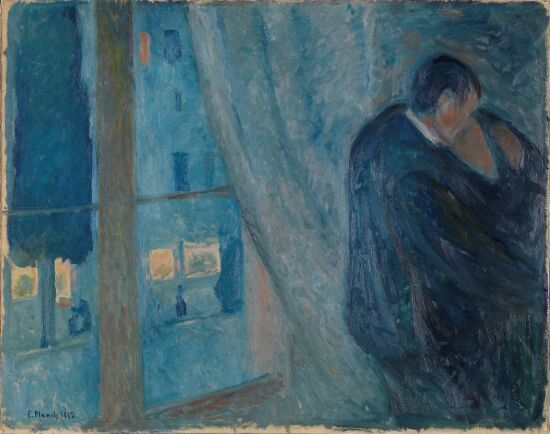 The KissEdvard Munch1892
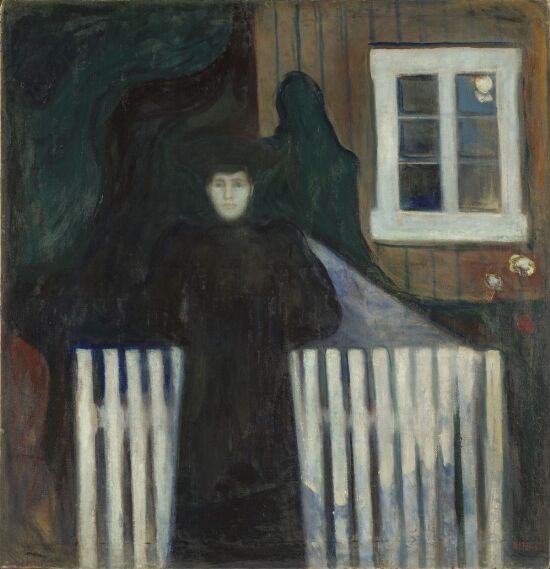 MoonlightEdvard Munch(1893)
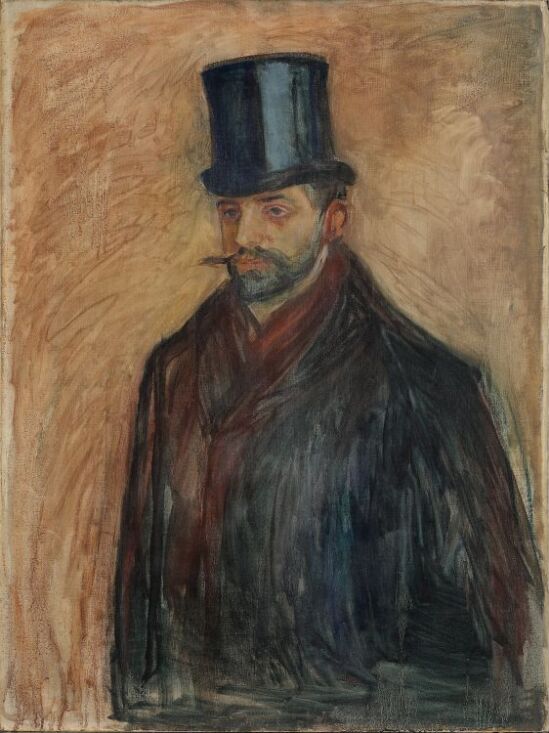 Julius Meier-GraefeEdvard MunchAntagelig 1894
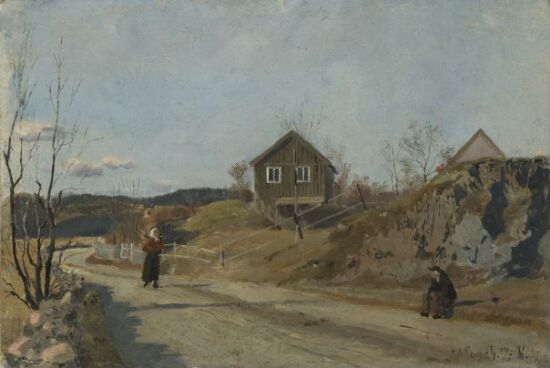 From Vestre AkerEdvard Munch1881
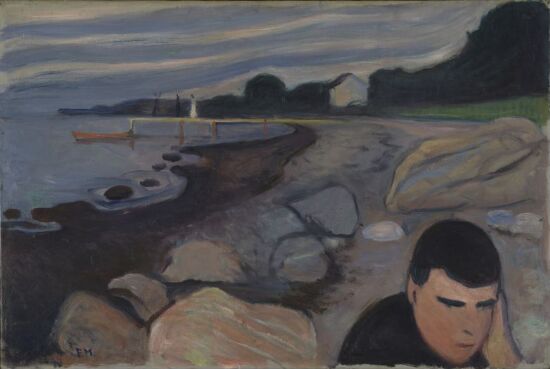 MelancholyEdvard MunchAntagelig 1892
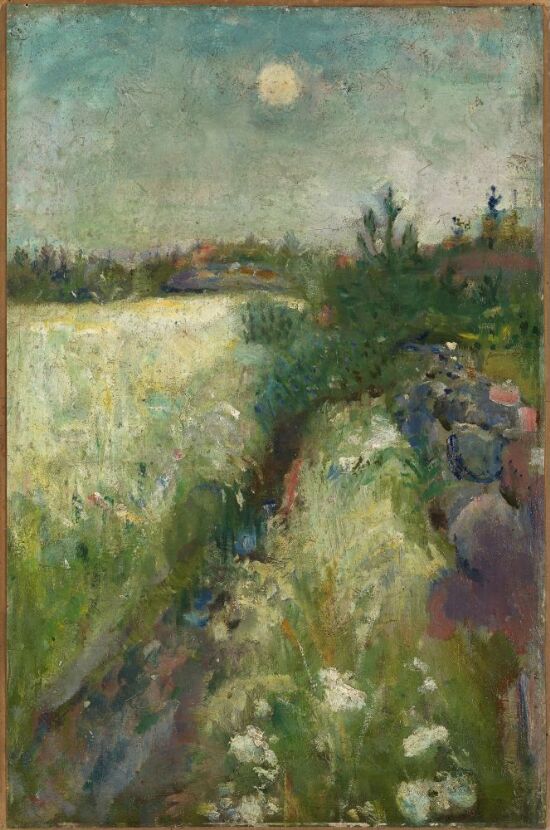 Flowery Meadow at VeierlandEdvard Munch(1887)
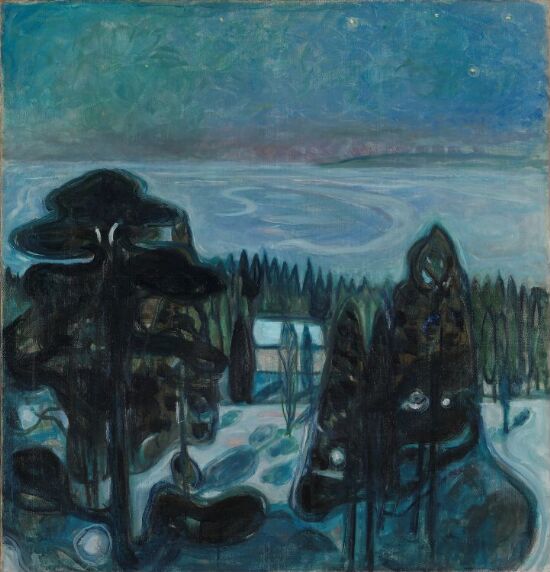 White NightEdvard MunchPåbegynt 1900, avsluttet 1901
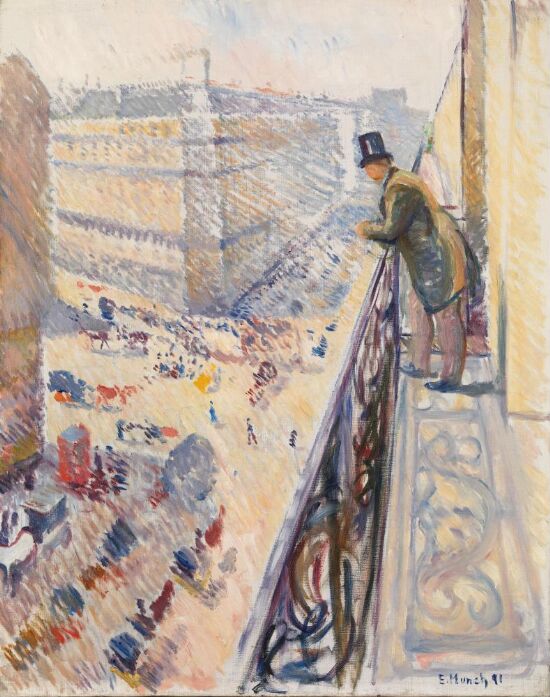 Rue LafayetteEdvard Munch1891
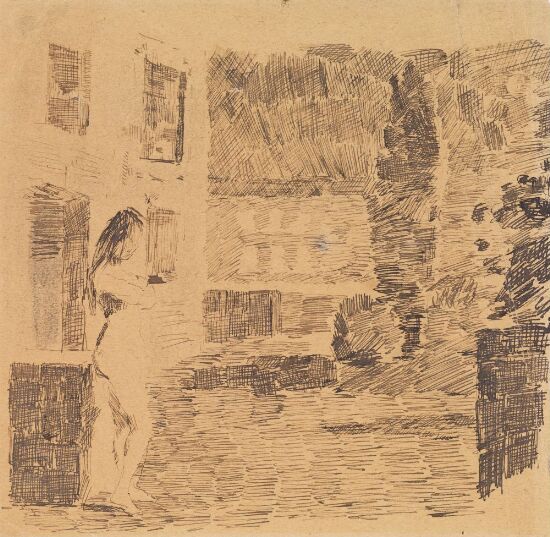 Naked Woman in Front of a HouseEdvard Munch1883 eller 1884
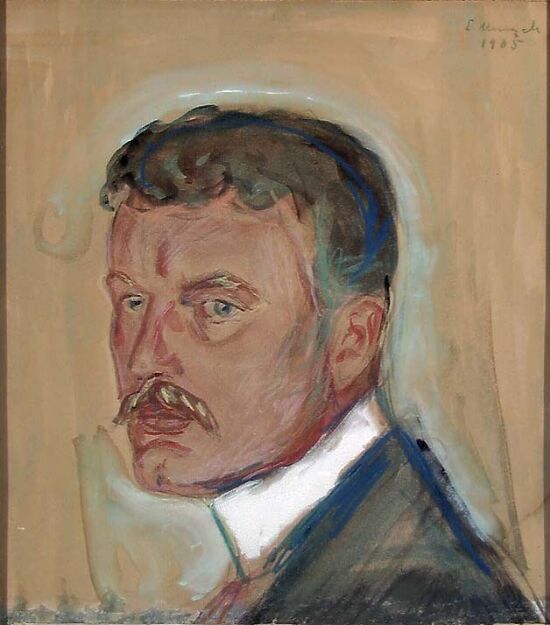 Self-PortraitEdvard Munch1905
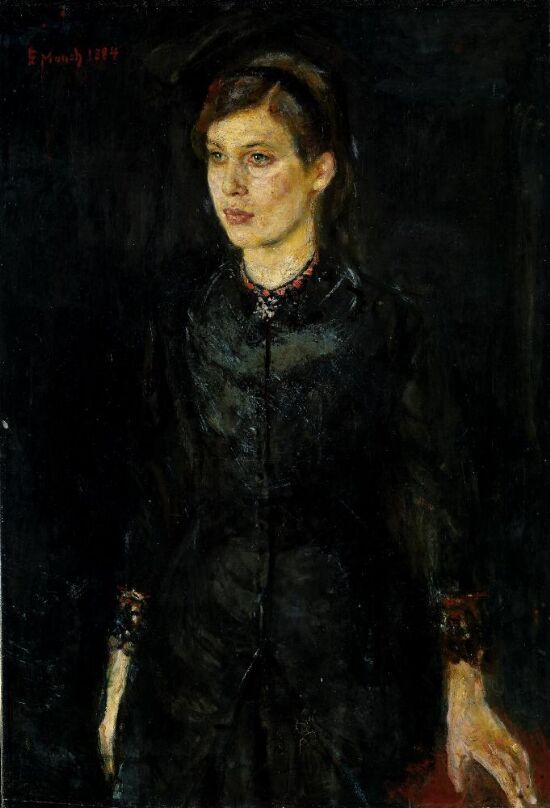 Inger Munch in BlackEdvard Munch1884
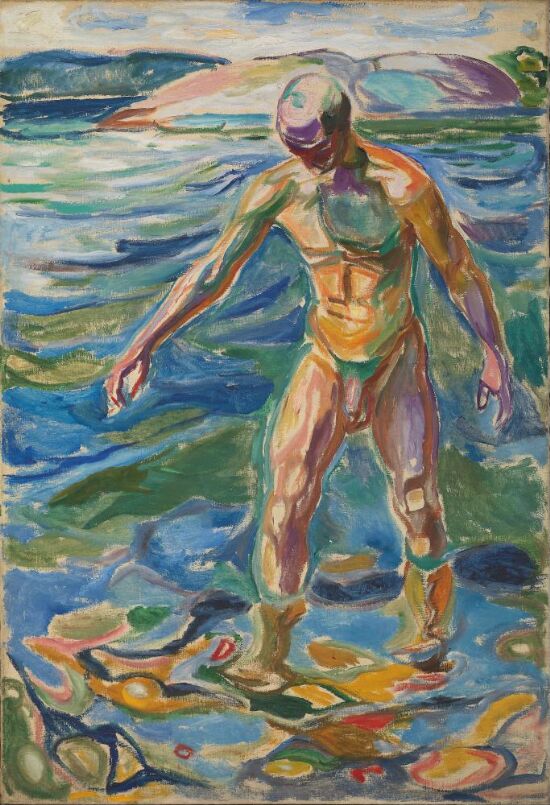 Bathing ManEdvard Munch(1918)