Room 87: Jumana Manna: Works from Storage

Room 87 presents works by Jumana Manna from The National Museums collection.
This presentation of works by Jumana Manna reflects her engagement in the land struggles and ecology of her native Palestine, and its neighbouring countries Lebanon and Syria. Manna explores how colonial structures have shaped landscapes and ways of life, while also examining forms of resistance to dominant global power structures. In some of her works, she turns her attention to Norway.
The works on view combine reused and archival materials to examine how preservation practices redefine land use and cultural memory. Her central concern is who decides what gets preserved and what gets erased.
From 2026 on, this room will be dedicated to frequent temporary displays of works from the National Museum collection. The aim is to provide a platform for topical issues, recent acquisitions, and a plurality of perspectives.
Post Herbarium
Post Herbarium is a multipart installation, that explores the intersections of colonialism with the discipline of botany and the genre of still life painting.
Many objects depicted in European still lifes are plants and fruits that first became available through colonial expansion. Both the table, with its bust, books, and flowers, and the panels featuring plants could be described as still lifes.
Manna uses a 19th century herbarium compiled by George E. Post, an American missionary in Beirut, as her point of departure.
Wild Relatives
In addition to Post Herbarium, the video Wild Relatives from 2018 is shown in the room.
Deep beneath Arctic permafrost, seeds are preserved in the Svalbard Global Seed Vault, a repository of specimens meant to ensure human survival. During the Syrian civil war, an agricultural research centre in Aleppo was forced to relocate to Lebanon. In the process, it became the first to withdraw its deposits from the seed vault.
The film follows the replanting and harvesting of these ‘wild relatives’ – resilient reservoirs of plant diversity – and the communities whose livelihoods depend on the land and its cultivation.
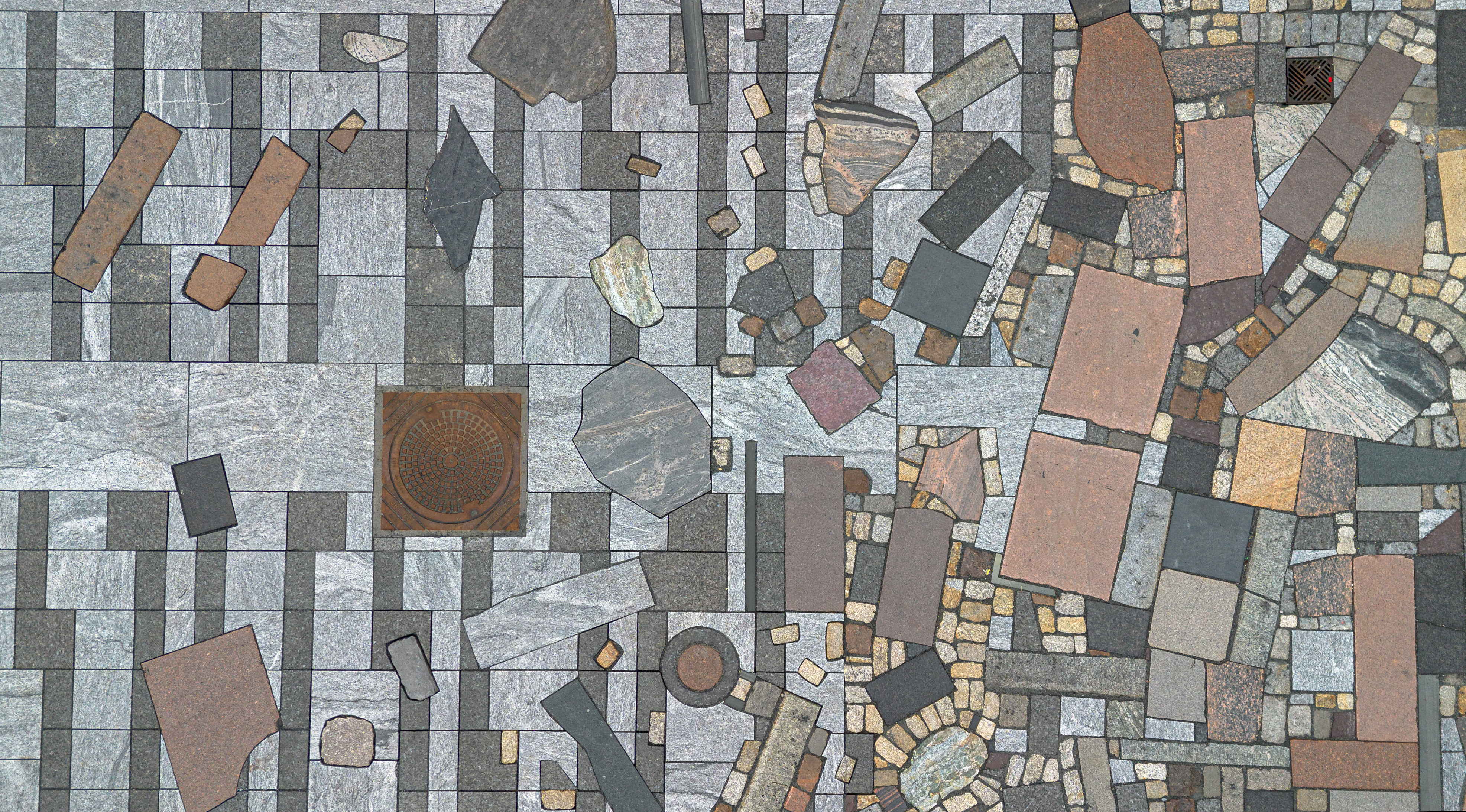
Surplus stones from Jumana Manna’s work ‘Sebastia’ in the Government Quarter, Oslo
Left over stones donated for Manna’s work Sebastia in the new Government Quarter in Oslo are also on display.
The stones come from municipalities and donors across Norway – including the National Museum – as material for a patch-work public square. By using ruins to create something new, the work rejects extraction and waste.
Referring to an ancient village in Palestine, the title expands the work’s engagement with archaeology, fragmentations and shared heritage. The stones stored here will be used for future repairs of Sebastia.
The stones in Sebastia come from all over Norway, see where they are from (developed by KORO)

