Edvard Munch
- Born:
- 12.12.1863 in Løten, Hedmark
- Death:
- 23.01.1944 in Oslo
- Nationality:
- Norway
- Works in the collection (published):
- 240
- Exhibitions (published):
- 360
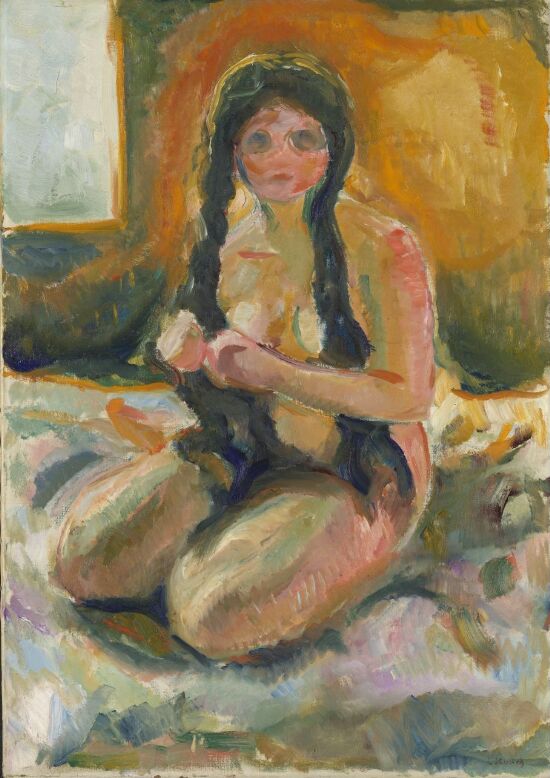
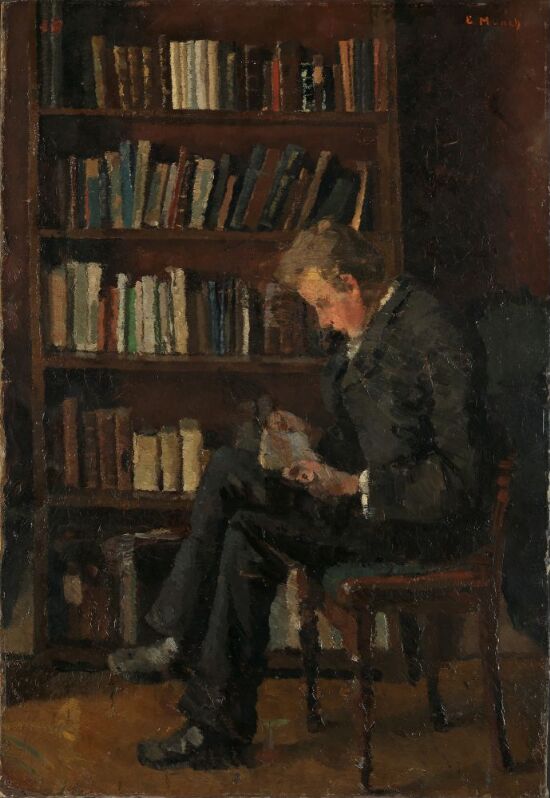
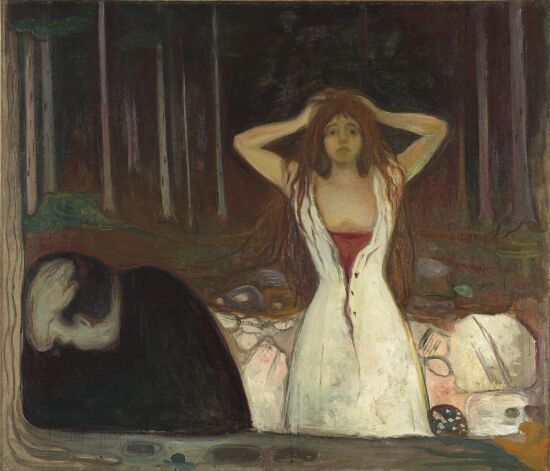
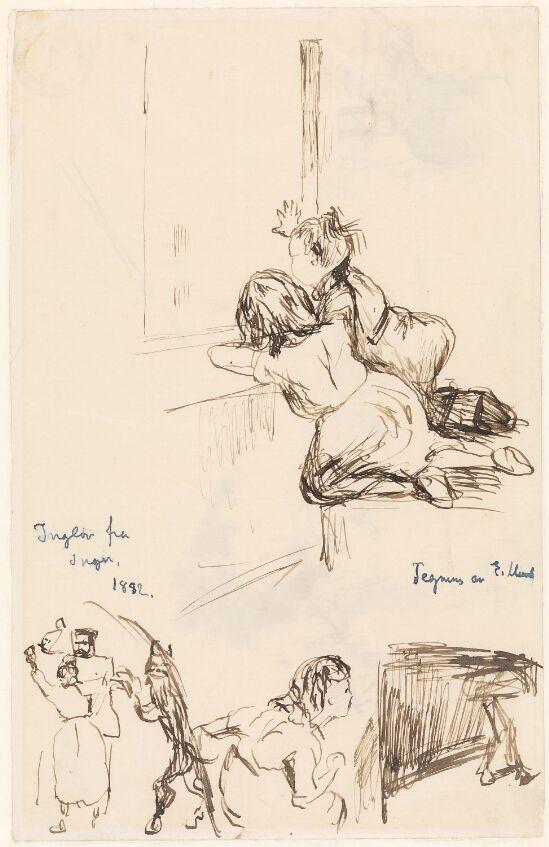
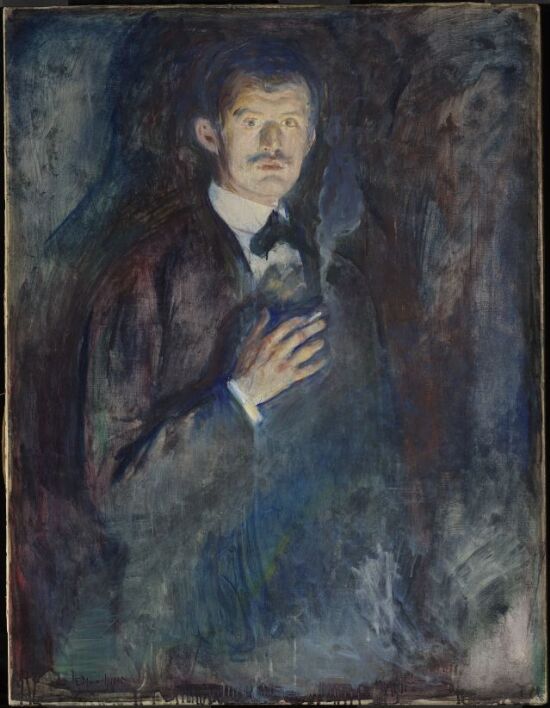
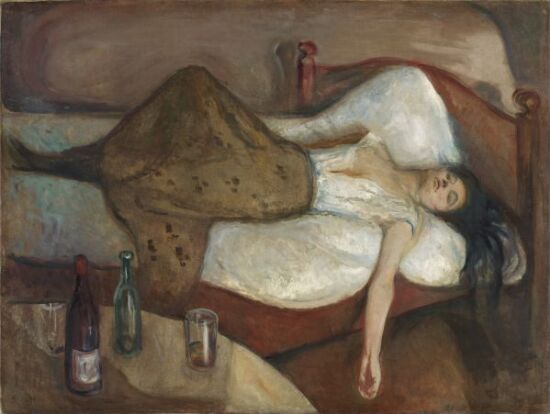
Edvard Munch worked as an artist for over sixty years. He was creative, ambitious and hardworking. He produced nearly two thousand paintings, hundreds of graphic motifs and thousands of drawings. In addition, he wrote poems, prose and diaries. The Scream, Madonna, Death in the Sickroom and the other symbolist works from the 1890s have made him one of the most famous artists of our time.
"Don't become an artist!"
Edvard wanted to become an artist early on, and there was no doubt that he had talent. But his father refused to allow him to follow his dream, so Edvard began studying engineering. But already after one year he chose to defy his father, and switched from engineering college to the Norwegian National Academy of Craft and Art Industry in Kristiania, now Oslo.
A talented and provocative bohemian
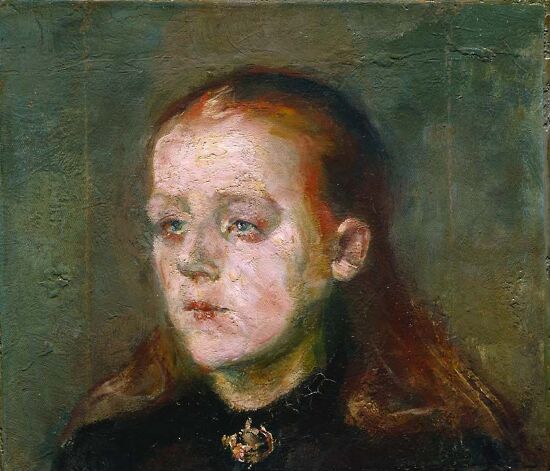
It was obvious to everyone in the Norwegian art community that the young man showed rare talent. In 1883, at the age of 20, he debuted at Høstutstillingen (The Autumn Exhibition). In 1886, Munch became acquainted with author and anarchist Hans Jæger, a leading figure in the Kristiania bohemian community. The bohemian community convinced Munch that the arts had to renew themselves to reach people and to have relevance in their lives. In the same year he exhibited the painting The Sick Child. This generated debate!
Courage led to breakthrough
Some acclaimed The Sick Child a work of genius, while others deemed it unfinished and unworthy of exhibition. Today it is considered to mark Munch's breakthrough. It was here that demonstrated the independence and willingness to break fresh ground.
From this point until his final brush strokes, his artistic practice can be summed up in just word: experimentation. Munch did not care about established "rules" for so-called good art. His techniques in both painting and graphics were innovative.
From people's emotional life to agriculture and landscape
Henrik Ibsen's plays about humanity's existential challenges inspired Munch. Themes such as death, love, sexuality, jealousy and anxiety were central to his early images. Some themes sprang from personal experience. For example, Death in the Sickroom and The Sick Child are linked to his memory of his mother and sister's illnesses and early deaths.
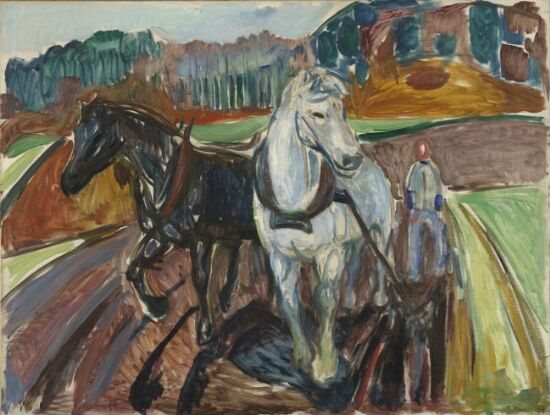
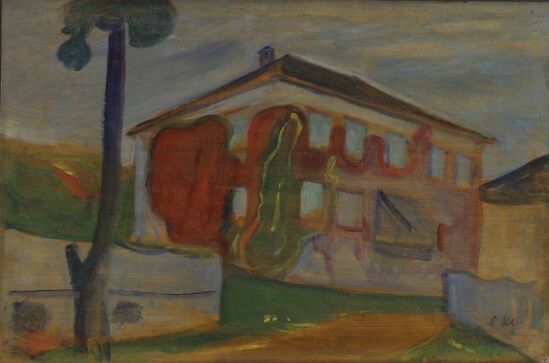
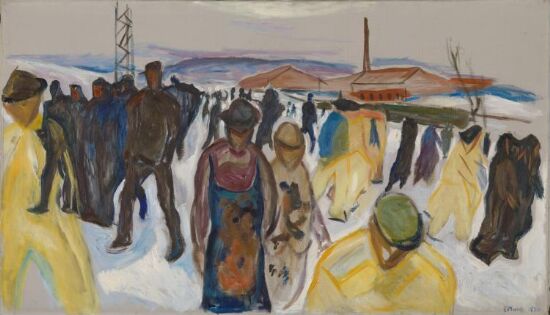
After 1910, Munch chose a quieter and secluded life. At his own farms at Ekely in Oslo and in Hvitsten, he found entirely new motifs, such as agriculture, working life and landscapes. Man in the Cabbage Field is a typical example from this period.
Litterature
Atle Næss, Munch. En biografi (A biografi) (Oslo: Gyldendal, 2004)
Edvard Munchs life: https://munchmuseet.no/munch
- Hodler, Monet, Munch: Peindre l'impossible / Painting the Impossible (Hovedtittel/ anvendt/ Fransk)Martigny, Sveits(2017)Det magiske nord. Finsk og norsk kunst rundt 1900 (Hovedtittel/ anvendt/ Norsk)Helsinki, Finland(2015)The Jawlensky Horizon. Alexej von Jawlensky in the Reflection of his Encounters from 1900 to 1914Tyskland(2014)The Jawlensky Horizon. Alexej von Jawlensky in the Reflection of his Encounters from 1900 to 1914Wiesbaden, Tyskland(2014)Exhibition(2003–2004)Impressionismen og Norden. Fransk avantgarde i det sene 1800-tal og kunsten i Norden 1870-1920København, Danmark(2003)Impressionismen och Norden. Det sena 1800-talets franska avantgardekonst och konsten i norden 1870-1920Stockholm, Sverige(2002–2003)Verso l'Arte Moderna : Da Puvis de Chavannes a Matisse e PicassoChiesa di S. Maria del Giglio, Italia(2002)Die Lebensreform. Entwurfe zur Neugestaltung von Leben und Kunst um 1900Darmstadt, Tyskland(2001–2002)
Works in the collection (published)